When you buy wheat flour online, check the milling date rather than just the expiry date, read the ingredient list to confirm it is 100 percent whole wheat with nothing else blended in, look for sellers who mill in small batches close to the order date, and check reviews specifically for comments about freshness and aroma. Price matters less than these four checks, since a cheap bag that has been sitting in a warehouse for months is worse value than a slightly pricier bag milled two weeks ago.
Why buying wheat flour online is different from buying in a shop
In a physical shop, you can pick up a bag, check the texture through the packaging, sometimes even ask the shopkeeper directly when it was milled. Online, none of that is available. You are relying entirely on what the seller chooses to show you: photos, a product description, and whatever the listing says about freshness.
This is not a reason to avoid buying wheat flour online. It is genuinely convenient, often cheaper once you account for delivery to your door, and gives access to good stone milled options that may not exist in your local market. It just means the checks you would normally do by touch and smell need to be done through the listing itself, before you place the order rather than after the bag arrives.
What to check before you buy wheat flour online
1. Milling date, not expiry date
This is the single most important check and the one most buyers skip. Expiry dates are often set conservatively, sometimes six months to a year out, regardless of when the flour was actually ground. The milling or manufacturing date tells you how fresh the flour genuinely is. Good sellers display this clearly on the product page. If a listing only shows an expiry date and no milling date, that is worth asking about directly before ordering.
Freshness affects more than taste. The natural oils in the wheat germ begin to fade from the moment of milling, which is why fresher flour tends to smell better and cook into softer rotis. Our guide on does flour expire explains this timeline in detail.
2. The ingredient list
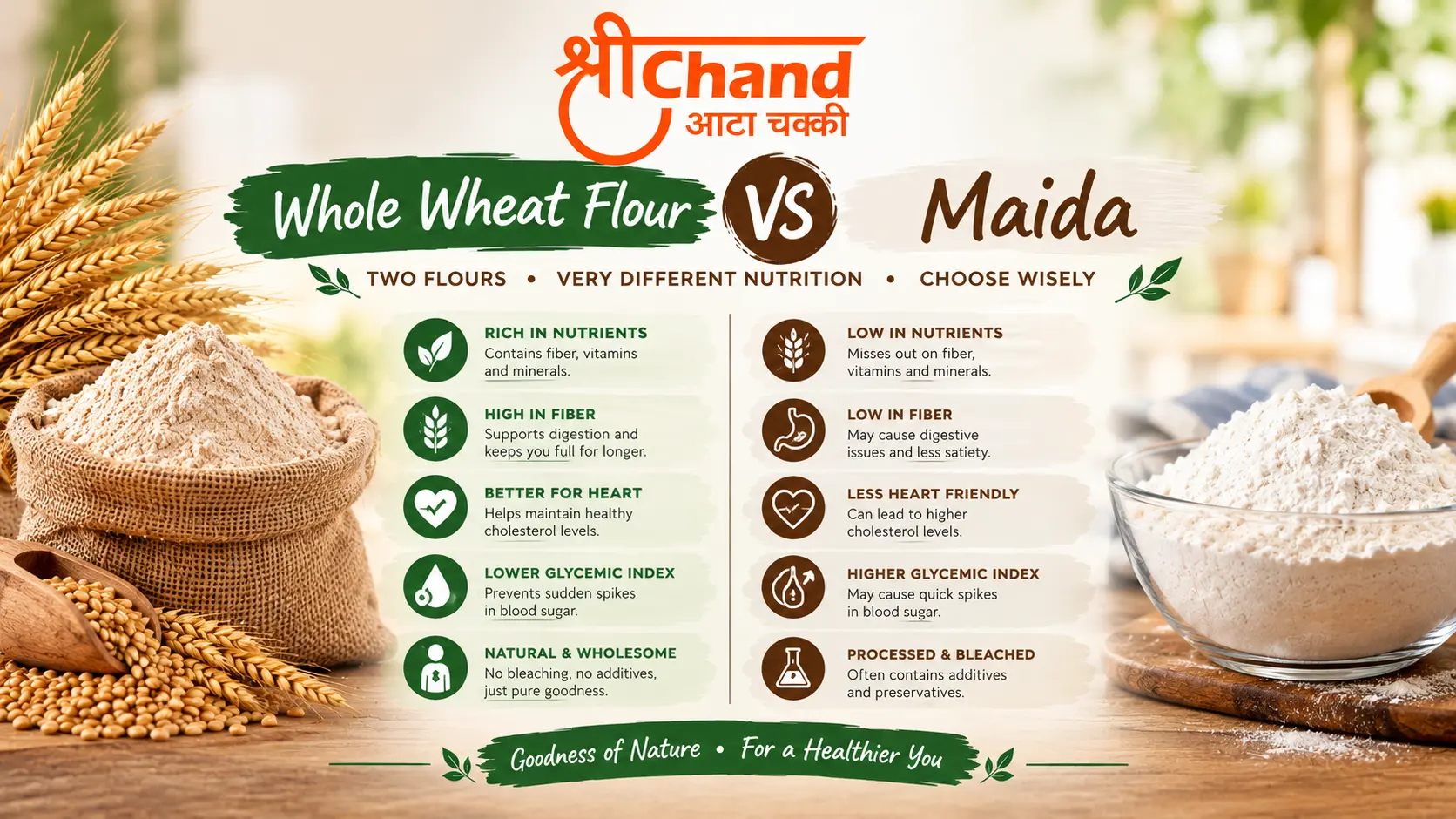
A genuine whole wheat flour should list one ingredient: whole wheat. If you see maida, refined flour, or any additive on the list, you are buying a blend, not pure whole wheat atta, regardless of how the product is marketed on the front of the listing. This matters most if you specifically want the higher fibre, higher nutrient profile that whole wheat offers over refined flour. See whole wheat flour benefits for why this distinction matters nutritionally.
3. Milling method
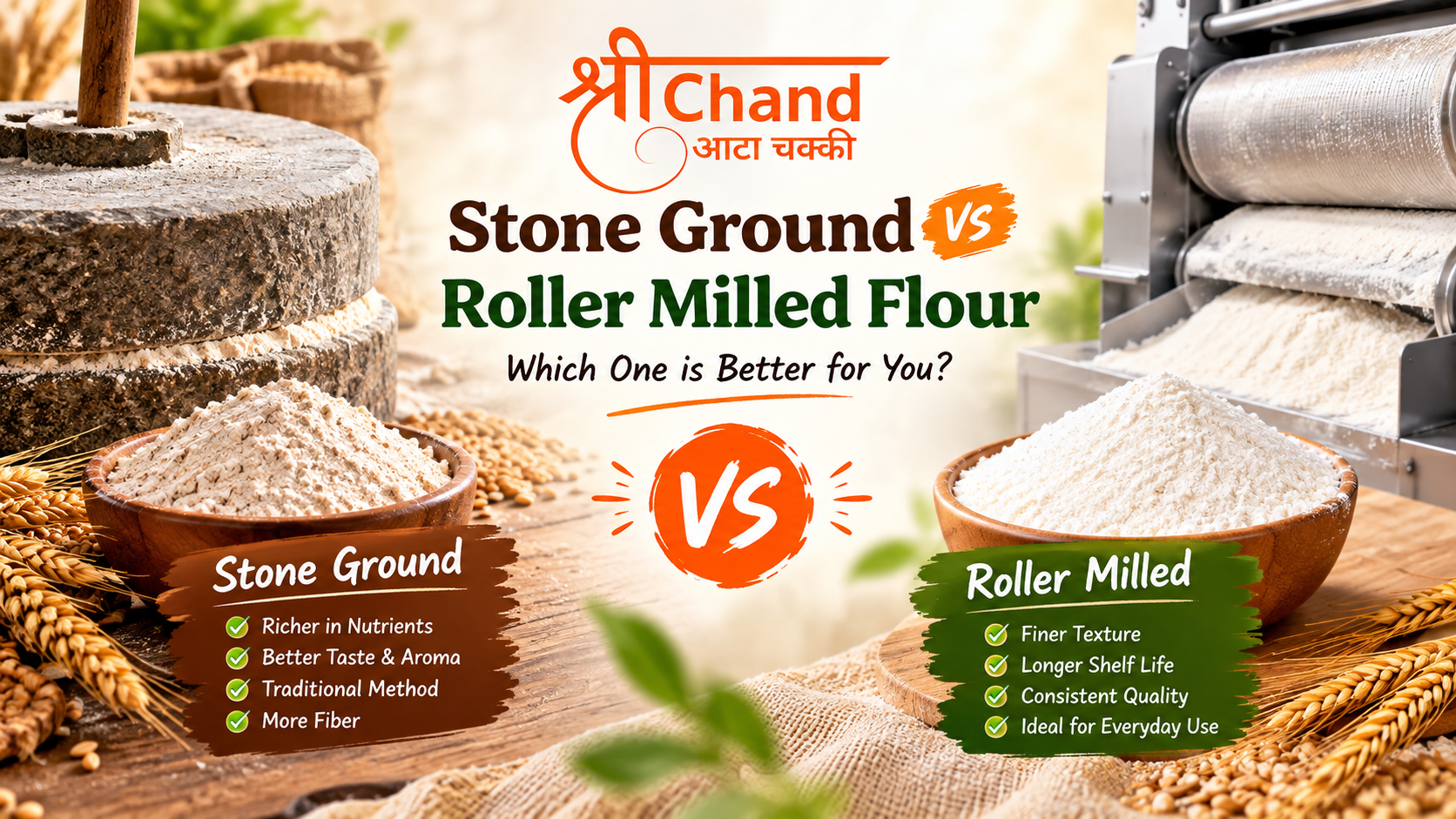
Look for whether the flour is stone ground or roller milled, since this genuinely changes texture, aroma and nutrient retention. Stone ground or chakki flour tends to preserve more of the wheat germ's natural oils because it is milled slowly at lower heat. Roller milled flour is processed faster and can have a longer shelf life, but often loses some of that aromatic edge over time. Our detailed comparison in chakki atta benefits and stone ground versus roller milled flour covers this in full.
4. Batch size and seller transparency
Sellers who mill in small, frequent batches are generally more likely to ship flour close to its actual milling date, compared to large scale operations working through bulk stock that may sit in a warehouse for months before reaching you. Product pages that openly share batch information, milling location and processing method tend to be more trustworthy than generic listings with only a brand name and a price.
5. Reviews that mention freshness specifically
Star ratings alone do not tell you much. Read a handful of reviews and look specifically for comments about smell, texture, softness of rotis, or freshness on arrival. A pattern of complaints about stale smelling flour or hard dough is a much stronger signal than an average star rating pulled across hundreds of generic reviews.
6. Packaging quality
Wheat flour needs to be protected from moisture and air to stay fresh in transit. Check that the listing shows a properly sealed bag, ideally with some barrier against humidity, especially if you are ordering during monsoon months when humidity accelerates spoilage. Once it arrives, our guide on how to store flour properly covers how to keep it fresh at home.
Comparing your options before you order
| What to compare | What to look for | Why it matters |
|---|---|---|
| Milling date | Recent, clearly listed | Freshness fades over weeks, not months |
| Ingredients | Only whole wheat, nothing added | Confirms it is genuine whole wheat, not a blend |
| Milling method | Stone ground or roller milled, clearly stated | Affects aroma, texture and nutrient retention |
| Batch size | Small batch, frequent milling | Shorter gap between milling and delivery |
| Reviews | Specific mentions of freshness and softness | More reliable than a generic star rating |
| Packaging | Sealed, moisture resistant | Protects freshness during transit and storage |
| Price per kilo | Reasonable for the quality claimed | Cheapest is not always best value |
If you are unsure how to weigh price against these quality factors, our full flour buying guide covers the trade-offs across all flour types, not just what you can check online.
Is cheaper wheat flour actually worth it
Not always. The cheapest bag on any online listing is often the one that has been sitting in bulk storage the longest, since large volumes bought and warehoused in advance can be priced lower than fresh, small batch stock. A slightly higher price for flour milled within the last few weeks usually delivers noticeably better taste and texture than a discount bag that has been on a shelf for months, even if both list the same expiry date.
This does not mean the most expensive option is automatically the best either. Premium pricing sometimes reflects packaging and branding rather than actual freshness. The milling date is still the most reliable single indicator, regardless of price point.
How delivery affects quality
Wheat flour is fairly stable during shipping compared to more perishable foods, but a few things still affect what arrives at your door. Long transit times in hot weather can accelerate the natural oxidation of the wheat germ oils, particularly for stone ground flour that already carries more of those oils intact. Sellers based closer to your location, or those using faster delivery networks, generally mean less time between milling and your kitchen.
If you live in Delhi NCR, ordering from a local mill rather than a seller shipping from across the country typically shortens this window meaningfully. Shri Chand Atta is milled in small batches in Delhi NCR and ships close to the milling date rather than from long term bulk stock, which keeps that freshness gap as small as possible.
Whole wheat versus other flour types when buying online
If you are buying wheat flour online for the first time, it is worth knowing what you are actually looking for among the options typically listed alongside plain whole wheat atta.
- Whole wheat atta is the standard daily flour, best for rotis and parathas, and the focus of this guide.
- Multigrain atta blends wheat with millets, oats or other grains, often marketed for weight management. See best flour for weight loss for how this compares.
- Stone ground or chakki atta refers to the milling method rather than a different grain, and is covered fully in stone ground flour.
- Maida, or refined flour, is a different product entirely, stripped of bran and germ, and not a substitute if you are buying for everyday roti making.
Our broader guide to types of flour covers the full range if you are still deciding which one fits your kitchen.
Frequently asked questions
Is it safe to buy wheat flour online?
Yes, as long as you order from a seller who clearly states the milling date, ingredient list and packaging details. Reputable sellers, whether large brands or local mills, generally ship in sealed, moisture resistant packaging that protects the flour in transit.
How do I know if wheat flour bought online is fresh?
Check the milling or manufacturing date on the listing before ordering, not just the expiry date. Once it arrives, fresh whole wheat flour should smell mildly nutty rather than flat or musty, and should have a slightly coarse texture if it is stone ground.
Is online wheat flour cheaper than buying from a local shop?
It can be, particularly for brands that skip retail markup by selling direct, though pricing varies widely. The bigger factor for value is usually freshness rather than price alone, since a cheap bag that has sat in storage for months is poor value regardless of the discount.
What is the best type of wheat flour to buy online for daily use?
For most households, a genuine 100 percent whole wheat atta, ideally stone ground and recently milled, is the best everyday choice for rotis and parathas. Multigrain or specialty blends make sense if you have a specific health goal beyond general daily cooking.
How long does wheat flour bought online stay fresh after delivery?
Once opened and stored in an airtight container away from heat, most whole wheat flour stays at its best for four to six weeks, regardless of whether it was bought online or in a shop. See flour shelf life for the complete breakdown by flour type.
The bottom line
Buying wheat flour online works well once you know what to check before you order rather than after the bag arrives. The milling date matters more than the expiry date, the ingredient list matters more than the marketing on the front of the pack, and reviews mentioning freshness matter more than a generic star rating. Get those four things right and the convenience of ordering online comes with none of the usual trade-off in quality.
Ready to order? Browse our stone ground atta range, milled fresh in small batches and shipped close to the milling date. Or if you want to compare brands more broadly before deciding, our best atta brands in India roundup is a good place to start.