Last updated: July 2026
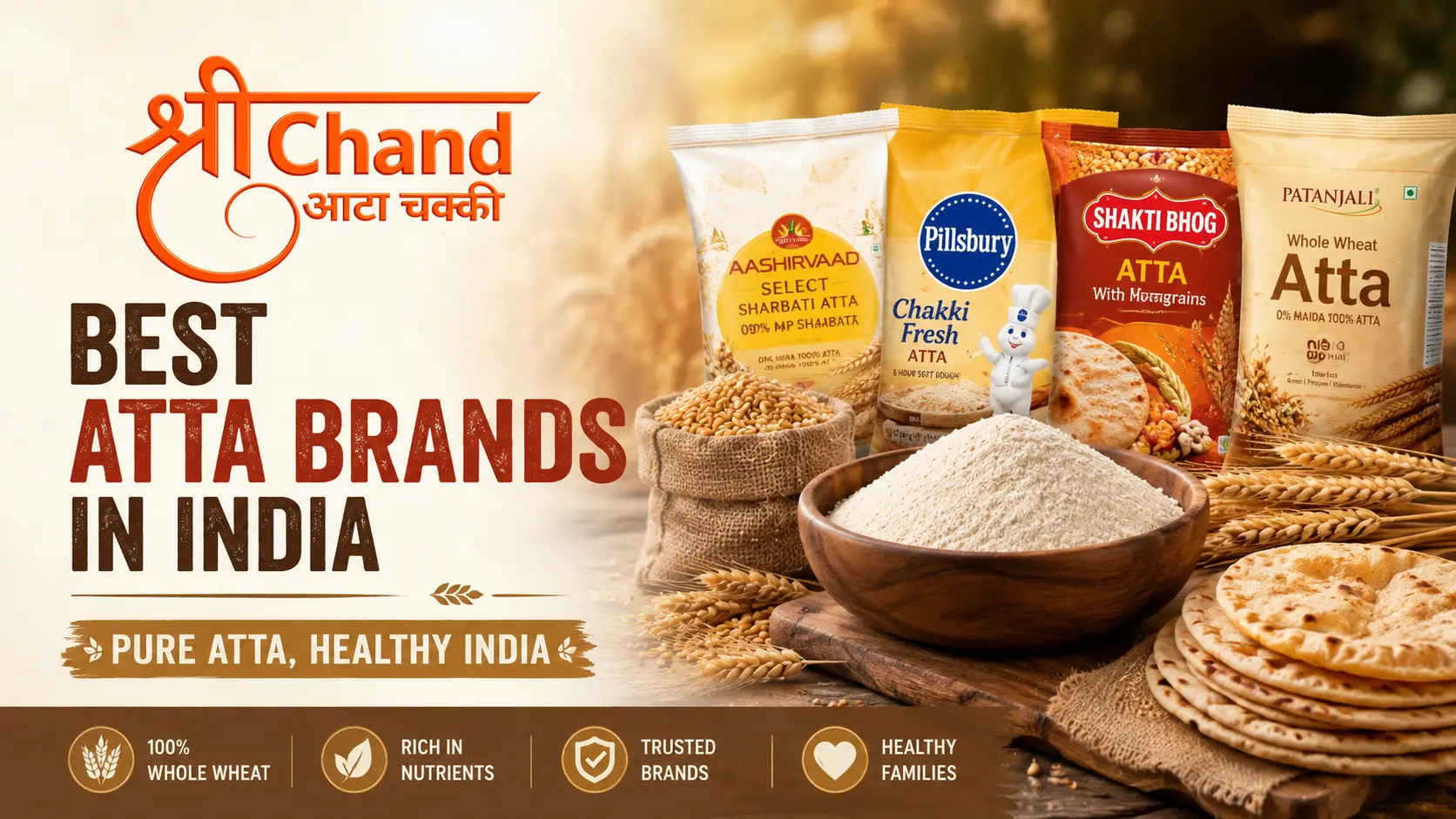
Short answer: For nationwide consistency, Aashirvaad is still the safest packaged atta in India. For softer rotis from premium wheat, Aashirvaad Select or Pillsbury Gold Sharbati are the picks. For value, Fortune Fresh and Patanjali Traditional deliver the most atta per rupee. And if you are in Delhi NCR, freshly stone milled Shri Chand Atta beats every packet on this list on the one thing no factory can match: the milling date.
Every family in India argues about atta. Someone swears the rotis went hard after switching brands. Someone else insists the packet smells different than it used to. And the shelf at the store keeps growing, with sharbati, multigrain, high fibre, low GI and organic all shouting for attention at once.
So we did the boring work. We looked at what actually separates one atta from another, checked current prices across quick commerce platforms in July 2026, and ranked the brands people in India actually buy.
What actually makes an atta good
Before the list, it helps to know what you are paying for. Four things decide whether your rotis come out soft, and brand name is only one of them.
1. The wheat variety. Sharbati wheat grown in the Sehore and Vidisha belt of Madhya Pradesh is the gold standard for North Indian rotis. It carries roughly 12 to 14 percent protein, builds better gluten, and has a faintly sweet finish. Lokwan wheat from Maharashtra behaves similarly. Ordinary mill-mix wheat, which is what most budget attas use, is a blend of whatever was cheap at the mandi that season, and that is exactly why cheap atta tastes different from bag to bag.
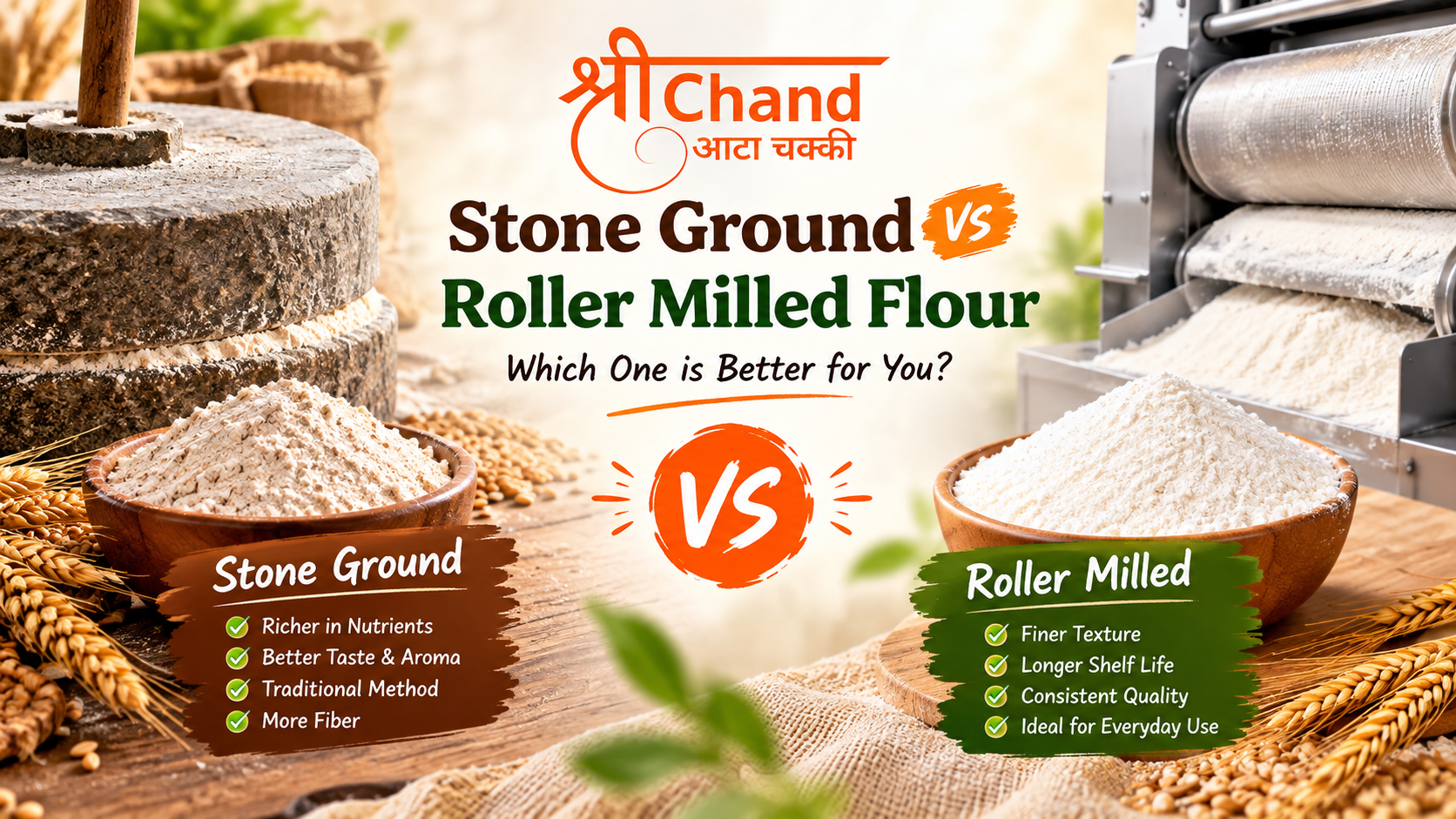
2. The milling method. Chakki milling crushes grain slowly between stones. The bran, germ and endosperm get ground together and stay together. Roller milling separates them at high speed and higher heat, then adds a measured amount of bran back to call it whole wheat. Both produce edible flour. Only one keeps the wheat germ oils intact, which is where the aroma lives. We go deeper on this in our guide to stone ground versus roller milled flour.
3. Bran content. Read the fine print. "100 percent atta, 0 percent maida" is a real claim and a useful one. Some cheaper brands quietly blend in refined flour to make the dough behave better and the rotis look whiter. Softer today, less fibre in every bite.
4. Freshness. This is the one nobody prints on the front of the pack. Wheat germ contains natural oils, and those oils begin turning stale within weeks of milling. A packet that was milled in March and reaches your kitchen in July is not spoiled, but it has lost aroma. Check the manufacturing date, not just the expiry.
The comparison table
Prices below are indicative for July 2026 across quick commerce apps in Delhi NCR. Shri Chand Atta pricing is on our own shop page. They move with discounts, city and pack size, so treat them as a guide rather than a quote.
| Brand | Best known variant | Typical 10 kg price | Approx. cost per kg | Best for |
|---|---|---|---|---|
| Aashirvaad (ITC) | Shudh Chakki Atta | ₹386 | ₹39 | Everyday reliability |
| Aashirvaad Select | 100% MP Sharbati | ₹700 plus | ₹70 plus | Softest rotis, premium |
| Pillsbury | Fresh Chakki Atta | ₹405 | ₹41 | Consistent softness |
| Pillsbury Gold | Sharbati Atta | ₹557 | ₹56 | Sharbati on a budget |
| Fortune (Adani Wilmar) | Fresh Chakki Atta | ₹417 | ₹42 | Value buying |
| Patanjali | Traditional Whole Wheat with Bran | ₹437 | ₹44 | Higher bran content |
| Nature Fresh (Cargill) | Superior MP Chakki | ₹438 | ₹44 | Balanced mid-range |
| Aashirvaad Multigrain | High Fibre Multigrain | ₹614 | ₹61 | Fibre, mixed grains |
| Aashirvaad Low GI | Sugar Release Control | ₹950 plus | ₹95 plus | Blood sugar management |
| Organic Tattva | Organic Whole Wheat | ₹700 to ₹850 | ₹70 to ₹85 | Certified organic |
| 24 Mantra Organic | Organic Sharbati | ₹750 plus | ₹75 plus | Organic and premium wheat |
| Shri Chand Atta | Stone milled whole wheat | 400 | 40 | Freshness, aroma, Delhi NCR delivery |
| Other local chakki atta | Freshly stone milled | ₹450 to ₹600 | ₹45 to ₹60 | Freshness, if you can reach one |
Brand by brand: the honest read
1. Aashirvaad (ITC)
Aashirvaad is India's largest packaged atta brand and crossed the one billion dollar revenue mark in early 2026. It reaches more than two million retail outlets, which means you can buy the same product in Karol Bagh and in a small town in Odisha and get roughly the same result.
That consistency is the real product. ITC sources wheat through its agri network, blends across regions to even out seasonal variation, and runs tight quality control. The Shudh Chakki line is honest about carrying no maida.
What you are also paying for is nationwide distribution and a very large advertising budget. Aashirvaad is rarely the cheapest option per kilo, and because it is milled centrally and shipped far, it is almost never the freshest.
Buy it if: you want zero surprises and shop wherever is convenient.
2. Aashirvaad Select
The premium tier, milled from Madhya Pradesh Sharbati wheat. The difference is genuinely noticeable. Dough comes together smoother, rotis stay pliable longer after they cool, and there is a mild sweetness that plain wheat lacks.
At roughly ₹70 per kilo it costs nearly double the standard line. Whether that is worth it depends entirely on how much your household cares about texture.
Buy it if: roti softness is the thing you judge a meal by.
3. Pillsbury
Pillsbury Chakki Fresh uses a cold grinding process meant to limit heat damage during milling, and the results back it up. Rotis puff well and the flour has a clean smell.
The Gold Sharbati variant is the value play in the premium segment, usually landing well below Aashirvaad Select for comparable wheat. Availability is strongest in modern retail and quick commerce, weaker in small kirana stores.
Buy it if: you want Sharbati wheat without paying Select prices.
4. Fortune (Adani Wilmar)
Fortune sits squarely in the value bracket. The wheat is sourced domestically, the atta is a straightforward 100 percent whole wheat product, and the rotis are perfectly good. It is not trying to be premium and does not price like it.
During festival sales Fortune 10 kg packs drop very low, which is when most households stock up.
Buy it if: you cook large volumes and cost per kilo is the deciding number.
5. Patanjali
The Traditional Whole Wheat Chakki Atta with Bran is the interesting one here. Most brands compete on how fine and white they can make whole wheat look. Patanjali goes the other way and leaves visible bran in, which raises fibre and darkens the roti.
Some families love it. Others find the rotis heavier and slightly coarse. There is no right answer, only preference.
Buy it if: you want more fibre and do not mind a denser roti.
6. Nature Fresh (Cargill)
A solid mid-market option built on Madhya Pradesh wheat. Quality is dependable, packaging is good, and pricing sits between the value brands and the premium ones. It rarely wins a taste test outright and rarely disappoints either.
Buy it if: you want a middle path and your store stocks it.
7. Aashirvaad Multigrain and High Fibre
Wheat blended with grains like oats, ragi, maize, barley, soya and chana. Fibre goes up, glycaemic load comes down slightly, and the roti gets nuttier and firmer.
Multigrain atta needs a different hand. It absorbs more water, wants a longer rest, and turns rubbery if you overwork it. If you are switching for health reasons, read our full guide to the best flour for weight loss before you commit to a 10 kg bag.
Buy it if: you want more fibre and are willing to adjust your dough technique.
8. Aashirvaad Low GI
Engineered specifically for slower sugar release, priced accordingly at roughly ₹95 per kilo. It is a legitimate product with real formulation behind it, not just marketing.
It is also expensive enough that many families use it only for the person who needs it rather than for the whole household. If diabetes is the reason you are reading this, our guide to the best flour for diabetes compares the actual options including millet and chana blends.
Buy it if: a doctor has asked you to watch glycaemic index and budget allows.
9 and 10. Organic Tattva and 24 Mantra Organic
Certified organic, no synthetic pesticides or fertilisers in cultivation, third party audited. Both are honest about what certification does and does not mean.
Understand what you are buying though. Organic certification governs how the wheat was farmed. It says nothing about milling quality or freshness. A certified organic atta milled four months ago in a roller mill is not automatically better than a non-organic chakki atta milled last week. Different claims, different benefits.
Buy it if: farming practice matters to you specifically and you accept the 70 to 100 percent price premium.
12. Shri Chand Atta Chakki
Full disclosure before anything else: this is our own atta, and you should weigh what follows with that in mind. Here is the case, stated plainly enough that you can check it yourself.
Shri Chand Atta is stone milled in small batches in Delhi NCR and delivered locally, which means the gap between milling and your kitchen is measured in days rather than months. That is the whole proposition. We are not claiming better wheat than Aashirvaad Select, and we are not certified organic. What we can offer that a nationally distributed pack structurally cannot is atta that still smells like wheat when you open it.
The grain is kept whole through milling, so bran and germ go in together and stay together rather than being separated and partially recombined. Nothing is added to extend shelf life, which is also why the usable window is shorter. Alongside whole wheat atta we mill multigrain atta, besan and millet flours on the same stones.
Two honest cautions. Because we mill small batches, buy to a four to six week rhythm rather than stocking three months ahead. And our besan and millet flours share equipment with wheat, so they are not suitable for anyone avoiding gluten.
Buy it if: you are in Delhi NCR and freshness is the variable you care about most. See current packs and pricing on the Shri Chand Atta shop page.
11. Regional brands
Sujata Gold in the east, Rajdhani in the north, Annapurna in the south, plus dozens of strong state level brands. Many use good Sharbati or Lokwan wheat and undercut the national players by 15 to 20 percent because they are not funding national television campaigns.
If a regional brand has been in your local store for a decade and people keep buying it, that is meaningful evidence. Try a 5 kg pack before committing.
The category every list forgets: fresh chakki atta
Here is the thing none of the big listicles will tell you, because none of them have anything to sell you in this category.
The single largest variable in atta quality is not the brand on the bag. It is how long ago the wheat was ground. Wheat germ oils oxidise. That is chemistry, not opinion. Freshly milled atta smells sweet and grassy. Four month old atta smells like paper. You will notice it the first time you compare them directly.
A neighbourhood chakki mills in small batches, often the same week you buy. There is no national distribution chain adding months between the stone and your kitchen. The wheat is usually visible before it goes in. Nothing is added to extend shelf life, because nothing needs to be.
The trade-offs are real and worth stating plainly. Local chakki atta is only as good as the wheat that particular chakki buys, so quality genuinely varies from shop to shop. It has a shorter usable window, roughly four to six weeks in Indian summers, so buying 10 kg at a time may not suit a small household. And you have to be able to reach one, which is a problem for a lot of apartment dwellers.
For families in Delhi NCR, this is exactly the gap Shri Chand Atta Chakki fills. We mill on stone in small batches, deliver across the region, and keep the grain whole from mill to bag. You can see the full range on our flour and atta shop page.
We compare the two approaches properly in fresh atta versus packaged atta, including the storage question, which is where most people go wrong.
How to choose in 60 seconds at the shop
- Flip the pack over. Look for "100% atta" or "0% maida" stated clearly. If it is not stated, assume it is not true.
- Find the manufacturing date. Not the expiry. Anything milled more than three months ago has lost aroma.
- Check the wheat. If it says Sharbati or MP wheat, you are paying for better gluten and it is usually worth it.
- Look at the colour through the window. Slightly beige with visible flecks means the bran is present. Bright white means it is not.
- Do the maths per kilo. A 10 kg pack usually saves 8 to 12 percent over two 5 kg packs, but only if you will finish it in time.
- Buy small first. Test a 5 kg pack before switching your household over.
If you want the longer version of that checklist, our flour buying guide walks through every flour type, and types of flour explained covers what besan, ragi, jowar and bajra are actually for.
Mistakes that ruin good atta
Even the best atta in India will give you leathery rotis if it is stored badly. The three most common errors:
Leaving it in the original bag. Plastic packaging is fine sealed and useless once opened. Air and moisture get in, and in Delhi humidity that is a fast track to weevils. Move it to an airtight steel or glass container the day you open it.
Buying more than you can finish. A 10 kg bag is only a saving if it does not go stale in month three. Two adults typically use 5 to 7 kg a month. Buy to that rhythm.
Storing it near the stove. Heat accelerates oil oxidation. Keep atta in the coolest, driest cupboard you have, away from spices with strong aromas. Full detail in how to store flour properly.
Frequently asked questions
Which is the best atta brand in India?
Aashirvaad is the most consistent packaged atta available nationally, and Aashirvaad Select is the best performer on roti softness among mass market brands. Freshly milled chakki atta outperforms all of them on aroma and taste, because it is ground within days of reaching you rather than months. In Delhi NCR, Shri Chand Atta is stone milled in small batches for exactly that reason.
Which atta is best for daily rotis?
Whole wheat chakki atta made from Sharbati or Madhya Pradesh wheat gives the softest everyday rotis. Pillsbury Gold Sharbati and Aashirvaad Select both fit, as does freshly stone milled Shri Chand Atta. More on this in which flour makes the softest chapatis.
Is chakki atta really better than regular atta?
Chakki milling grinds bran, germ and endosperm together at lower temperatures, which keeps the wheat germ oils and the aroma with them. Roller milling separates the components and adds bran back afterwards. Chakki atta generally tastes better and smells fresher. See chakki atta benefits for the full comparison.
What is a fair price for atta in India in 2026?
Standard whole wheat atta runs roughly ₹38 to ₹45 per kilo. Sharbati and premium variants run ₹55 to ₹75. Multigrain and high fibre blends run ₹60 to ₹70. Certified organic and specialised low GI attas run ₹75 to ₹100. Fresh chakki atta typically sits between ₹45 and ₹60.
Is expensive atta actually worth it?
Sometimes. The premium is worth paying when it buys you better wheat, such as Sharbati, or genuine freshness. It is not worth paying when it only buys you packaging, an organic label on a product you were never worried about, or a health claim with no formulation behind it.
How long does atta stay good after opening?
In Indian conditions, plan on four to six weeks for freshly milled atta and two to three months for packaged atta, both stored airtight and away from heat. It will not be unsafe after that, but the taste falls off noticeably. Does flour expire covers the signs to watch for.
The bottom line
There is no single best atta brand in India, and any list that gives you one without asking what you want is selling something.
If you need dependability and easy availability, buy Aashirvaad. If you want the softest possible roti and will pay for it, buy Aashirvaad Select or Pillsbury Gold Sharbati. If you are feeding a large family on a tight budget, Fortune and Patanjali give you the most for your money. If fibre is your priority, go multigrain and accept the firmer texture.
And if what you actually want is atta that smells like wheat when you open the container, stop shopping by brand and start shopping by milling date. That is the variable that changes everything, and it is the one the packet is least keen to tell you about. If you are in Delhi NCR, that is the whole reason Shri Chand Atta exists.
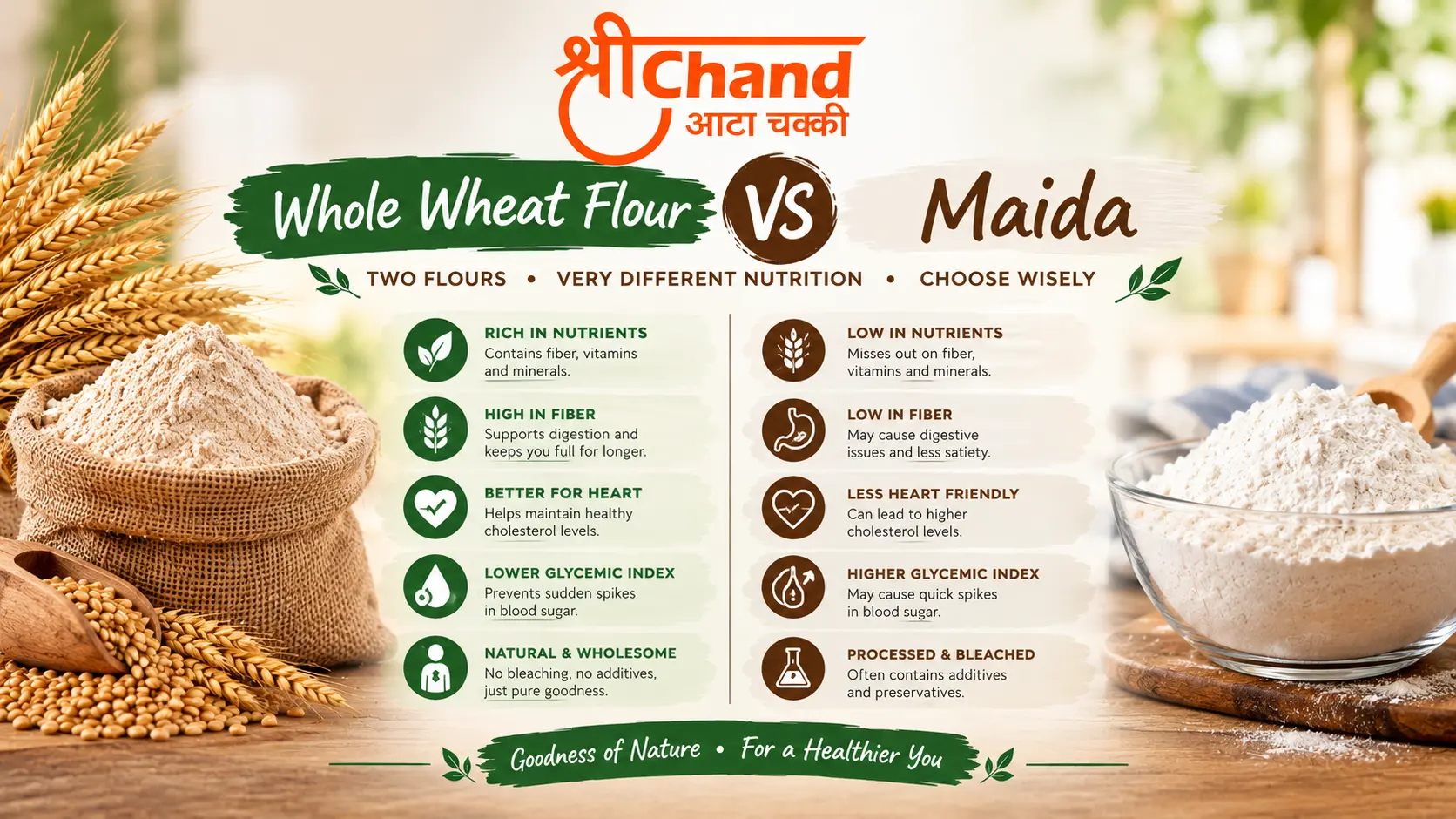
Want to understand what is actually in whole wheat before you choose? Read whole wheat flour benefits next, or see how it stacks up against refined flour in whole wheat flour versus maida.