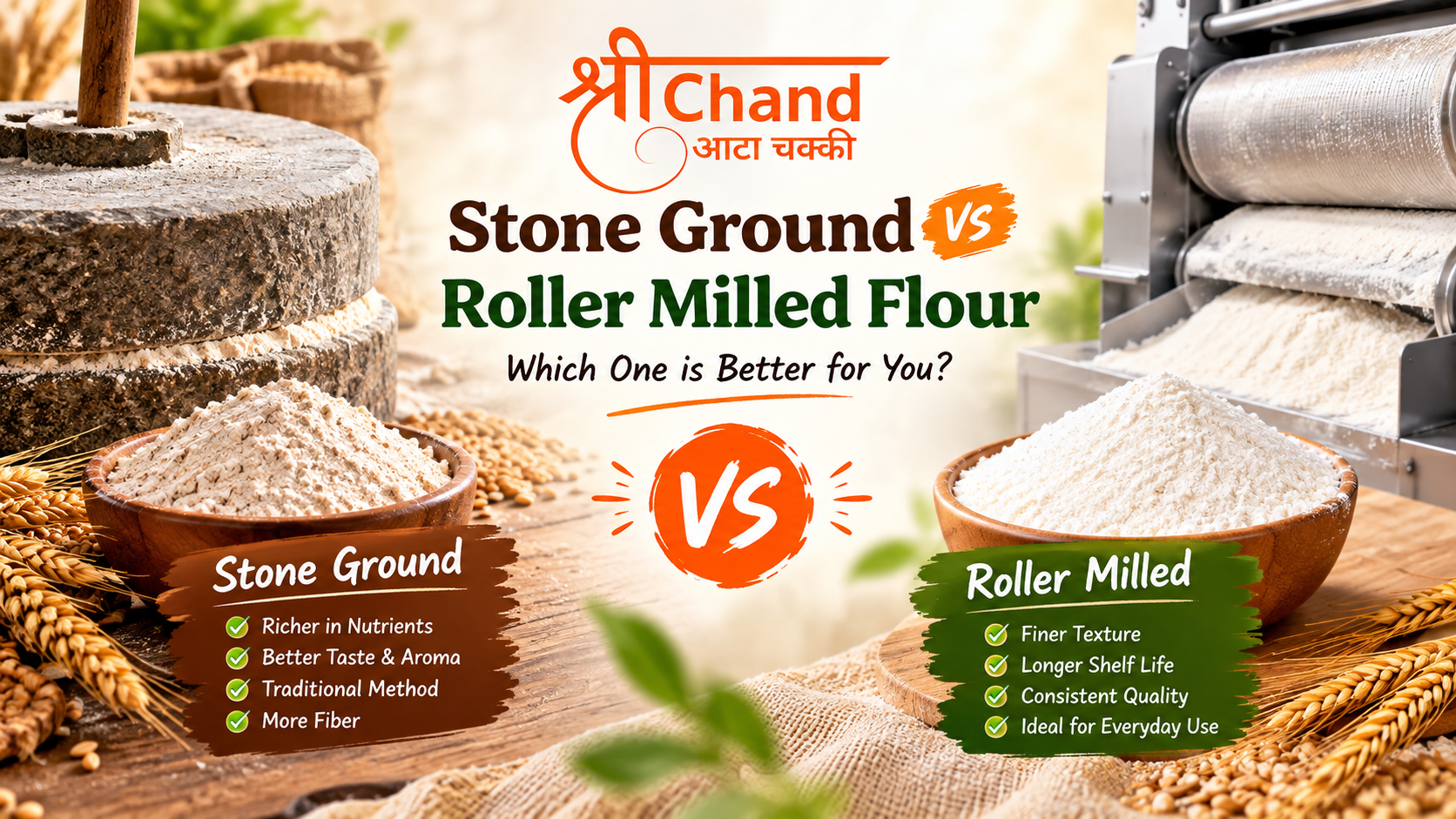
Stone ground flour is made by crushing whole grain slowly between two stones at low heat, keeping the bran, germ and endosperm together in one pass. Roller milled flour is made by passing grain through fast spinning steel rollers that separate the bran and germ from the endosperm, typically recombining a portion of bran afterward for whole wheat products. Stone milling generally preserves more aroma and heat sensitive nutrients due to lower processing temperatures, while roller milling offers greater consistency, higher output and typically a longer shelf life. Neither method is objectively better in every situation, the right choice depends on what you value most between freshness and convenience.
The core mechanical difference
Both methods aim to do the same job: turn whole wheat grain into usable flour. They just get there in fundamentally different ways, and that difference shapes nearly everything downstream, from aroma to nutrition to how long the flour lasts.
How stone milling works
In stone milling, whole wheat grain passes between two large stone discs, one fixed and one rotating slowly. The grain is crushed as a complete unit, with bran, germ and endosperm ground together in a single pass. Because the stones turn slowly, friction and heat buildup are minimal, which is the central reason stone ground flour retains more of its natural aroma and nutrients compared to faster processing methods.
How roller milling works
In roller milling, wheat passes through a sequence of steel rollers spinning at high speed. The first rollers crack the grain open, and subsequent stages progressively separate the bran and germ from the starchy endosperm, which is ground into fine flour. For whole wheat products, a measured proportion of bran is reintroduced afterward to approximate the nutritional profile of the whole grain, though at this point the components are no longer bound together the way they are in stone milled flour. Roller milling runs much faster and generates more heat due to the speed of the rollers.
For the full step by step process behind both methods, our guide on how flour is made walks through cleaning, conditioning and milling in detail.
Side by side comparison
| Factor | Stone ground flour | Roller milled flour |
|---|---|---|
| Milling temperature | Low, minimal friction heat | Higher, due to high speed rollers |
| Grain components | Ground together, never separated | Separated, bran added back afterward |
| Processing speed | Slow | Fast, suited to large scale output |
| Aroma | Strong, especially when fresh | Milder, more neutral |
| Texture | Slightly coarse, visible bran flecks | Fine, uniform |
| Nutrient retention | Generally higher, especially heat sensitive vitamins | Slightly lower due to heat exposure |
| Shelf life once milled | Shorter, best within 4 to 6 weeks | Often longer, formulated for extended storage |
| Typical batch size | Smaller, often local | Large scale, industrial |
| Consistency across batches | Can vary by mill | Generally very consistent |
| Common price point | Often slightly higher | Often more competitively priced at scale |
Why heat matters so much
Heat is the single biggest variable separating these two methods, and it is worth understanding why it matters specifically. The wheat germ, the nutrient dense core of the grain, contains delicate oils, vitamin E and certain B vitamins that are sensitive to heat and oxidation. The friction generated by fast spinning steel rollers raises the temperature of the grain during milling, which can degrade some of these compounds before the flour even reaches packaging.
Stone milling's slow rotation keeps the process substantially cooler, which is the primary reason stone ground flour tends to smell fresher and, by some measures, retain a modest nutritional edge, particularly in the more fragile nutrients concentrated in the germ. The core macronutrients, protein, fibre and carbohydrate content, remain broadly similar between the two methods since both typically use the whole grain, as covered in our full wheat flour nutrition facts guide.
Why roller milling dominates large scale production
Roller milling is not simply an inferior shortcut, it exists because it solves a different problem well: producing large, consistent volumes of flour efficiently. The speed and scale of roller mills make them well suited to supplying national and international markets, where consistency from batch to batch matters enormously for large food manufacturers and big retail brands.
Roller milled flour also tends to have a longer shelf life, partly because the separation and recombination process can be tuned for stability, and partly because large scale operations typically have more rigorous moisture control built into their processing lines. For households that buy in bulk or do not use flour quickly, this can be a genuine practical advantage.
Why stone milling remains popular despite being slower
Stone milling has persisted, and in many markets grown in popularity, because it delivers something roller milling generally cannot match as consistently: aroma and a direct connection to the whole, unprocessed grain. Many people who switch from standard roller milled packaged atta to fresh stone ground flour notice an immediate difference in smell and in how the dough behaves, often producing softer rotis that stay pliable for longer after cooking. Our guide to chakki atta benefits covers this experience in more practical detail.
Does the milling method affect taste in cooking
Yes, noticeably for many people, particularly in simple preparations like rotis where the flour itself is the dominant flavour. Stone ground flour's slightly coarser texture and retained natural oils tend to produce a more flavourful, aromatic roti compared to roller milled flour, especially when both are compared at similar levels of freshness. The difference becomes less noticeable in dishes with strong additional flavours, like parathas with heavy stuffing or spiced flatbreads, where other ingredients play a bigger role. Our guide on which flour makes the softest chapatis covers how milling method interacts with technique to affect texture specifically.
Cost comparison
Stone ground flour, particularly from smaller local mills, often costs somewhat more per kilo than the most basic roller milled brands, though the price gap has narrowed considerably as more companies now offer stone ground options at competitive prices. Some premium roller milled brands, particularly those using high quality Sharbati or other premium wheat varieties, can cost the same as or more than a reasonably priced stone ground option. Price alone is not a reliable indicator of milling method, and checking the label or product description remains the only accurate way to know which process was used.
Which one should you choose
There is no universally correct answer here, since the two methods serve slightly different priorities.
Choose stone ground flour if aroma, a more traditional taste, and closeness to the whole, unprocessed grain matter most to you, and you are comfortable buying in smaller quantities more frequently to maintain freshness.
Choose roller milled flour if consistency, longer shelf life, and wide availability at a predictable price point matter most, particularly if you buy in bulk or use flour less frequently.
Many households use both, favouring stone ground atta for daily rotis where taste matters most, and a roller milled option for less frequent baking or cooking needs where the aroma difference is less noticeable. Our broader guide to stone ground flour covers how to judge quality within the stone ground category specifically, including what to check before buying.
Frequently asked questions
Is stone ground flour better than roller milled flour? Stone ground flour generally offers better aroma and slightly higher retention of heat sensitive nutrients due to its lower temperature milling process. Roller milled flour offers greater consistency and typically a longer shelf life. Neither is universally better, the right choice depends on individual priorities.
Does stone ground flour have more nutrients than roller milled flour? The core nutrients, protein and fibre, are broadly similar since both typically use the whole grain. Stone ground flour tends to retain slightly more of the heat sensitive vitamins and natural oils in the wheat germ due to its gentler, lower heat milling process.
Why does stone ground flour cost more? Stone milling is slower and typically produced in smaller batches, which generally costs more per kilo to produce than large scale, high speed roller milling. The price gap has narrowed as more brands offer competitively priced stone ground options.
Does roller milled flour taste worse than stone ground flour? Not necessarily worse, but generally milder in aroma, since the faster, hotter processing degrades more of the delicate oils that carry flavour and smell. Many people notice this difference most clearly in simple preparations like plain rotis.
Which flour makes softer rotis, stone ground or roller milled? Stone ground flour often produces softer, more pliable dough due to higher retained natural oils and moisture, though freshness matters for both types, and a very fresh roller milled flour can still perform well.
Is stone ground flour the same as chakki atta? Yes, chakki is the traditional term for the stone mill itself, and chakki atta refers specifically to flour produced using this stone milling method, as opposed to flour produced by modern roller mills.
The bottom line
Stone ground and roller milled flour are two legitimate ways to turn wheat into atta, built around different priorities. Stone milling trades speed and shelf stability for aroma and a gentler process that preserves more of the grain's natural character. Roller milling trades some of that aromatic edge for consistency, scale and convenience. Knowing which one you are buying, and why it matters for your cooking, is more useful than assuming one is simply better than the other in every situation.
To see how this choice plays out specifically for whole wheat atta, read chakki atta benefits next, or explore our full stone ground flour buying guide.