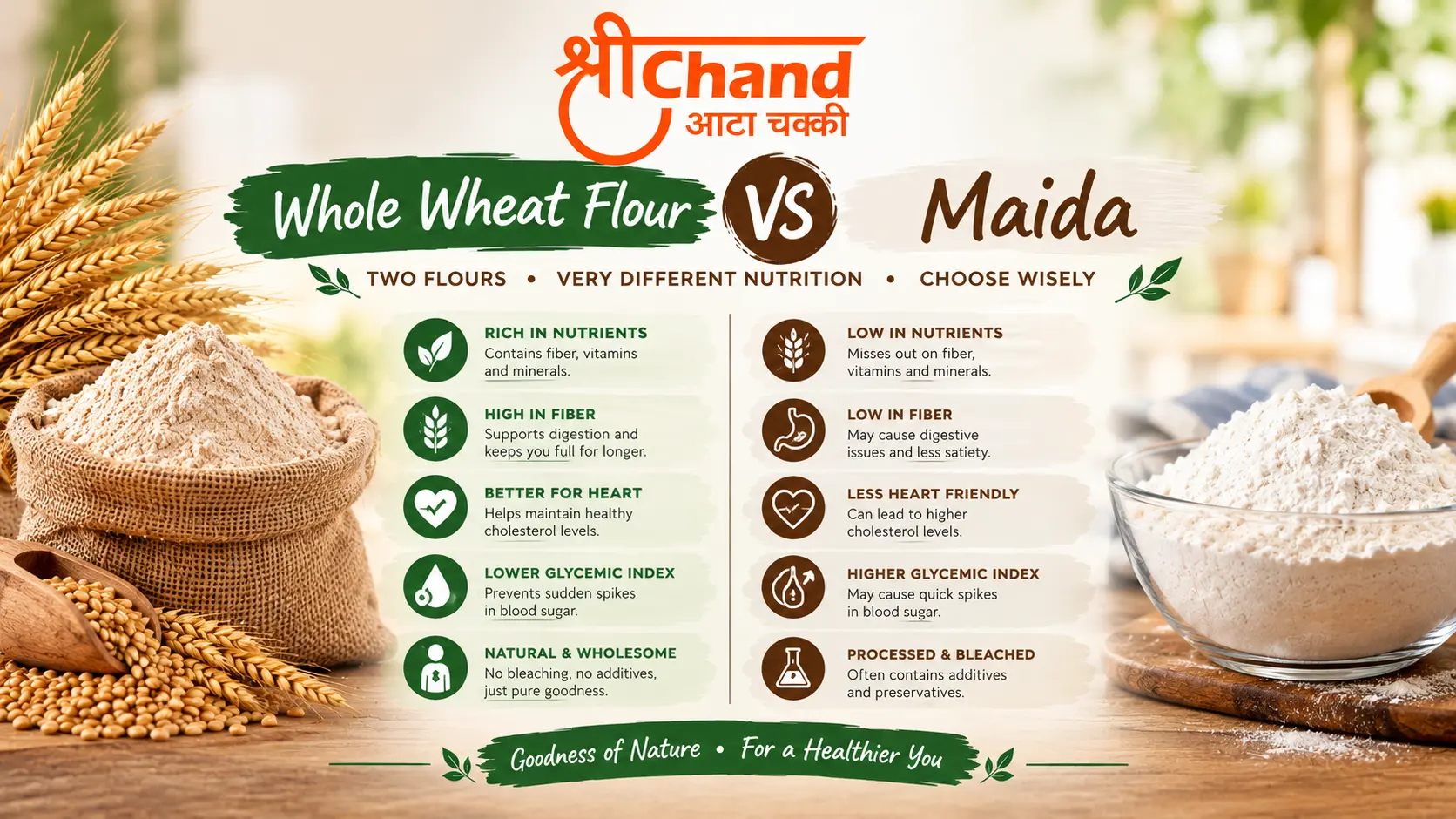
Whole wheat flour is healthier than maida for regular, everyday consumption, since it retains the bran and germ of the wheat grain, giving it three to four times more fibre along with more protein, iron, magnesium and B vitamins. Maida, or refined flour, has these layers removed during processing, leaving mostly starch with a higher glycaemic index and significantly less fibre. Maida is not inherently unsafe and has a legitimate place in certain recipes where its finer texture and elasticity matter, such as pastries and some breads, but whole wheat is the better everyday choice for rotis and general nutrition.
What separates whole wheat flour from maida
Both whole wheat flour and maida start from the same wheat grain, which has three parts: the bran, the fibre rich outer layer, the germ, the nutrient dense core containing healthy oils and vitamins, and the endosperm, the starchy bulk of the grain.
Whole wheat flour is made by grinding all three parts together, keeping the entire grain intact in the final product. Maida is produced by removing the bran and germ during processing, grinding only the endosperm, and often bleaching or refining the resulting flour further for a very fine, white texture. This single processing difference is the root cause of nearly every nutritional and functional difference between the two flours.
For a deeper look at how milling actually separates these components, our guide on how flour is made walks through the full process.
Nutrition comparison per 100 grams
| Nutrient | Whole wheat flour | Maida (refined flour) |
|---|---|---|
| Energy | 340 to 360 kcal | 340 to 350 kcal |
| Protein | 11 to 13 g | 9 to 11 g |
| Dietary fibre | 10 to 13 g | 2 to 3 g |
| Carbohydrates | 68 to 72 g | 72 to 75 g |
| Fat | 1.5 to 2 g | 1 to 1.5 g |
| Iron | 3.5 to 4.5 mg | 1 to 1.5 mg |
| Magnesium | 130 to 140 mg | 20 to 25 mg |
| B vitamins | Meaningful contribution | Significantly lower |
The calorie count between the two is nearly identical, which surprises many people who assume maida is automatically higher in calories. The real difference lies in fibre, protein and micronutrient content, all of which are concentrated in the bran and germ that maida processing removes. Our full breakdown in wheat flour nutrition facts covers these numbers in more depth.
Why fibre is the biggest difference
Fibre is the single most significant gap between whole wheat flour and maida, and it affects far more than just digestion. Whole wheat flour's 10 to 13 grams of fibre per 100 grams supports regular digestion, feeds beneficial gut bacteria, and slows the absorption of sugar into the bloodstream after a meal. Maida's 2 to 3 grams of fibre does very little of this, which is part of why maida based foods tend to digest quickly and leave you hungry again sooner than whole wheat based meals.
This fibre gap is also central to the glycaemic index difference between the two flours, covered next.
Glycaemic index and blood sugar impact
Whole wheat flour generally has a lower glycaemic index than maida, meaning it produces a slower, more gradual rise in blood sugar after eating. This happens because the fibre and protein retained in whole wheat slow down digestion, whereas maida, being mostly starch with little fibre, is broken down and absorbed more quickly.
This difference matters most for people managing blood sugar, though it is relevant for general health as well, since a diet consistently built around high glycaemic refined foods is generally associated with less favourable long term metabolic outcomes compared to one built around whole grains. Our dedicated guide on best flour for diabetes covers this topic specifically, including how whole wheat compares to multigrain and millet options for blood sugar management.
Texture and cooking differences
Maida's finer, more uniform texture and higher relative gluten elasticity make it the standard choice for foods that need a soft, stretchy or flaky texture, such as naan, puri, pastries, cakes and many baked goods. Whole wheat flour's coarser texture and higher fibre content produce a denser dough that is better suited to rotis and parathas, where a slightly chewier, heartier texture is actually desirable rather than a drawback.
This is why most traditional Indian recipes use whole wheat for everyday flatbreads and reserve maida for specific dishes where its particular texture is genuinely needed, rather than using one flour interchangeably for everything.
Does maida have any nutritional value at all
Maida is not nutritionally empty, it still provides carbohydrates for energy and a modest amount of protein, but it lacks the fibre, most of the micronutrients and some of the protein content that whole wheat flour retains. Occasional consumption of maida based foods, such as an occasional naan or pastry, is generally not a significant concern for most people within an otherwise balanced diet. The concern arises when maida becomes the dominant source of daily carbohydrate intake, effectively displacing the fibre and nutrients that whole wheat or other whole grains would otherwise provide.
When maida makes sense to use
Maida is not something to eliminate entirely from most kitchens, since it serves specific, legitimate culinary purposes.
- Baking, where its fine texture and gluten structure are needed for cakes, cookies and certain breads.
- Specific traditional dishes, like puri, certain sweets, and some regional breads, where the texture is part of the dish's identity.
- Thickening, in smaller quantities, for certain gravies where a very smooth finish is desired.
The practical approach most nutrition guidance suggests is treating maida as an occasional ingredient for specific dishes, rather than the default flour for daily meals, with whole wheat taking that daily role instead.
Making the switch from maida to whole wheat
For households looking to shift away from regular maida consumption toward more whole wheat, a few practical steps help ease the transition.
- Start with rotis and parathas, where whole wheat is already the traditional choice, and ensure maida is not being quietly blended in by checking ingredient lists on packaged atta.
- Experiment with whole wheat in baking gradually, since whole wheat behaves differently than maida in cakes and pastries, often requiring recipe adjustments for liquid content and rising time.
- Reserve maida for specific occasions rather than regular use, treating dishes like puri or pastries as occasional rather than everyday foods.
- Choose fresh, good quality whole wheat atta, ideally stone ground, to get the most benefit from the switch, since freshness affects both taste and nutrient retention. Our guide to chakki atta benefits covers what to look for.
Frequently asked questions
Is whole wheat flour healthier than maida? Yes, for everyday consumption. Whole wheat flour retains the bran and germ, giving it significantly more fibre, protein and micronutrients than maida, which has these components removed during processing, leaving mostly starch.
Does maida have more calories than whole wheat flour? No, the two are very similar in calorie content per 100 grams. The meaningful difference is in fibre, protein and micronutrient content, not overall calories.
Can diabetics eat maida? Maida has a higher glycaemic index than whole wheat flour and is generally not recommended as a regular part of a diet for blood sugar management. Occasional consumption in small amounts is a decision best made with guidance from a doctor or dietitian familiar with individual health needs.
Is maida bad for digestion? Maida's very low fibre content means it does less to support healthy digestion compared to whole wheat flour, which is rich in fibre that aids regular bowel movement and feeds beneficial gut bacteria. Occasional maida consumption is unlikely to cause digestive issues for most people, though regular high intake can contribute to digestive sluggishness for some.
Should I completely avoid maida? Complete avoidance is not necessary for most people. Using maida occasionally for specific dishes like baking or certain traditional recipes, while relying on whole wheat for daily meals like rotis, is a reasonable and commonly recommended approach.
What is the healthiest flour alternative to both whole wheat and maida? Multigrain atta, which blends whole wheat with millets, oats or pulses, often offers additional fibre and protein beyond plain whole wheat. Our guide to best flour for weight loss and best flour for diabetes cover these options for specific health goals.
The bottom line
Whole wheat flour and maida come from the same grain but end up as genuinely different foods once processing is accounted for. Whole wheat's retained bran and germ give it a clear nutritional advantage for everyday use, while maida earns its place for specific dishes where texture matters more than fibre content. The most practical approach for most households is whole wheat as the daily default, with maida used thoughtfully rather than as a constant replacement.
For a closer look at exactly what whole wheat flour offers nutritionally, read whole wheat flour benefits next, or explore our full types of flour guide to see where both fit among the other options available.