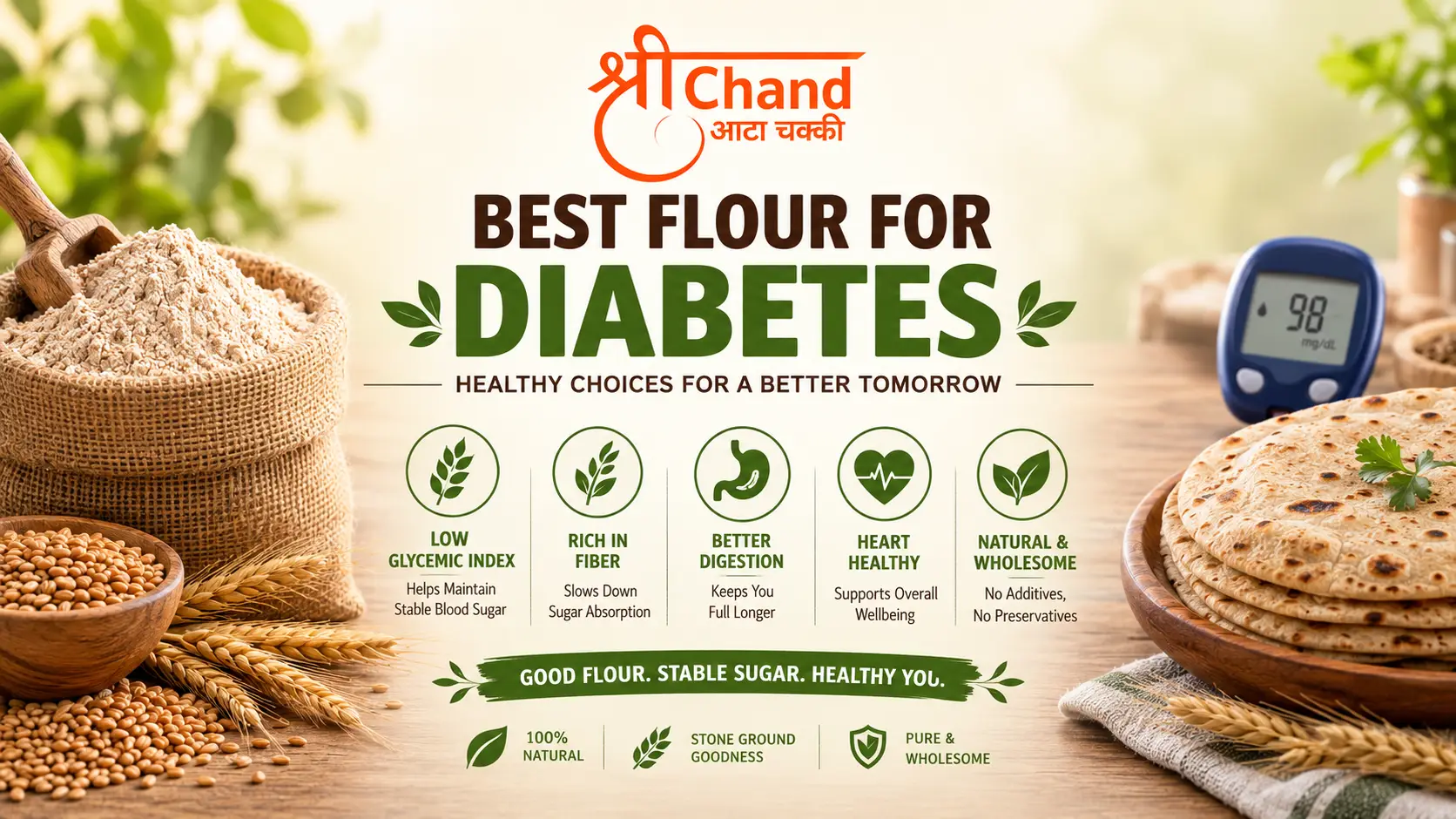
There is no single best flour for diabetes that works for everyone, but flours higher in fibre and protein and lower in refined starch generally produce a gentler rise in blood sugar than refined flour. Whole wheat atta is a reasonable everyday base, multigrain blends that combine wheat with millets, chana and oats often perform better on glycaemic response, and pure millet flours like jowar and bajra can be useful additions in moderation. This article is for general information only and is not a substitute for advice from a doctor or dietitian, since individual blood sugar response varies and depends on medication, portion size and the overall meal, not flour choice alone.
Why flour choice matters for blood sugar
Roti, made mostly from wheat flour, is eaten daily in a large share of Indian households, which makes it one of the most consistent carbohydrate sources in the diet. For anyone managing diabetes or prediabetes, small changes in the type of flour used can add up over weeks and months, simply because the food is eaten so regularly.
The key concept here is glycaemic index, a measure of how quickly a food raises blood glucose after eating, compared to pure glucose. Foods with a lower glycaemic index generally cause a slower, more gradual rise in blood sugar, which is typically considered more favourable for blood sugar management. Fibre and protein both tend to lower a food's glycaemic impact, which is why flour choice is not just about the grain itself but about what stays in the flour after milling.
How refined flour compares to whole grain options
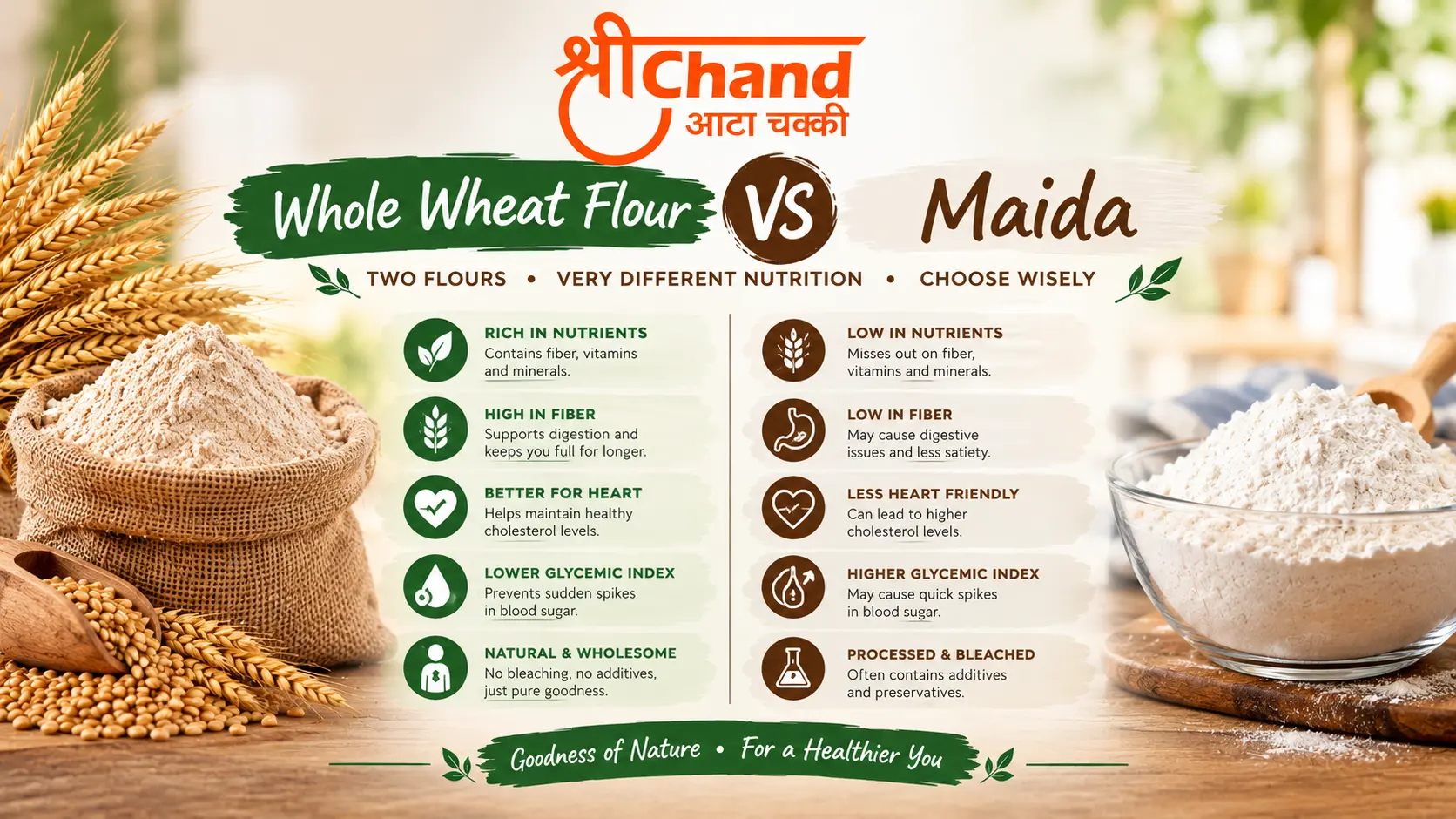
Refined flour, or maida, has the bran and germ removed during milling, leaving mostly starch. This gives maida a notably higher glycaemic index than whole grain alternatives, since there is little fibre or protein left to slow digestion. Whole wheat flour keeps the bran and germ intact, which is why it generally produces a steadier blood sugar response than maida based foods like naan, maida roti or refined bread. Our full comparison in whole wheat flour versus maida covers this difference in detail.
That said, whole wheat flour still has a moderate glycaemic index on its own, meaningfully lower than maida but higher than many millet and legume based flours. This is why many dietitians recommend looking beyond plain wheat atta for anyone specifically managing blood sugar.
Comparing common flours for diabetes management
| Flour type | Relative glycaemic impact | Fibre content | Notes |
|---|---|---|---|
| Maida (refined flour) | High | Low | Least favourable option for blood sugar management |
| Whole wheat atta | Moderate | Moderate to high | Reasonable everyday base, better than refined flour |
| Multigrain atta (wheat, millet, oats blend) | Moderate to low | High | Often a practical middle ground |
| Jowar (sorghum) flour | Low to moderate | High | Gluten free, works well blended with wheat for texture |
| Bajra (pearl millet) flour | Low to moderate | High | Warming in nature, commonly used in winter months |
| Ragi (finger millet) flour | Low | High | Also valued for its calcium content |
| Besan (chana flour) | Low | High in fibre and protein | Strong protein content helps slow digestion further |
| Soya flour | Low | High in protein | Often blended in small proportions with wheat |
These are general patterns based on nutrition research and typical composition. Individual response can still vary, and this table is not a substitute for a blood sugar test or a conversation with a healthcare provider about your specific situation.
Why multigrain atta is often recommended
Multigrain flour blends typically combine whole wheat with one or more of millet, oats, chana and soya, aiming to balance the familiar taste and texture of a wheat roti with the added fibre and protein of other grains and legumes. This combination generally produces a lower glycaemic response than plain wheat atta alone, while still being practical enough for daily cooking, unlike pure millet flours which can be harder to work with on their own due to lower gluten content.
The exact blend matters. A multigrain atta that is mostly wheat with a small proportion of other grains will behave closer to plain wheat nutritionally, while a blend with a higher proportion of millets and legumes will generally have a more meaningful impact on glycaemic response. Reading the ingredient percentages, not just the word multigrain on the label, is worth doing if blood sugar management is your priority.
Millet flours: jowar, bajra and ragi
Millets have gained attention in recent years partly because of their favourable glycaemic profile compared to refined grains. Jowar, bajra and ragi flours are all naturally gluten free, high in fibre, and generally associated with a slower rise in blood sugar than wheat or maida.
The practical challenge is texture. Pure millet flour lacks the gluten structure that makes wheat dough easy to roll thin and cook into a soft roti. Most households blend millet flour with a portion of wheat to make a workable dough, which is effectively a homemade multigrain atta. Our guide to types of flour explains how each of these grains behaves differently in the kitchen.
Besan and soya flour as additions
Besan, made from ground chana dal, and soya flour are both notably higher in protein than wheat or millet flours. Protein slows gastric emptying and helps moderate the blood sugar response of a meal, which is part of why adding a portion of besan to roti dough, a common practice in some households, can make sense for blood sugar management.
Neither is typically used as the sole flour for rotis, since both change texture and flavour significantly in larger proportions. A common approach is blending a smaller portion of besan or soya flour into whole wheat atta, rather than replacing it entirely.
What matters beyond flour choice
Flour type is one factor among several that affect how a meal impacts blood sugar. A few others matter just as much, and sometimes more.
- Portion size. Even a lower glycaemic flour can raise blood sugar significantly if the portion is large.
- What the roti is eaten with. A meal with vegetables, dal and a source of protein generally produces a gentler blood sugar response than the same roti eaten alone.
- Cooking method. Rotis cooked without added oil or ghee behave differently from parathas, which are typically higher in fat and calories.
- Overall meal pattern and timing. Individual factors, including medication, activity level and meal timing, play a significant role that flour choice alone cannot offset.
This is why flour choice should be seen as one part of a broader approach to blood sugar management, not a single fix. Anyone managing diabetes should work with a doctor or registered dietitian to build a plan suited to their specific situation, medication and health goals.
How to switch flours without disrupting your routine
If you are considering a change, a gradual shift tends to work better than an abrupt one, both for taste adjustment and for tracking how your body responds.
- Start by blending a portion of multigrain or millet flour into your regular whole wheat atta rather than replacing it completely.
- Monitor how you feel and, if you track blood sugar, how readings respond over a few weeks.
- Adjust the ratio gradually based on taste, texture and any guidance from your healthcare provider.
- Keep portion sizes and the rest of your meal consistent while you evaluate the flour change, so you can judge its effect more clearly.
For general nutrition background on wheat flour specifically, our guide to wheat flour nutrition facts and whole wheat flour benefits are useful starting points.
Frequently asked questions
What is the best flour for diabetics in India?
There is no single flour that suits everyone, but multigrain atta blending wheat with millets, besan or oats generally produces a gentler blood sugar response than plain wheat or refined flour. Millet flours like jowar, bajra and ragi are also commonly recommended additions.
Is whole wheat atta good for diabetes?
Whole wheat atta is a reasonable everyday choice and clearly better than refined maida, since it retains fibre from the bran. It has a moderate glycaemic index, which is why many people managing blood sugar look at multigrain or millet blends as an additional step.
Can diabetics eat roti made from wheat flour?
In most cases, yes, in appropriate portions and as part of a balanced meal, though individual tolerance varies. This is a general nutrition question, and specific dietary decisions should be made with guidance from a doctor or dietitian familiar with your health history.
Is jowar or bajra better than wheat for diabetes?
Both jowar and bajra generally have a lower glycaemic impact than wheat and are high in fibre, but pure millet flour is harder to roll into a soft roti on its own. Many households blend millet flour with wheat to balance texture and glycaemic benefit.
Does besan help control blood sugar?
Besan is high in protein and fibre relative to wheat flour, both of which can help moderate the blood sugar response of a meal. It is often blended into roti dough in smaller proportions rather than used as the sole flour.
Should I switch to multigrain atta if I have diabetes?
It can be a reasonable option to discuss with your doctor or dietitian, since multigrain blends generally offer more fibre and a gentler glycaemic response than plain wheat. The right choice still depends on your specific health situation, medication and overall diet.
The bottom line
Flour choice is a meaningful but partial piece of blood sugar management. Multigrain blends, millet flours and protein rich additions like besan generally perform better than plain wheat or refined flour on glycaemic response, but portion size, meal composition and individual health factors matter just as much. This article offers general nutrition information rather than personalised medical advice, so if diabetes management is a priority for you, a conversation with a doctor or registered dietitian is the most reliable next step.
For more on how different flours compare for other health goals, see best flour for weight loss next, or start with the basics in our whole wheat flour benefits guide.
If you are experiencing health concerns related to blood sugar, please speak with a qualified healthcare professional. This article is intended for general information and does not replace individual medical advice.