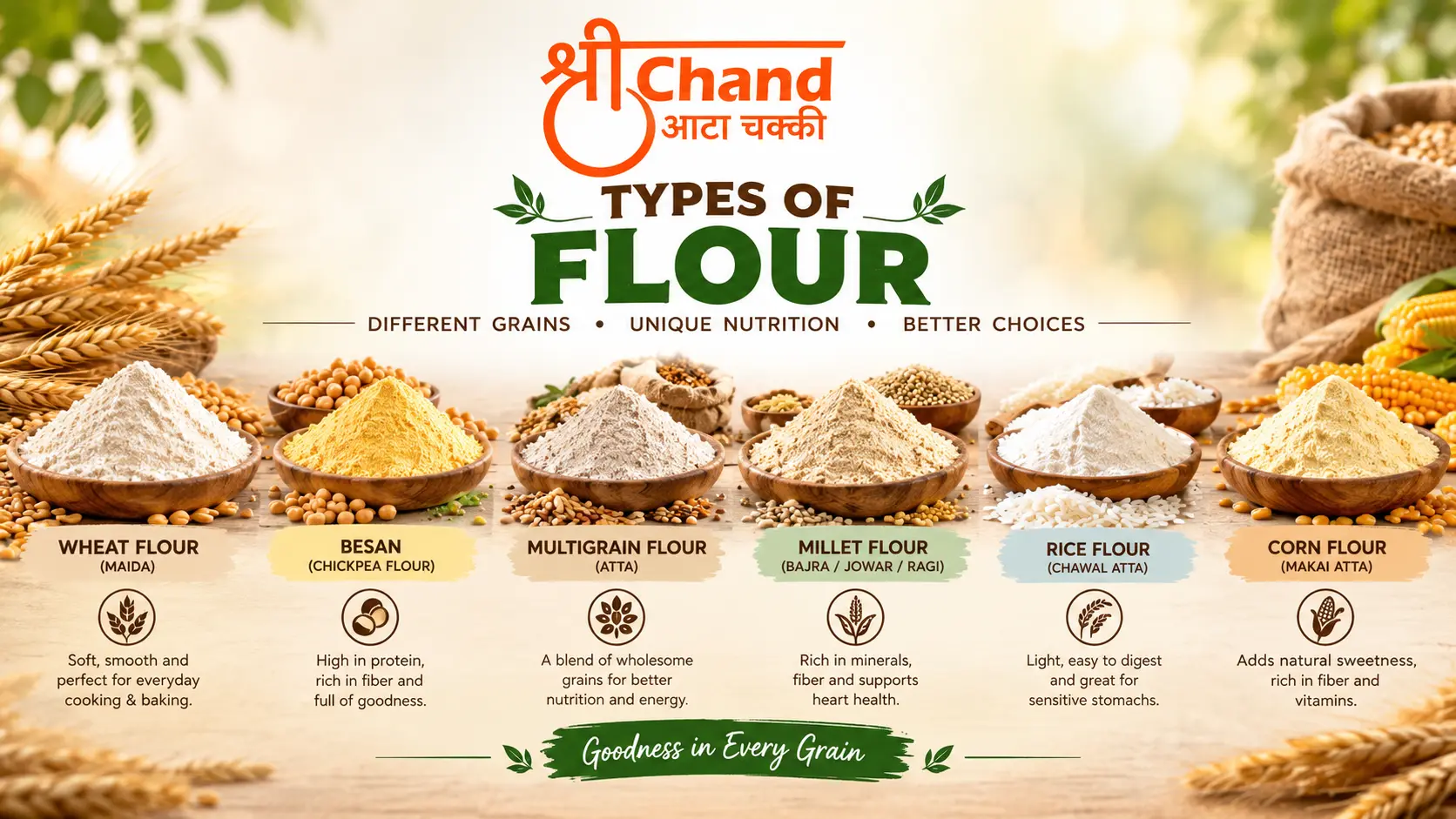
The main types of flour used in Indian kitchens are whole wheat atta for everyday rotis, maida or refined flour for bread and pastries, multigrain atta that blends wheat with millets and pulses, and a range of single grain flours including besan, bajra, jowar, ragi and rice flour, each suited to specific dishes. The right choice depends on what you are cooking, how often you eat it, and whether you have a specific nutritional goal like fibre intake or blood sugar management.
Wheat based flours
Whole wheat atta
Whole wheat flour, the everyday atta used for rotis, parathas and most North Indian flatbreads, is made by grinding the entire wheat kernel, bran, germ and endosperm together. This gives it a notably higher fibre, protein and micronutrient content than refined flour. It is the most commonly used flour in Indian households by a wide margin. Our full guide to whole wheat flour benefits covers exactly what this nutrition profile means for digestion, blood sugar and heart health.
Maida (refined flour)
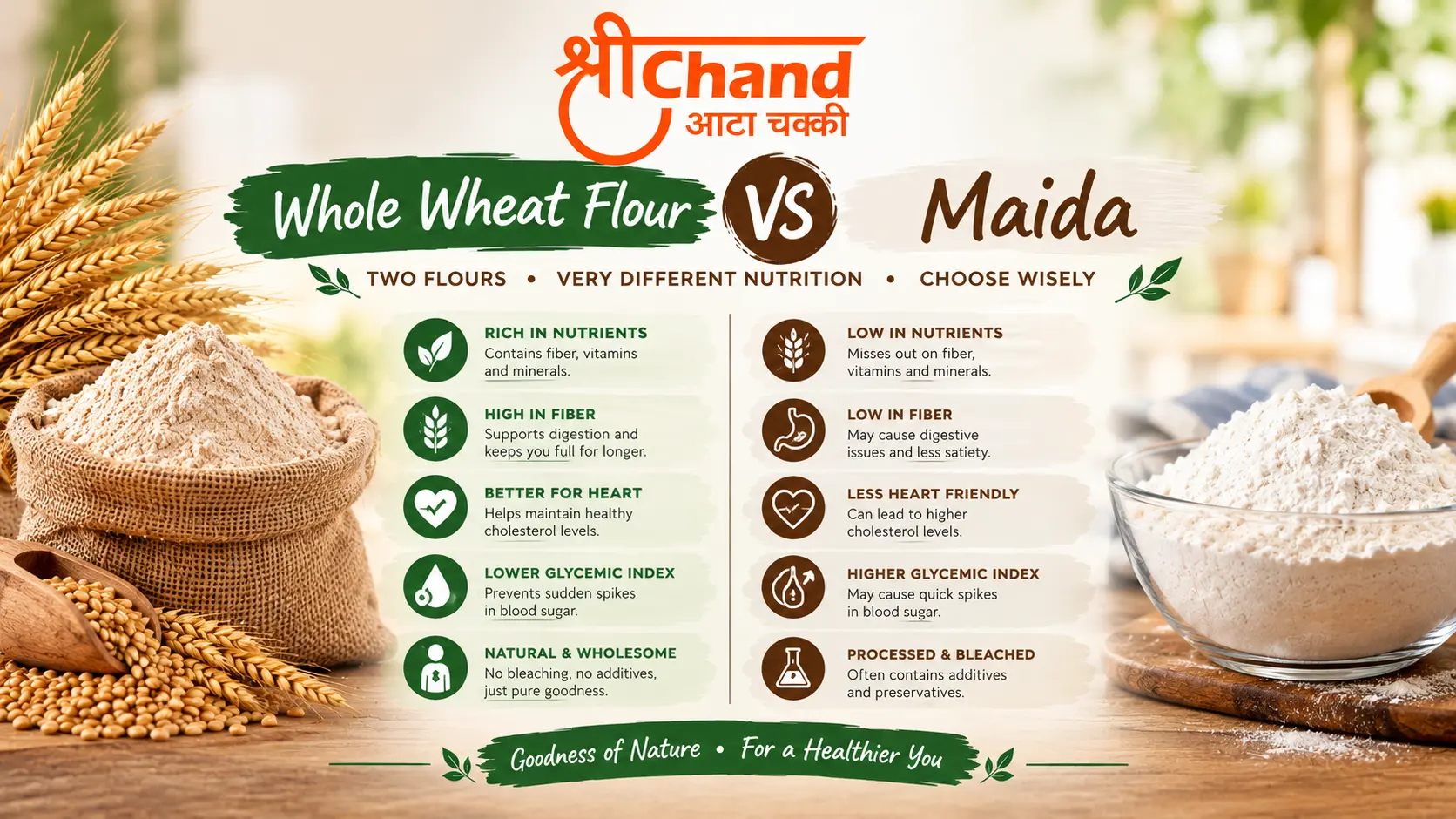
Maida is wheat flour with the bran and germ removed during processing, leaving mostly the starchy endosperm. It has a finer texture and produces a softer, more elastic dough, which is why it is standard for naan, puri, pastries and most baked goods. It has significantly less fibre than whole wheat and a higher glycaemic index, making it less favourable for daily, everyday consumption. The full comparison is covered in whole wheat flour versus maida.
Multigrain atta
Multigrain flour blends whole wheat with other grains, typically a combination of millets like jowar or bajra, along with oats, soya or chana. The goal is usually to increase fibre and protein content beyond what plain wheat offers, while keeping the dough workable enough for regular rotis. The exact nutritional benefit depends heavily on the blend ratio, which is worth checking on the ingredient list rather than assuming from the word multigrain alone. Our guides on best flour for diabetes and best flour for weight loss go into when multigrain makes sense as a choice.
Millet flours
Bajra (pearl millet) flour
Bajra flour is ground from pearl millet and is traditionally popular during winter months, partly for its warming properties in Ayurvedic food tradition. It is naturally gluten free, high in fibre, and lower in glycaemic impact than wheat. Because it lacks gluten, pure bajra dough is harder to roll thin and tends to be made into thicker rotis or mixed with wheat for a more workable texture.
Jowar (sorghum) flour
Jowar flour, ground from sorghum, is another gluten free option valued for its fibre content and relatively neutral taste. Like bajra, it is commonly blended with wheat flour to improve dough elasticity, or used on its own for thicker, denser rotis that are typically patted out by hand rather than rolled with a pin.
Ragi (finger millet) flour
Ragi is notable for its calcium content, among the highest of any commonly used flour, along with good fibre content and a naturally earthy, slightly nutty flavour. It is often used for porridge, dosas and rotis, particularly in South Indian cooking traditions, and increasingly appears in multigrain blends for its nutritional profile.
Pulse and legume flours
Besan (chana flour)
Besan, ground from chana dal, stands out for its notably high protein content compared to grain based flours. It is the base for dishes like pakoras, dhokla, and besan chilla, and is also sometimes blended into roti dough in smaller proportions to boost protein content. Its strong, slightly nutty flavour makes it unsuitable as a complete substitute for wheat in most everyday recipes, but valuable as an addition.
Soya flour
Soya flour is made from ground soybeans and carries an even higher protein content than besan, often used in smaller proportions blended with wheat flour specifically to increase protein in daily rotis without significantly altering taste or texture.
Rice and other flours
Rice flour
Rice flour, ground from either regular or glutinous rice varieties, is a staple in South Indian and some North Indian recipes, used for dishes like dosa, idiyappam and certain sweets. It has a very different texture and binding behaviour compared to wheat flour, since it contains no gluten, and is not typically used for everyday rotis.
Cornflour (maize starch)
Cornflour, often confused with corn flour made from whole ground maize, usually refers to a refined starch used primarily as a thickening agent in gravies, soups and sauces, rather than as a primary flour for bread or roti.
Oat flour
Oat flour, made from ground oats, is increasingly used in multigrain blends and home baking for its fibre content, particularly beta-glucan, a type of soluble fibre associated with satiety and heart health benefits. It is typically blended with wheat for rotis, since it lacks sufficient gluten structure on its own.
Stone ground versus roller milled: a separate dimension
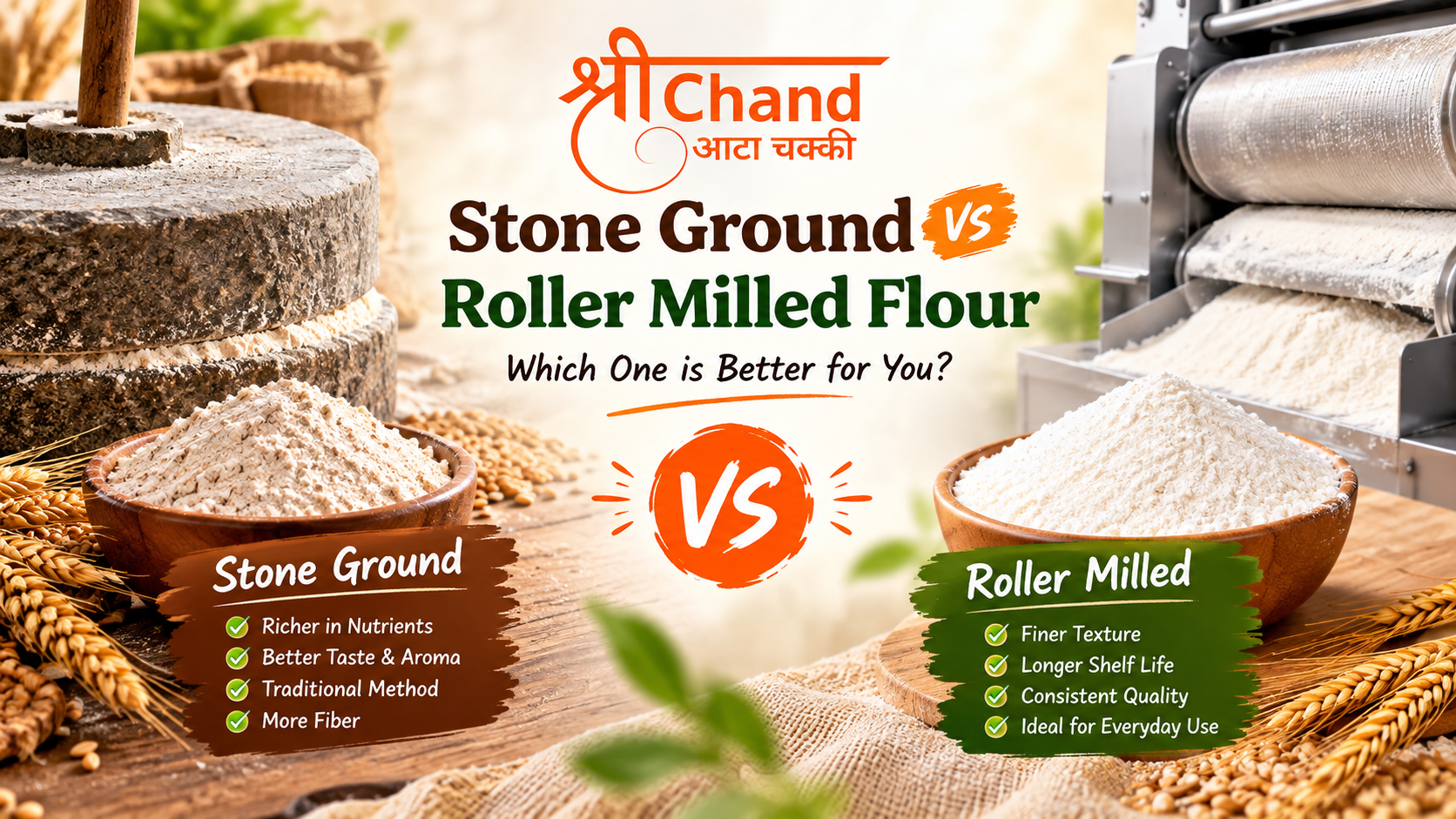
It is worth noting that milling method, stone ground or roller milled, is a separate consideration from which grain the flour is made from. Any of the flours above, whether wheat, bajra or besan, can in principle be stone milled or roller milled, though stone milling is most commonly associated with wheat atta sold as chakki atta. Stone milling grinds the grain slowly at low heat, generally preserving more aroma and nutrients, while roller milling processes faster at higher heat with more separation of grain components. Our detailed comparison in stone ground versus roller milled flour and chakki atta benefits covers this distinction fully, including why it matters even within a single type of flour like whole wheat.
A quick comparison table
| Flour type | Gluten content | Best used for | Notable trait |
|---|---|---|---|
| Whole wheat atta | Moderate to high | Rotis, parathas | High fibre, everyday staple |
| Maida | High | Naan, pastries, baked goods | Fine texture, low fibre |
| Multigrain atta | Varies by blend | Rotis, health focused cooking | Blended fibre and protein boost |
| Bajra flour | None | Winter rotis, thicker flatbreads | Gluten free, warming |
| Jowar flour | None | Rotis, gluten free cooking | Gluten free, neutral taste |
| Ragi flour | None | Porridge, dosas, rotis | High in calcium |
| Besan | None | Pakoras, dhokla, protein additions | High protein content |
| Soya flour | None | Protein enrichment blends | Very high protein |
| Rice flour | None | Dosa, idiyappam, sweets | No gluten, different texture |
| Oat flour | None | Multigrain blends, baking | High in soluble fibre |
How to choose the right flour for your kitchen
Start with what you are cooking most often. If daily rotis are the priority, whole wheat atta, ideally fresh and stone ground, is the standard, reliable choice for most households. See chakki atta benefits and stone ground flour for what to look for.
If you have a specific health goal, such as managing blood sugar or supporting weight management, multigrain blends or an addition of millet or besan flour to your regular atta is a reasonable next step, covered in more depth in best flour for diabetes and best flour for weight loss.
If softness of your rotis is the top priority, our guide on which flour makes the softest chapatis covers exactly what to look for beyond just the grain type, including freshness and milling method.
For baking, pastries or dishes that specifically call for a lighter, more elastic dough, maida remains the standard choice, though it is worth limiting for everyday meals given its lower fibre content.
Frequently asked questions
What are the main types of flour used in Indian cooking?
The most common types are whole wheat atta for daily rotis, maida for baked goods and pastries, multigrain atta blending wheat with millets or pulses, and single grain flours like bajra, jowar, ragi and besan used for specific dishes or nutritional goals.
Which flour is healthiest for everyday use?
Whole wheat atta, ideally fresh and stone ground, is generally considered the healthiest everyday option due to its fibre, protein and micronutrient content compared to refined flour. Multigrain blends can offer additional benefits depending on the specific grains included.
What is the difference between maida and whole wheat flour?
Maida has the bran and germ removed during processing, leaving mostly starch, while whole wheat flour retains the entire grain. This makes whole wheat significantly higher in fibre, protein and micronutrients than maida.
Can millet flours replace wheat flour completely?
Pure millet flours like bajra, jowar and ragi are naturally gluten free and lack the elasticity needed to roll a thin, soft roti on their own. Most households blend them with wheat flour rather than replacing it entirely, unless specifically avoiding gluten.
What flour is best for gluten free cooking?
Bajra, jowar, ragi and rice flour are all naturally gluten free and commonly used in Indian gluten free cooking, though each behaves differently in dough and usually requires some recipe adjustment compared to wheat based cooking.
Is multigrain atta better than plain wheat atta?
It depends on the specific blend. A multigrain atta with a meaningful proportion of millets, oats or pulses generally offers more fibre and protein than plain wheat. A blend that is mostly wheat with a small addition of other grains will behave similarly to plain whole wheat atta.
The bottom line
There is no single best flour for every situation, since each type is suited to a different purpose, from the daily whole wheat roti to specialty flours used for specific dishes or health goals. Understanding what each flour actually offers, rather than relying on front of pack marketing, makes it much easier to build a kitchen stocked with the right options for how you actually cook and eat.
For a deeper look at how your everyday wheat atta is milled and what that means for quality, read how flour is made next, or see where different brands stand in our best atta brands in India comparison.