Short answer: Whole wheat flour keeps the bran, germ and endosperm of the wheat grain intact, which is why it delivers roughly three to four times more fibre than refined maida, along with B vitamins, iron, magnesium and plant protein. Regular use is linked to better digestion, steadier blood sugar, improved heart health and longer lasting fullness after meals. The benefits are strongest when the atta is freshly milled, since the wheat germ oils that carry much of the nutrition and flavour start to fade within weeks of grinding.
What makes whole wheat flour different
Whole wheat flour, often called atta in Indian homes, is made by grinding the entire wheat kernel. That kernel has three parts, and each one matters.
The bran is the outer layer. It is where most of the dietary fibre sits, along with antioxidants and B vitamins. The germ is the nutrient dense core of the seed, rich in healthy fats, vitamin E and folate. The endosperm is the starchy bulk of the grain, which is mostly carbohydrate.
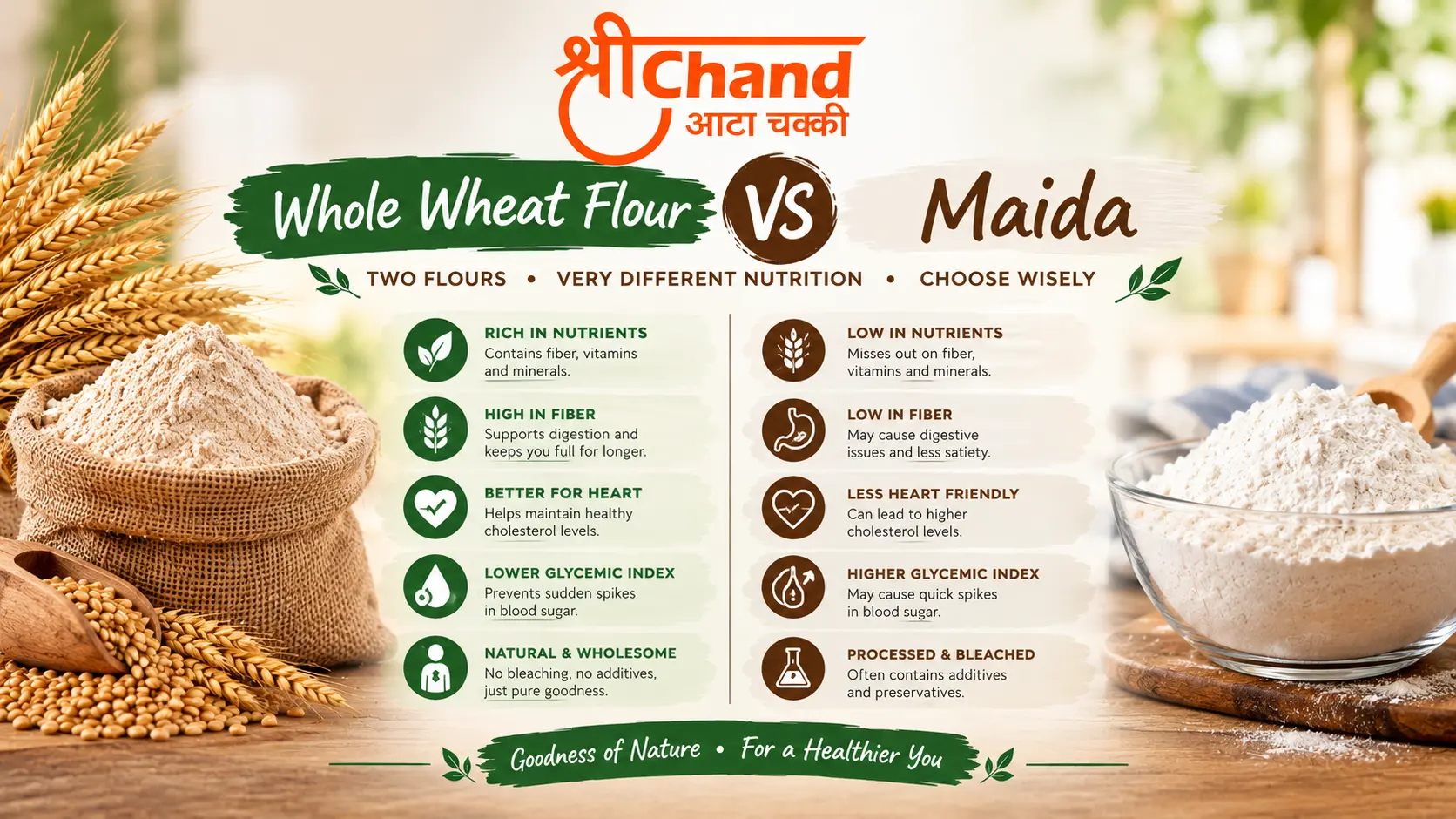
Refined flour, or maida, strips away the bran and germ and keeps only the endosperm. That is the core reason whole wheat flour benefits look so different from maida on paper. You are simply keeping more of the grain, and more of the grain means more nutrition per roti. We cover this comparison in full detail in whole wheat flour versus maida if you want the side by side breakdown.
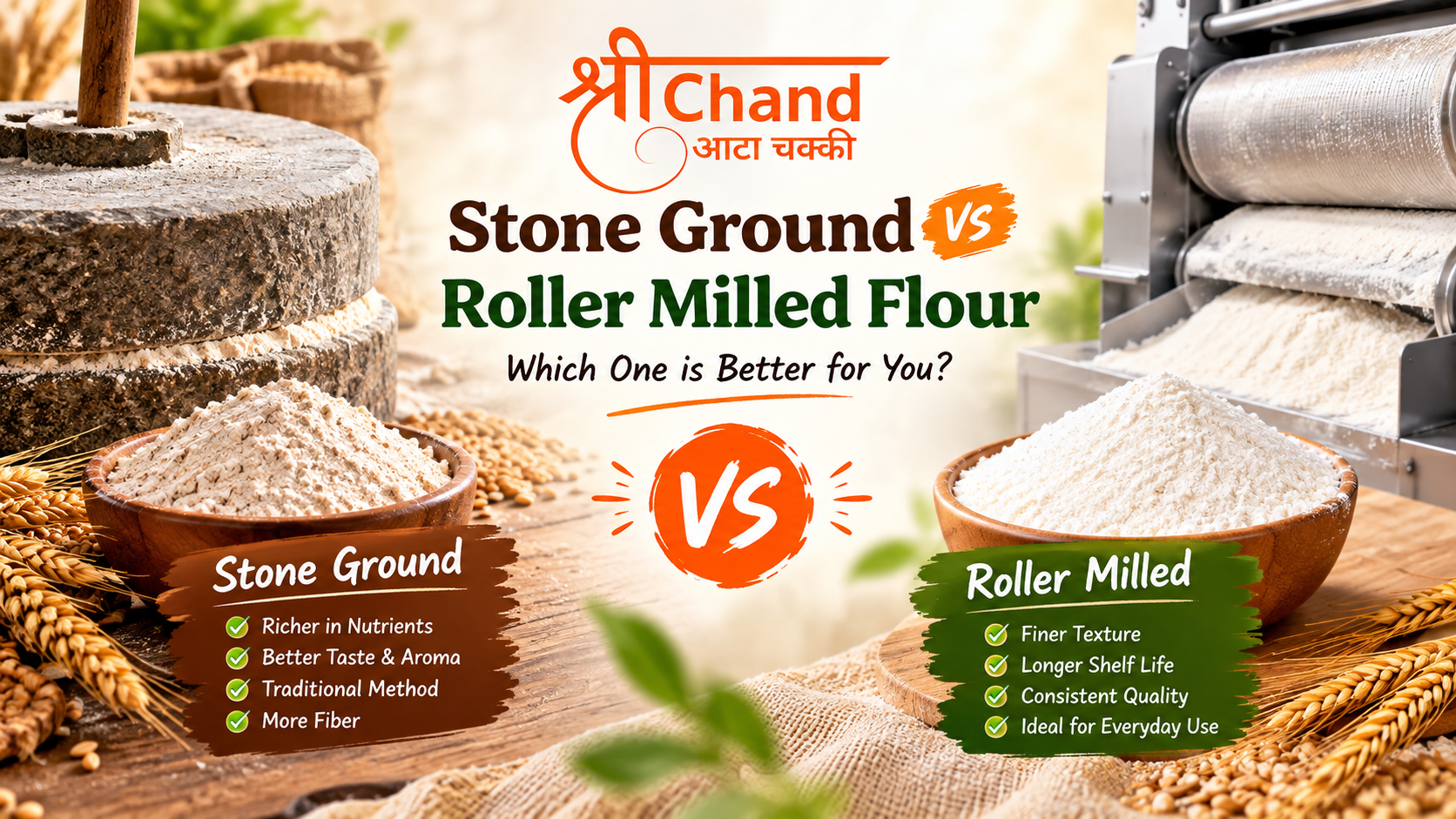
How the grain is milled also plays a role. Stone ground whole wheat flour, sometimes called chakki atta, is crushed slowly at low temperatures, which preserves more of the natural oils and aroma in the germ. Roller milled flour is processed faster and hotter, and often separates the components before recombining them. If you want to understand why that matters for taste and shelf life, our guide to chakki atta benefits goes deeper into the milling side of the story.
The core nutrition profile
Per 100 grams, whole wheat flour typically provides the following. Values shift slightly by wheat variety and season, but this is a reliable range for Indian atta.
| Nutrient | Approximate amount per 100g |
|---|---|
| Energy | 340 to 360 kcal |
| Protein | 11 to 13 g |
| Dietary fibre | 10 to 13 g |
| Carbohydrates | 68 to 72 g |
| Fat | 1.5 to 2 g |
| Iron | 3.5 to 4.5 mg |
| Magnesium | 130 to 140 mg |
| B vitamins (thiamine, niacin, folate) | Meaningful daily contribution |
For a full nutrient breakdown including calories, protein and fibre by brand and variant, see our detailed guide on wheat flour nutrition facts. If you want to know exactly how the grain becomes flour before it reaches this nutrition table, how flour is made walks through the milling process from field to kitchen.
The main whole wheat flour benefits
1. Higher fibre for digestion
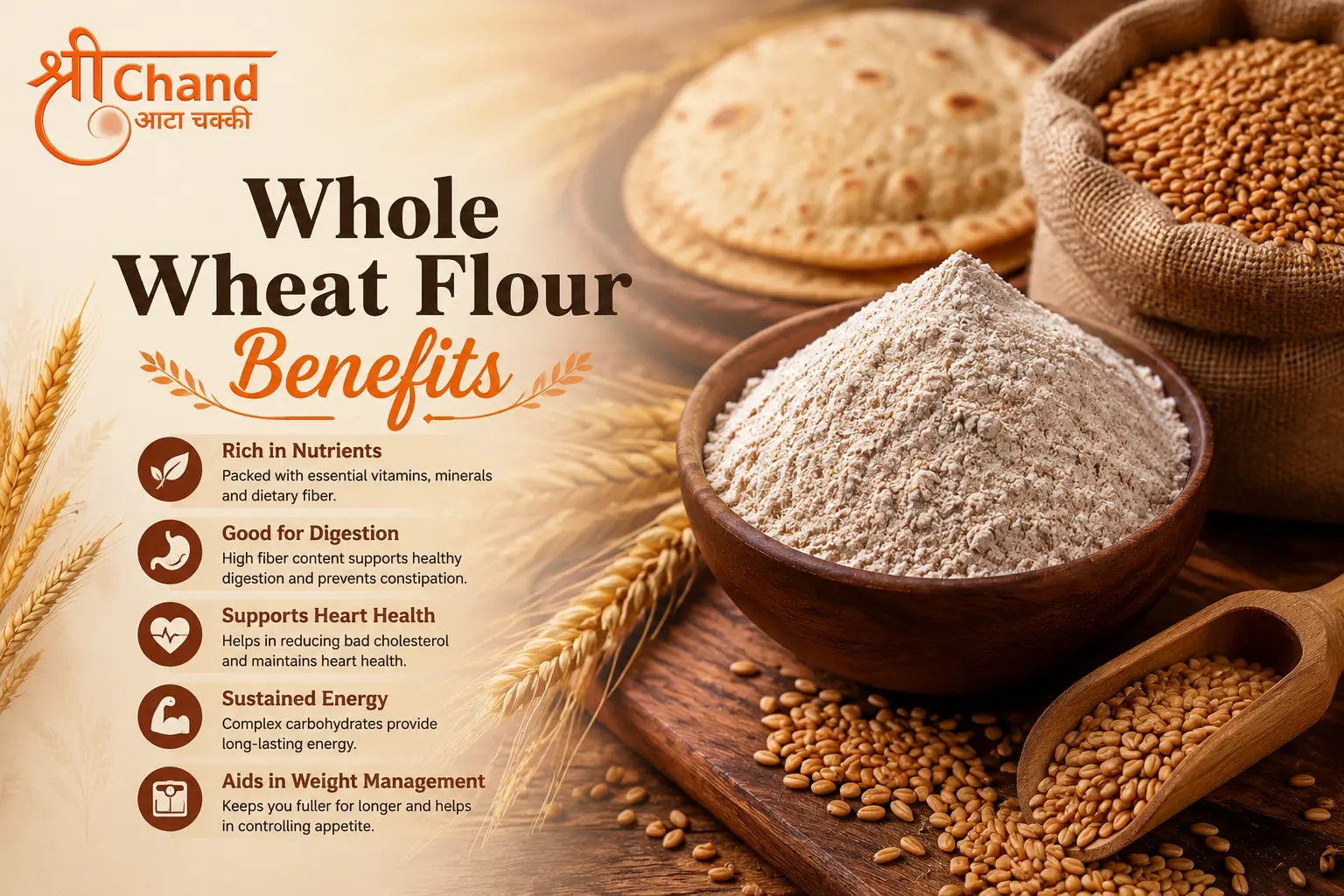
This is the single biggest whole wheat flour benefit. The bran layer supplies both soluble and insoluble fibre. Insoluble fibre adds bulk to stool and keeps digestion moving, which helps prevent constipation. Soluble fibre slows down how quickly sugar enters the bloodstream and feeds the good bacteria in the gut.
A diet built around whole wheat atta rather than maida based foods generally means a noticeably higher daily fibre intake, since most Indians fall short of the recommended 25 to 30 grams a day. Two or three rotis made from whole wheat flour can cover a meaningful share of that target on their own.
2. Steadier blood sugar
Because whole wheat flour digests more slowly than refined flour, it produces a gentler rise in blood glucose after meals. This is measured as glycaemic index, and whole wheat generally sits lower than maida based products like white bread or maida based parathas.
This does not mean whole wheat atta is a diabetic superfood on its own. Portion size, cooking method and what you eat alongside the roti all matter. If blood sugar management is your main concern, our dedicated guide to the best flour for diabetes compares whole wheat against millet, chana and multigrain blends specifically for that goal.
3. Longer lasting fullness
The combination of fibre and protein in whole wheat flour slows digestion and keeps you feeling full for longer after a meal, compared to the same quantity of refined flour. This is one reason whole wheat rotis are often recommended over maida based options for anyone watching their weight.
That said, whole wheat flour is not automatically a weight loss food by itself. Quantity, oil used in cooking and overall diet still decide the outcome. Our guide to the best flour for weight loss looks at how whole wheat compares with multigrain, besan and millet flours for people specifically trying to manage their weight.
4. Heart health support
Whole wheat flour contains soluble fibre, which has been associated with modestly lower LDL cholesterol when eaten regularly as part of a balanced diet. It also carries small amounts of plant compounds called lignans, along with magnesium, both of which are linked to cardiovascular health in nutrition research.
None of this replaces medical advice or medication, but swapping refined flour for whole wheat atta in daily cooking is a low effort, high value habit for long term heart health.
5. Plant protein and steady energy
Whole wheat flour supplies 11 to 13 grams of protein per 100 grams, which adds up across a day of rotis, parathas and other wheat based meals. It is not a complete protein on its own, but paired with dals, curd or vegetables, wheat based meals form a well rounded plate that is standard in most Indian households already.
The complex carbohydrates in whole wheat also release energy more gradually than refined flour, which is part of why a wheat based breakfast tends to hold you through the morning better than a maida based one.
6. B vitamins and minerals
The bran and germ layers carry B vitamins including thiamine, niacin and folate, along with minerals like iron, magnesium and zinc. These support everything from red blood cell formation to nerve function and energy metabolism. Refined maida loses a large share of these nutrients during processing, which is exactly why whole wheat flour benefits extend well beyond fibre alone.
Daily uses beyond the roti
Whole wheat flour is not limited to chapati and paratha, even though that is where most Indian households use it first.
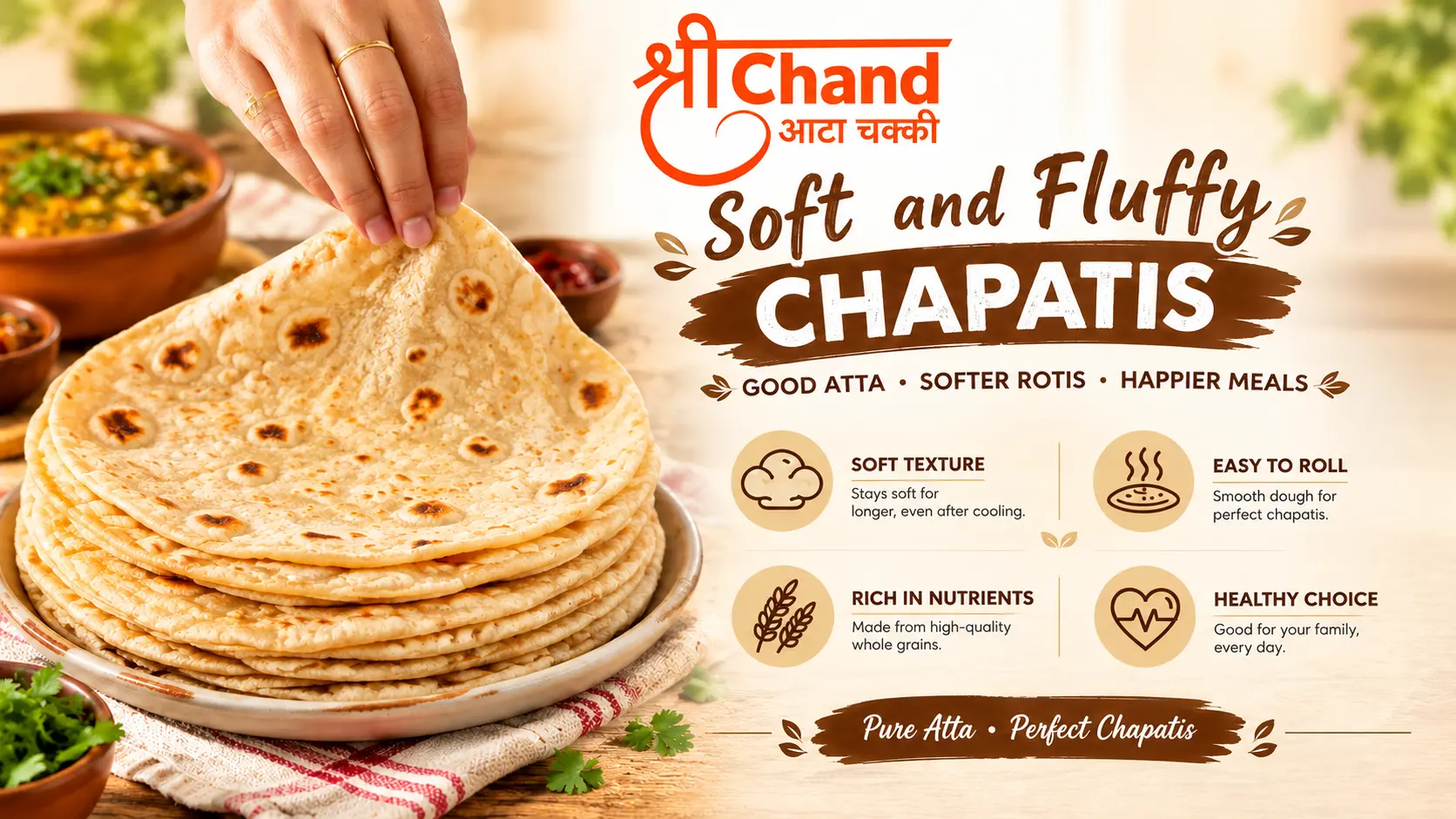
- Rotis and phulkas. The everyday use, and where soft texture matters most. Our guide on which flour makes the softest chapatis has practical tips for getting this right.
- Parathas and stuffed breads. Whole wheat holds stuffing well and crisps nicely with a little ghee.
- Baking. Whole wheat flour works in cookies, muffins and quick breads, though it needs slightly more liquid than maida based recipes since the bran absorbs moisture.
- Thickening. A spoon of whole wheat flour can thicken gravies, though besan and cornflour are usually better suited for a smoother finish.
- Porridge. Roasted whole wheat flour cooked with milk and jaggery is a traditional, filling breakfast in many North Indian homes.
Does freshness change whole wheat flour benefits
Yes, and this is the part most nutrition articles skip. The nutrients described above exist in the wheat germ and bran the moment the grain is milled. From that point on, the natural oils in the germ begin to oxidise, slowly at first and then more noticeably after a few months. The flour does not become unsafe, but the aroma fades and some of the nutritional edge softens along with it.
This is why freshly stone milled whole wheat flour, ground in small batches close to when you buy it, tends to deliver a more noticeable version of these benefits than flour that has spent months in a warehouse and on a shelf before reaching your kitchen. We go into this comparison properly in fresh atta versus packaged atta, including how to judge freshness at the point of purchase.
If you are in Delhi NCR and want whole wheat flour milled on stone close to the date you buy it, Shri Chand Atta is milled in small batches specifically to keep that nutritional and aromatic edge intact. You can compare how we stack up against national brands in our full best atta brands in India comparison.
How to store whole wheat flour to keep the benefits
Buying good whole wheat flour is only half the job. Poor storage undoes a lot of the benefit quickly.
- Move flour to an airtight steel or glass container as soon as you open the pack.
- Store it in a cool, dry cupboard away from the stove and direct sunlight.
- Buy only what you will use in four to six weeks if you care about freshness.
- Check for a stale, papery smell before use, which signals the oils have oxidised.
For the complete storage checklist, including shelf life by season, see how to store flour properly and does flour expire.
Frequently asked questions
What are the main benefits of whole wheat flour over maida?
Whole wheat flour keeps the bran and germ of the grain, giving it three to four times more fibre than maida, along with more protein, B vitamins, iron and magnesium. Maida is stripped of these layers during refining, leaving mostly starch.
Is whole wheat flour good for weight loss?
It can help, since the fibre and protein content keep you fuller for longer than refined flour. It is not a weight loss food by itself and works best as part of a balanced, portion controlled diet.
Is whole wheat flour safe for diabetics?
Whole wheat flour has a lower glycaemic index than maida and digests more slowly, which supports steadier blood sugar. It is not a substitute for medical advice, and portion size still matters for anyone managing diabetes.
Does whole wheat flour go bad?
It does not become unsafe quickly, but the natural oils in the wheat germ oxidise over time, so the aroma and some nutritional value fade after a few months. Freshly milled whole wheat flour offers the strongest version of its benefits.
How much whole wheat flour should I eat daily?
There is no single fixed number, since it depends on overall diet and activity level. Two to three rotis made from whole wheat flour, alongside vegetables, dal and other whole foods, is a common and reasonable pattern in most Indian diets.
Is stone ground whole wheat flour more nutritious than roller milled flour?
Both are whole wheat and carry the bran and germ, so the core nutrient profile is similar. Stone milling at lower temperatures tends to preserve more aroma and slightly more of the delicate oils in the germ, which is why freshly stone ground atta often tastes noticeably better.
The bottom line
Whole wheat flour earns its place as a daily staple honestly. The fibre supports digestion, the protein and B vitamins support steady energy, and the lower glycaemic load compared to maida makes it a sensible everyday choice for most households. The benefits are real, but they are strongest when the flour is fresh, which is worth remembering the next time you are choosing between a bag that has been sitting in a warehouse and one that was milled this week.
Want to see how whole wheat stacks up against refined flour in more detail, or figure out which brand to actually buy? Read whole wheat flour versus maida next, or go back to our full best atta brands in India comparison to see where Shri Chand Atta fits in.