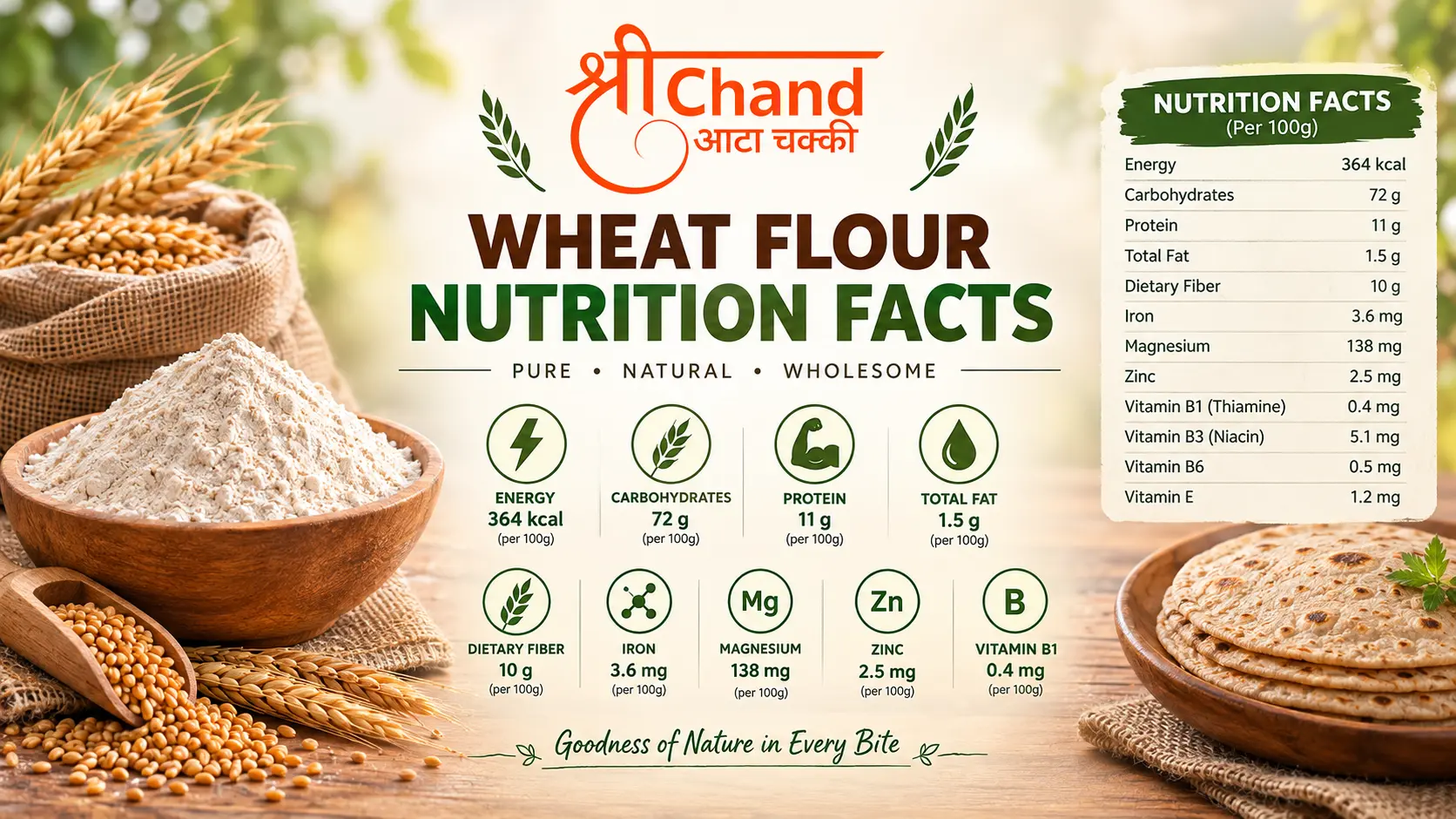
Whole wheat flour provides roughly 340 to 360 kilocalories, 11 to 13 grams of protein, 10 to 13 grams of fibre and 1.5 to 2 grams of fat per 100 grams, along with meaningful amounts of iron, magnesium and B vitamins. A single roti made from about 25 to 30 grams of dry flour generally works out to around 90 to 110 kilocalories. These numbers apply specifically to whole wheat atta, which keeps the bran and germ intact. Refined maida has a similar calorie count but noticeably less fibre, protein and micronutrient content, since processing strips away the outer layers of the grain.
Wheat flour nutrition per 100 grams
Values shift slightly depending on wheat variety, growing conditions and milling method, but this range reflects typical whole wheat atta sold in India.
| Nutrient | Amount per 100g | Approximate % of daily need |
|---|---|---|
| Energy | 340 to 360 kcal | Roughly 15 to 18% of a 2000 kcal diet |
| Protein | 11 to 13 g | 20 to 24% |
| Carbohydrates | 68 to 72 g | 25 to 28% |
| Dietary fibre | 10 to 13 g | 35 to 45% |
| Total fat | 1.5 to 2 g | 2 to 3% |
| Iron | 3.5 to 4.5 mg | 20 to 25% |
| Magnesium | 130 to 140 mg | 30 to 35% |
| Zinc | 2.5 to 3 mg | 20 to 25% |
| Thiamine (B1) | 0.3 to 0.4 mg | 25 to 30% |
| Niacin (B3) | 4 to 5 mg | 25 to 30% |
| Folate (B9) | 30 to 40 mcg | 8 to 10% |
Percentages are approximate and based on general adult daily reference values, which vary by age, sex and activity level. These figures are meant to give a practical sense of scale rather than precise individual targets.
What this looks like per roti
A typical roti uses about 25 to 30 grams of dry whole wheat flour before water is added. Scaled down from the table above, one roti made from plain whole wheat atta generally provides:
- Around 90 to 110 kilocalories
- 3 to 4 grams of protein
- 3 to 4 grams of fibre
- Small but meaningful contributions of iron, magnesium and B vitamins
This means a typical meal of two to three rotis contributes a noticeable share of daily fibre and a reasonable amount of plant protein, on top of whatever else is on the plate. For context on how this fibre and protein content actually benefits the body, see whole wheat flour benefits.
Whole wheat flour versus maida: the nutrition gap
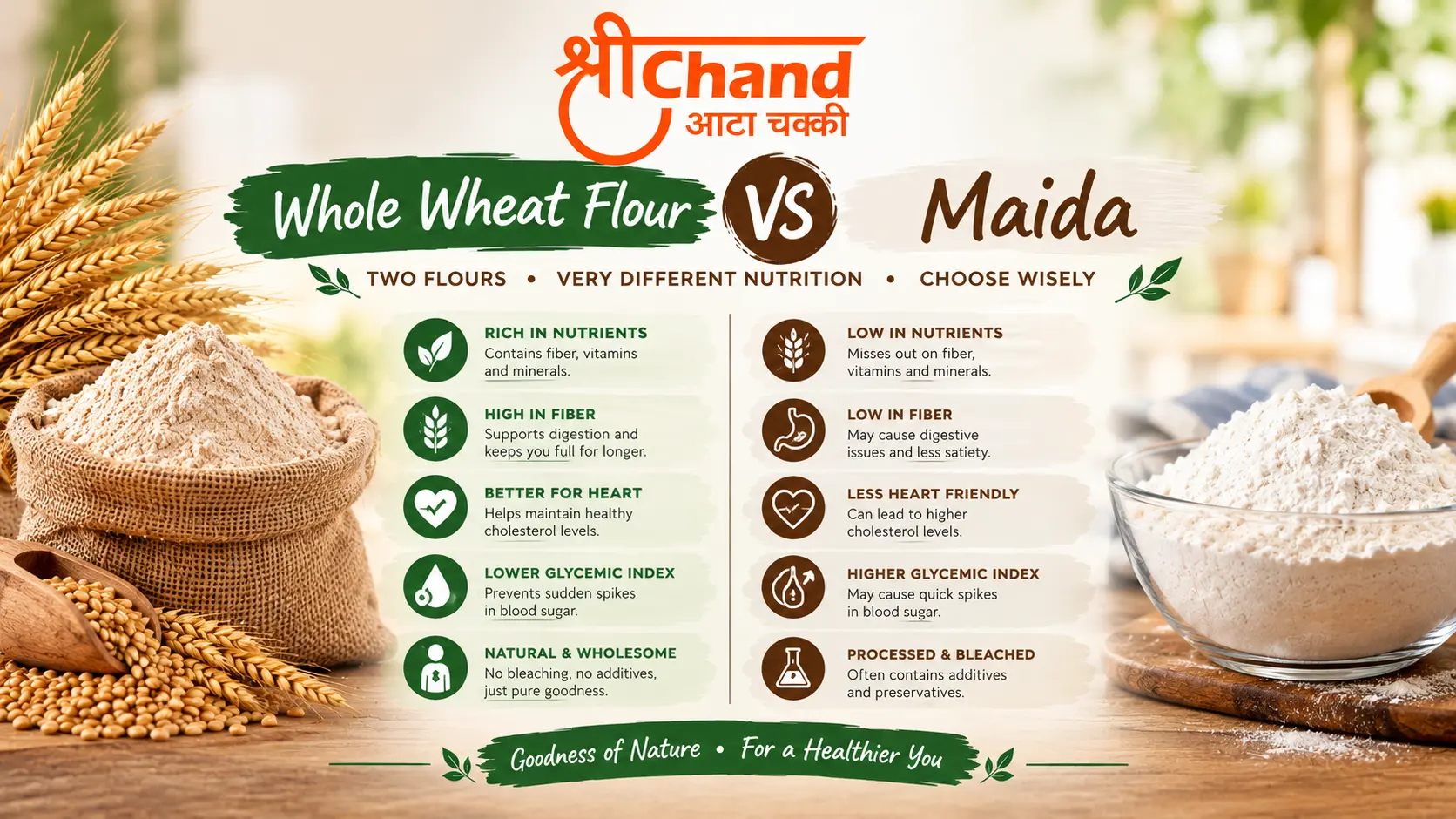
Calorie content between whole wheat flour and maida is fairly similar, since both are primarily carbohydrate. The real difference shows up in fibre, protein and micronutrients, all of which are concentrated in the bran and germ layers that maida processing removes.
| Nutrient per 100g | Whole wheat flour | Maida (refined flour) |
|---|---|---|
| Energy | 340 to 360 kcal | 340 to 350 kcal |
| Protein | 11 to 13 g | 9 to 11 g |
| Dietary fibre | 10 to 13 g | 2 to 3 g |
| Iron | 3.5 to 4.5 mg | 1 to 1.5 mg |
| Magnesium | 130 to 140 mg | 20 to 25 mg |
| B vitamins | Meaningful contribution | Significantly lower |
The calorie count alone does not tell the full story here. Two flours with nearly identical energy content can behave very differently in the body once fibre and micronutrient content are accounted for. Our full comparison in whole wheat flour versus maida goes deeper into what this means for digestion and blood sugar specifically.
Where the nutrition actually comes from
Understanding the anatomy of a wheat grain explains why these numbers look the way they do.
The bran, the outer protective layer, carries most of the dietary fibre along with a portion of the B vitamins and minerals. The germ, the nutrient dense core of the seed, contributes healthy fats, vitamin E, folate and additional protein. The endosperm, the largest part of the grain by volume, is mostly starch and contributes the bulk of the carbohydrate and calorie content, along with a portion of the protein.
Whole wheat flour includes all three parts, which is exactly why it carries a noticeably richer nutrition profile than maida, which keeps only the endosperm. For a full walkthrough of how the grain becomes flour, see how flour is made.
Does milling method affect the nutrition numbers
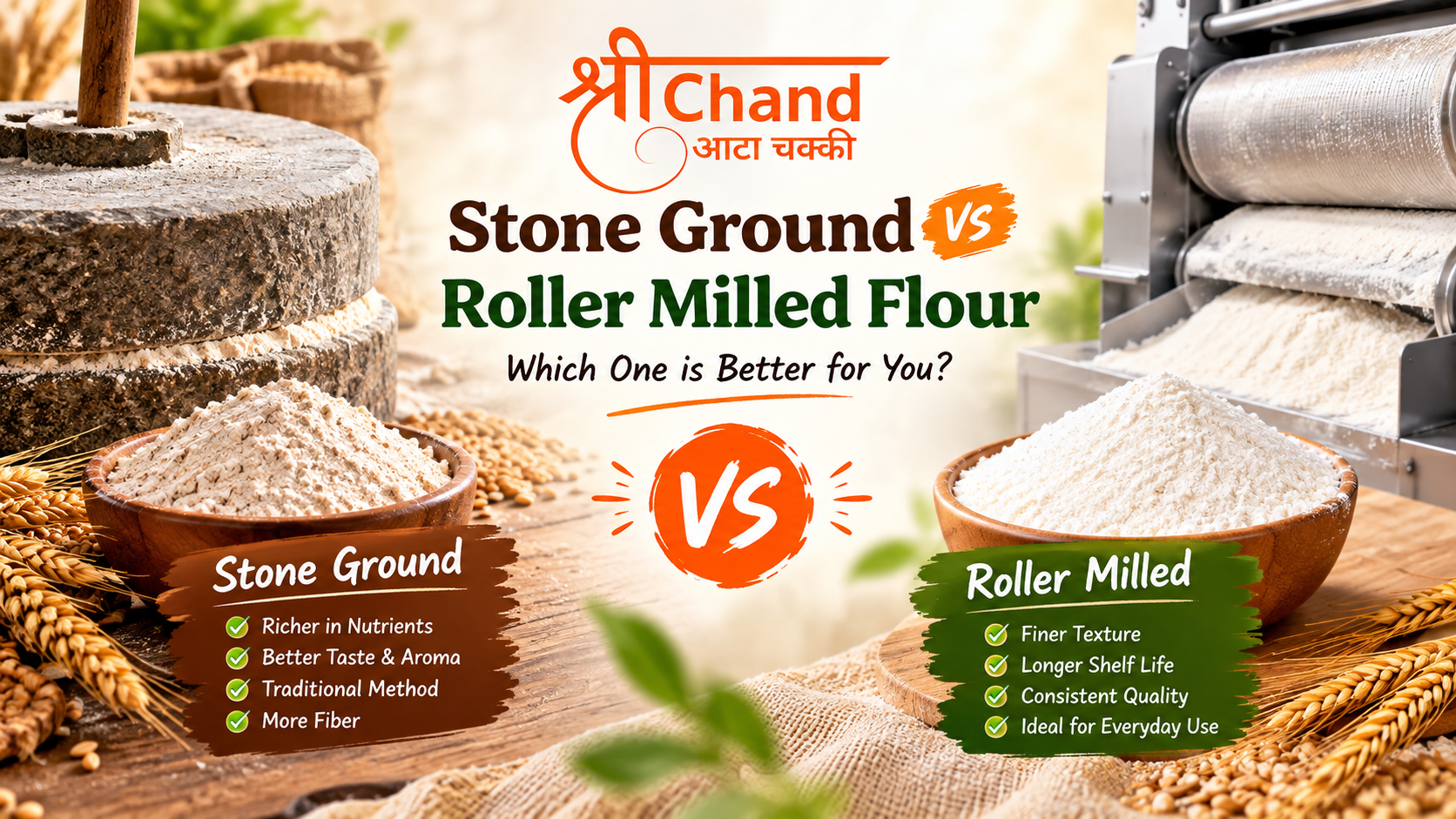
To a modest degree, yes. Stone ground, or chakki, flour is milled slowly at low heat, which tends to preserve slightly more of the delicate oils and heat sensitive vitamins in the wheat germ compared to fast, high heat roller milling. The difference in the core macronutrient numbers, calories, protein, fibre and carbohydrates, is generally small between the two methods, since both use the whole grain. The more noticeable gap shows up in retained vitamin content, aroma and how much of the natural oil survives the process. Our guide to chakki atta benefits and stone ground flour covers this distinction in detail.
Does freshness change the nutrition profile
Freshness affects the wheat germ oils more than it affects the core macronutrients like protein and fibre, which remain fairly stable over time as long as the flour is stored properly. What does change is the vitamin E and some B vitamin content, along with the natural aroma, both of which gradually decline as the flour ages after milling. This is one reason freshly milled flour is often recommended over flour that has been sitting in storage for extended periods, beyond the taste difference alone.
How wheat flour nutrition fits into a daily diet
Wheat flour on its own is not a complete source of nutrition, and no single food needs to be. What it does provide reliably, when eaten as whole wheat rather than refined flour, is a meaningful daily contribution of fibre, plant protein, iron and B vitamins, delivered through a food already central to most Indian meals.
Pairing wheat based rotis with dal, vegetables, curd or other protein sources rounds out the amino acid profile and adds nutrients that flour alone does not provide, which is exactly the pattern most traditional Indian thalis already follow. If you are looking at flour specifically for a health goal like blood sugar management or weight control, our guides on best flour for diabetes and best flour for weight loss cover how wheat compares to multigrain and millet options for those specific goals.
Frequently asked questions
How many calories are in 100 grams of wheat flour?
Whole wheat flour typically contains around 340 to 360 kilocalories per 100 grams. This is similar to maida, since both are primarily carbohydrate, though the two differ significantly in fibre and micronutrient content.
How much protein is in wheat flour?
Whole wheat flour generally provides 11 to 13 grams of protein per 100 grams, which is somewhat higher than maida, since the germ and outer layers of the grain contribute additional protein that refining removes.
How much fibre does wheat flour have?
Whole wheat flour typically contains 10 to 13 grams of dietary fibre per 100 grams, compared to only about 2 to 3 grams in refined maida. This gap is the single biggest nutritional difference between the two.
How many calories are in one roti?
A typical roti made from about 25 to 30 grams of whole wheat flour provides roughly 90 to 110 kilocalories, depending on exact size and thickness, before accounting for any oil or ghee added during cooking.
Does wheat flour have vitamins and minerals?
Yes, whole wheat flour contains meaningful amounts of iron, magnesium, zinc and B vitamins including thiamine, niacin and folate, most of which are concentrated in the bran and germ that whole wheat retains and refined flour does not.
Is stone ground wheat flour more nutritious than regular wheat flour?
The core macronutrients are similar between stone ground and roller milled whole wheat flour, since both use the entire grain. Stone ground flour tends to retain slightly more of the heat sensitive vitamins and natural oils due to its gentler, lower heat milling process.
The bottom line
Wheat flour nutrition looks quite different depending on whether the bran and germ are kept in or stripped out. Whole wheat flour delivers a meaningful daily dose of fibre, protein, iron and B vitamins that refined maida simply cannot match, even though the two look nearly identical on a calorie count alone. Knowing these numbers is useful, but how you use that flour, whether it is fresh, and what you eat alongside it, matters just as much for the nutrition you actually get from your meal.
For more on how this nutrition translates into real health benefits, read whole wheat flour benefits next, or see how it stacks up directly against refined flour in whole wheat flour vs maida.