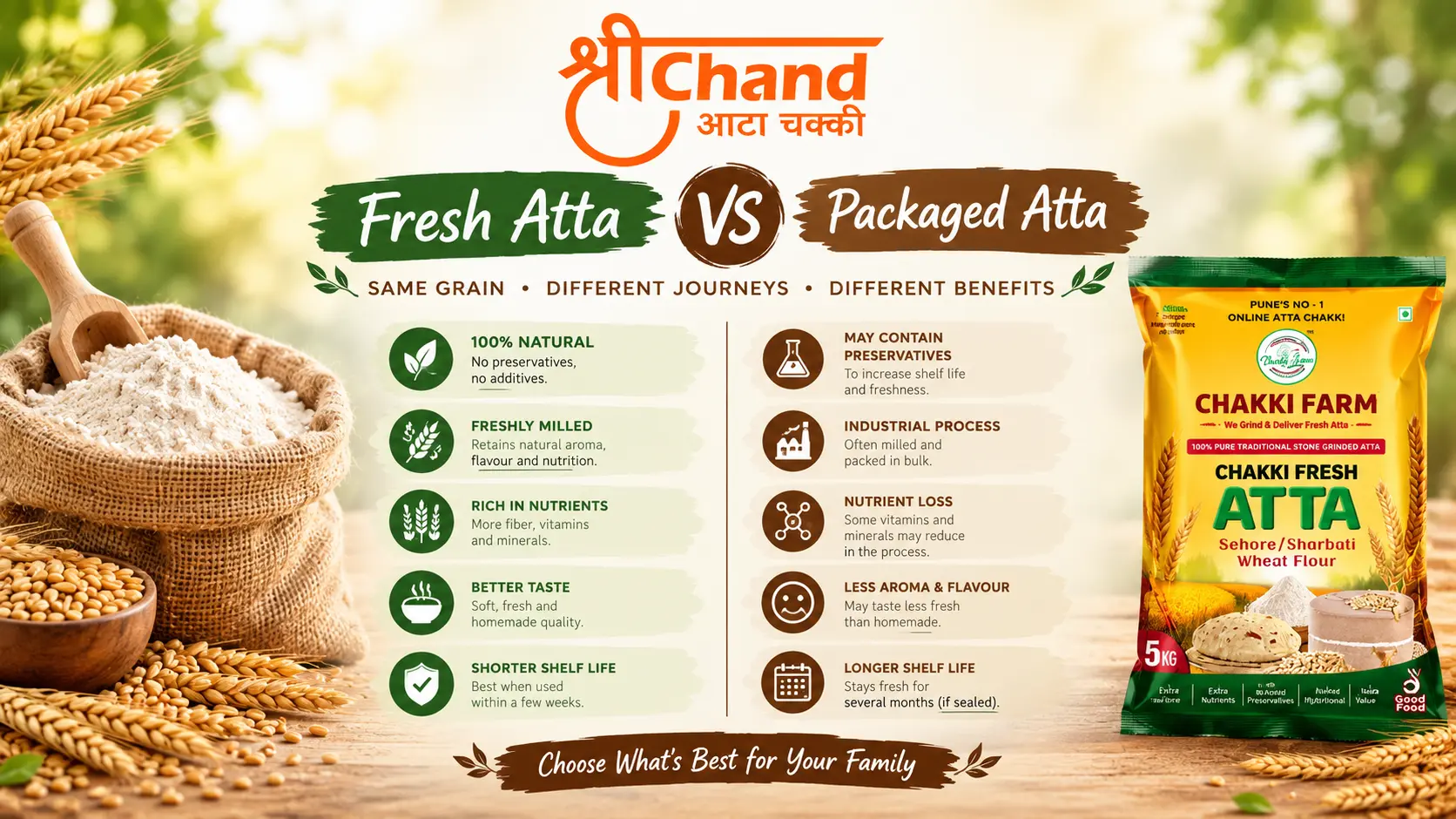
Fresh atta, meaning flour milled recently and bought close to that milling date, generally has a stronger aroma, softer dough and slightly better nutrient retention than packaged atta that has spent weeks or months in storage before reaching you. Packaged atta from reputable brands is not unsafe or low quality in any absolute sense, and offers real advantages in shelf life, consistency and convenience. The honest answer is that freshness matters more than brand, and the best approach for most households is choosing packaged atta from a brand that mills in small, frequent batches and displays the milling date clearly, rather than treating fresh and packaged as strictly opposite categories.
What fresh atta and packaged atta actually mean
The terms fresh atta and packaged atta are often used as if they describe two entirely different products, but the real distinction is about time and process, not necessarily packaging itself.
Fresh atta typically refers to flour that has been milled recently, often within days or a couple of weeks, and reaches the consumer quickly after grinding. This is the traditional model of a local chakki mill, where you bring grain to be ground or buy flour milled that same week, though many online sellers now replicate this model by shipping flour close to the milling date.
Packaged atta generally refers to flour sold in sealed bags by established brands, often produced at scale and distributed through a longer supply chain involving warehousing, distribution centres and retail shelf time before it reaches a buyer. This does not automatically mean the flour is old, but the supply chain itself typically introduces more time between milling and purchase compared to a local mill.
Both can, in principle, be fresh or not fresh depending on how recently they were milled and how they were handled afterward. The real question worth asking is not fresh versus packaged as categories, but how much time has actually passed since milling, which our guide to does flour expire explains in terms of what that time actually does to the flour.
Where fresh atta has a genuine advantage
Aroma and taste
This is the most immediately noticeable difference. Freshly milled atta carries a distinct, slightly nutty aroma from the natural oils in the wheat germ, oils that begin to oxidise and fade from the moment of milling. Packaged atta that has been stored for an extended period before reaching the shelf, and then sitting further in a kitchen cupboard, will generally have lost some of that aroma by the time it is used, even if it remains safe and perfectly edible.
Dough texture
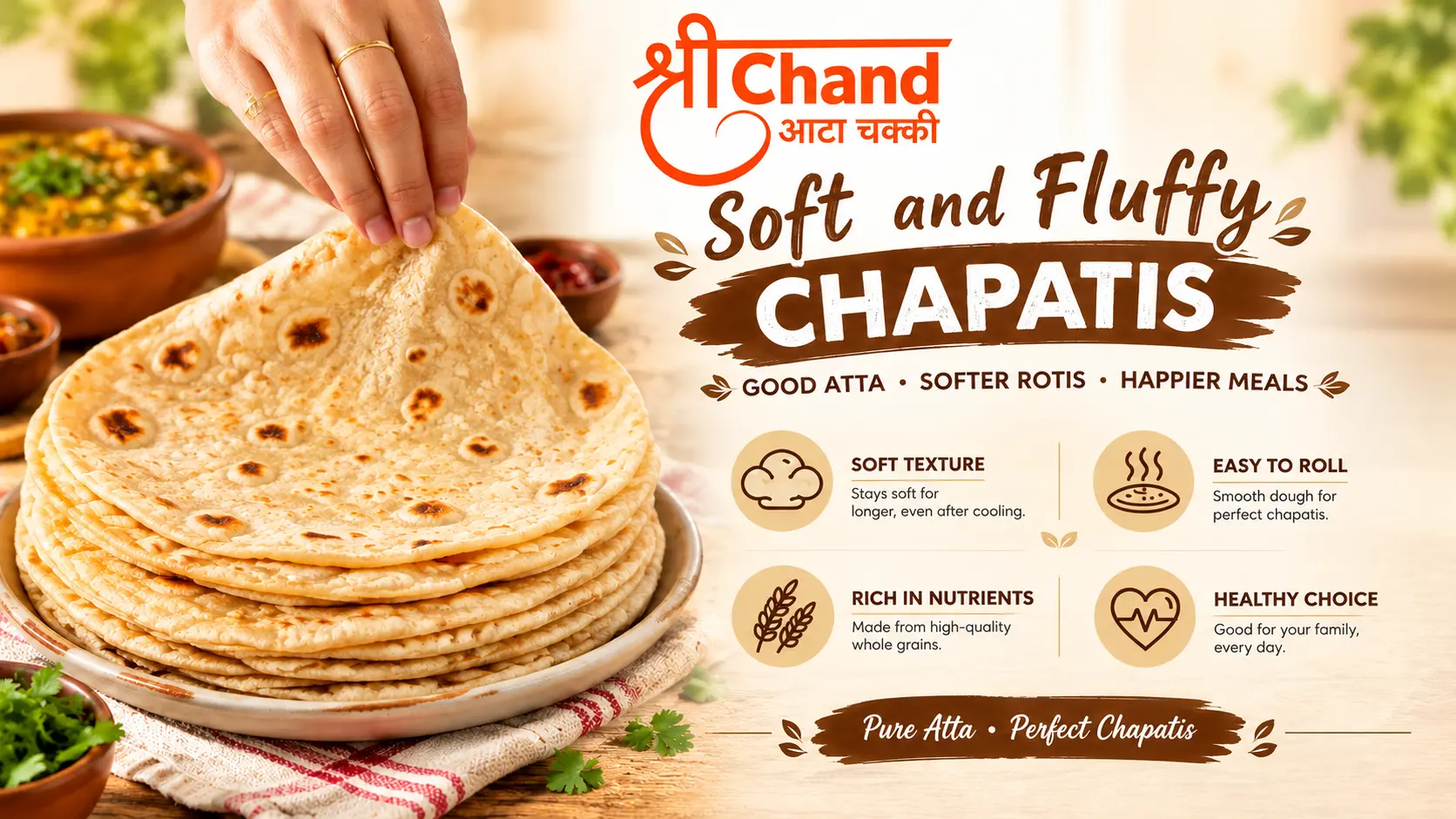
Fresh atta tends to produce a more pliable, easier to work dough, since the natural moisture and oil content has not had time to diminish. This often translates into softer rotis that stay soft for longer after cooking. Our guide on which flour makes the softest chapatis covers this in more practical detail, including technique that complements good fresh flour.
Nutrient retention
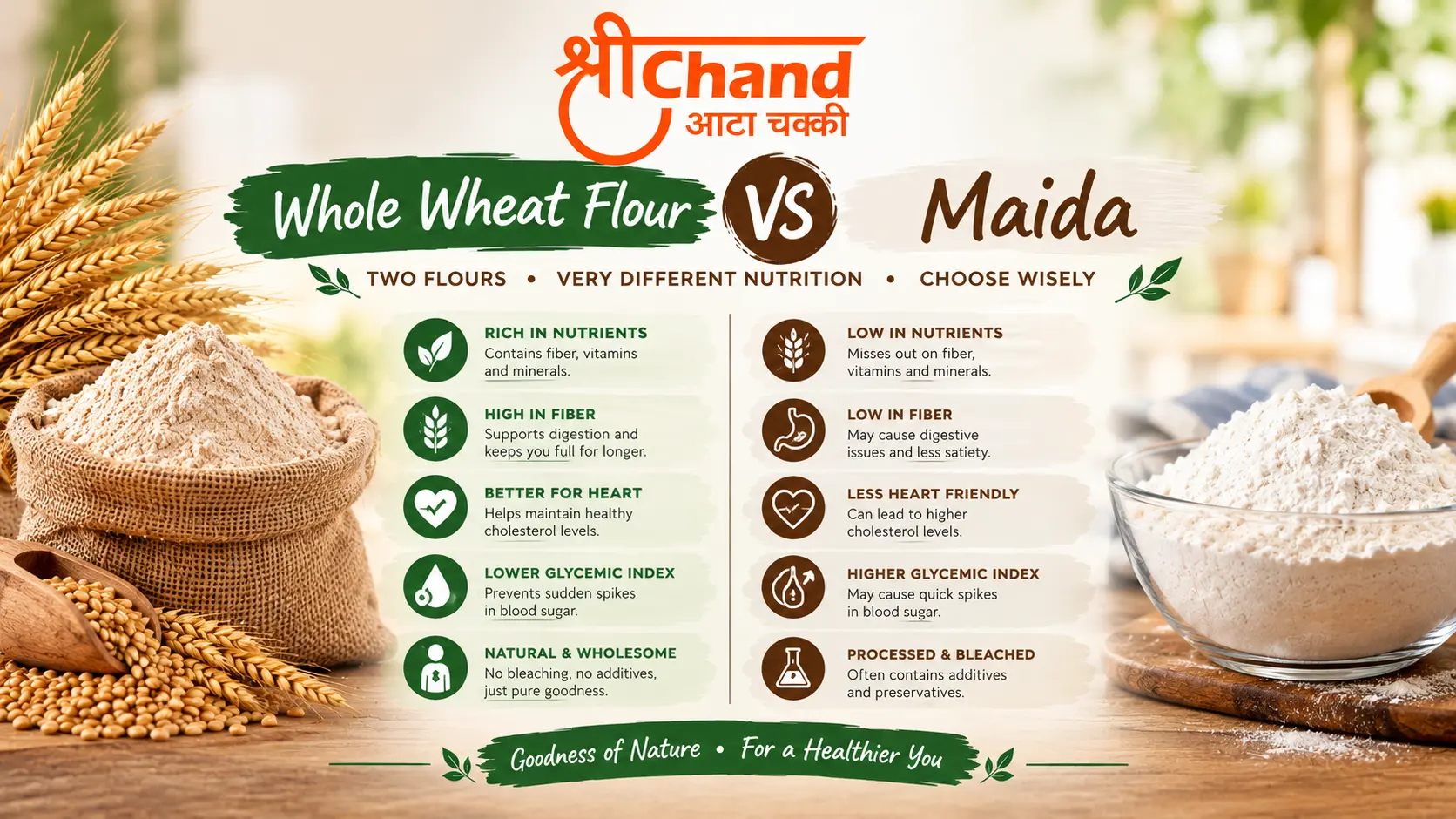
While the core protein and fibre content of whole wheat flour remains fairly stable over time, some of the more delicate nutrients, particularly certain B vitamins and the natural oils in the germ, do decline gradually as flour ages. Fresh atta, used relatively soon after milling, retains slightly more of this nutritional profile than flour that has spent months in storage. Our detailed breakdown in wheat flour nutrition facts covers the full nutrient picture.
Where packaged atta has genuine advantages
Consistency and quality control
Established brands producing packaged atta typically operate with standardised processes, quality testing and consistent sourcing, which means less variation from batch to batch compared to a smaller, local operation. For some households, this predictability is worth more than a modest freshness edge.
Longer shelf life by design
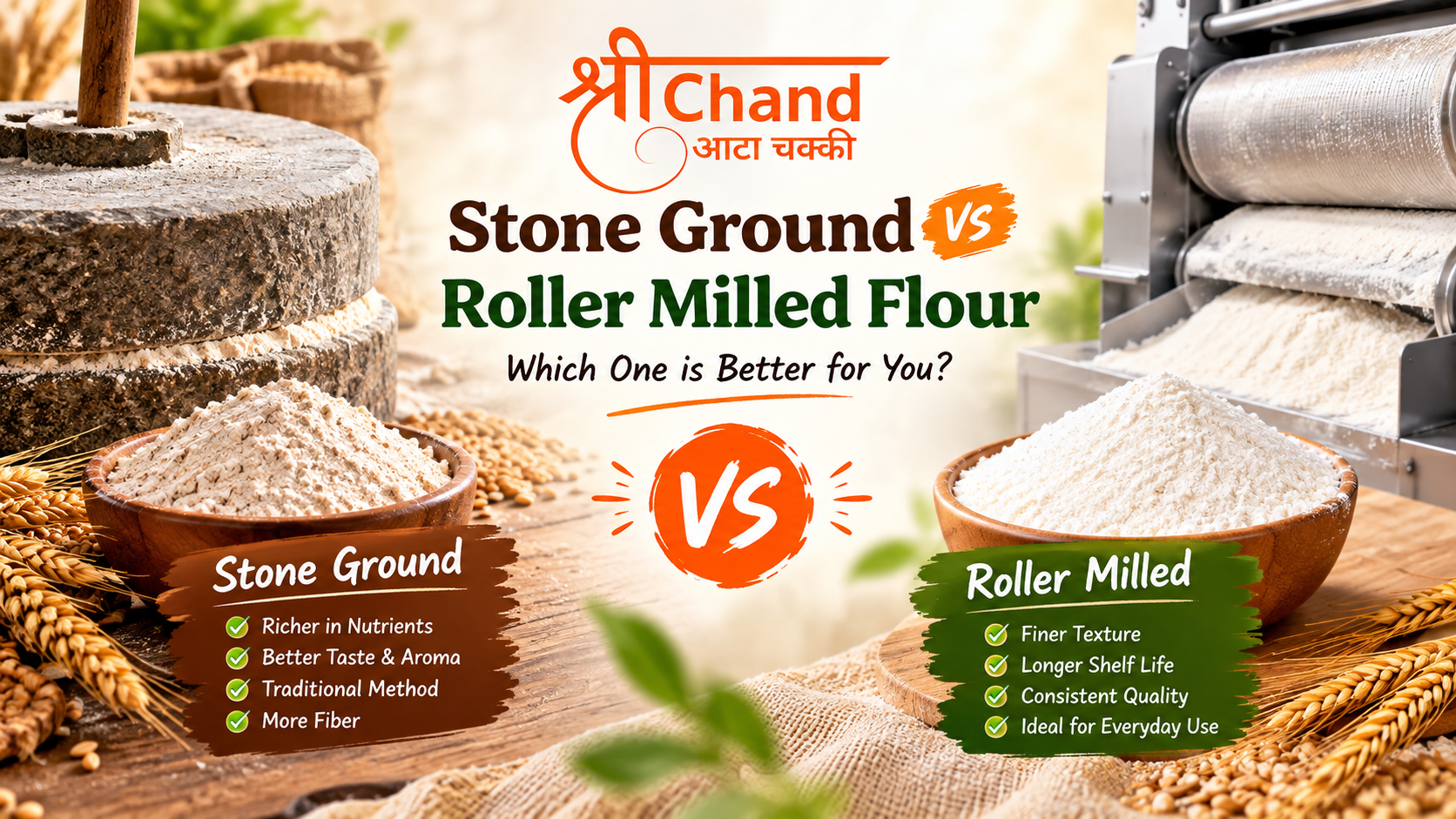
Many packaged attas, particularly those using roller milling, are processed in a way that extends shelf life somewhat compared to stone ground flour, making them more forgiving if you buy in bulk or do not use flour as quickly. This is covered in more detail in our comparison of stone ground versus roller milled flour.
Wide availability and convenience
Packaged atta from national or regional brands is typically available in most grocery stores and online platforms, offering convenience that a local chakki mill, tied to a specific location, cannot always match. This matters for households without easy access to a quality local mill.
Clear labelling and food safety standards
Reputable packaged atta brands generally follow standardised food safety practices and provide clear labelling, including ingredient lists and dates, which is not always consistent across smaller, informal local mills.
A side by side comparison
| Factor | Fresh atta | Packaged atta |
|---|---|---|
| Aroma | Generally stronger | Can fade depending on time in storage |
| Dough texture | Often softer and more pliable | Good, though can be slightly less pliable over time |
| Nutrient retention | Slightly higher if used soon after milling | Core nutrients stable, delicate ones decline over time |
| Shelf life | Shorter, best used within weeks | Often longer by design |
| Consistency | Can vary by local mill | Generally standardised |
| Availability | Limited to local access or specific online sellers | Widely available |
| Labelling and testing | Varies by source | Generally standardised and regulated |
The real deciding factor: milling date, not category
The most useful takeaway from this comparison is that the fresh versus packaged distinction is really a proxy for a more specific question: how long ago was this flour milled, and how has it been stored since. A packaged atta from a brand that mills in small batches and moves product quickly can be just as fresh as flour from a local chakki shop. Conversely, flour from a local mill that has been sitting in an open sack for weeks is not automatically fresher than a well packaged brand.
This is why checking the milling date, not just the brand or packaging style, is the single most reliable way to judge what you are actually buying. Our guide to buying wheat flour online and chakki atta benefits both cover specific checks for this, including what to look for on a label or product listing.
How to get the best of both
For most households, the practical answer is not choosing one category over the other, but choosing a source, whether a local mill or an online brand, that combines the benefits of both. Look for a producer that mills in small, frequent batches, similar to a traditional chakki shop, but offers the consistency, labelling and convenience typically associated with packaged products. Shri Chand Atta is built around this approach, milling stone ground flour in small batches in Delhi NCR and shipping close to the milling date rather than holding long term stock.
Once you have good, fresh flour, proper storage at home matters just as much for keeping it that way. Our guide on how to store flour properly covers the habits that protect that freshness after purchase.
Frequently asked questions
Is fresh atta healthier than packaged atta? Fresh atta generally retains slightly more of the delicate nutrients and natural oils in the wheat germ, since these begin to decline from the moment of milling. The core fibre and protein content is similar between fresh and well made packaged atta, so the difference is modest rather than dramatic.
Does packaged atta go stale faster than fresh atta? Not necessarily, since this depends more on how long the flour sat between milling and reaching the shelf, and how it is stored afterward, than on whether it is labelled fresh or packaged. A packaged atta from a brand that mills and distributes quickly can be just as fresh as flour from a local chakki shop.
Which is better for making soft rotis, fresh or packaged atta? Fresh atta often produces slightly softer rotis due to higher retained moisture and natural oils, though a packaged atta that is genuinely fresh, meaning recently milled and properly stored, can perform just as well.
Is it worth switching from packaged atta to a local chakki mill? It depends on your priorities. If aroma and freshness matter most to you and you have reliable access to a good local mill, it can be worth it. If consistency, convenience and clear labelling matter more, a packaged atta from a brand that prioritises small batch milling and freshness is a reasonable middle ground.
How do I know if packaged atta is actually fresh? Check the milling or manufacturing date on the packaging, not just the expiry date, and look for brands that are transparent about batch size and milling frequency. A coarser, slightly less uniform texture with visible bran flecks is also a sign of fresher, less heavily processed stone ground flour.
The bottom line
Fresh atta and packaged atta are not opposites, they are two paths to the same goal, which is flour that still has its natural aroma, moisture and nutrition intact. Fresh, recently milled flour generally has the edge in taste and texture, while well made packaged atta offers consistency and convenience that many households value just as much. The milling date is the detail that actually decides quality, regardless of which category the flour falls into.
To understand exactly why that date matters so much, read does flour expire next, or see how different brands compare on freshness and quality in our full best atta brands in India roundup.