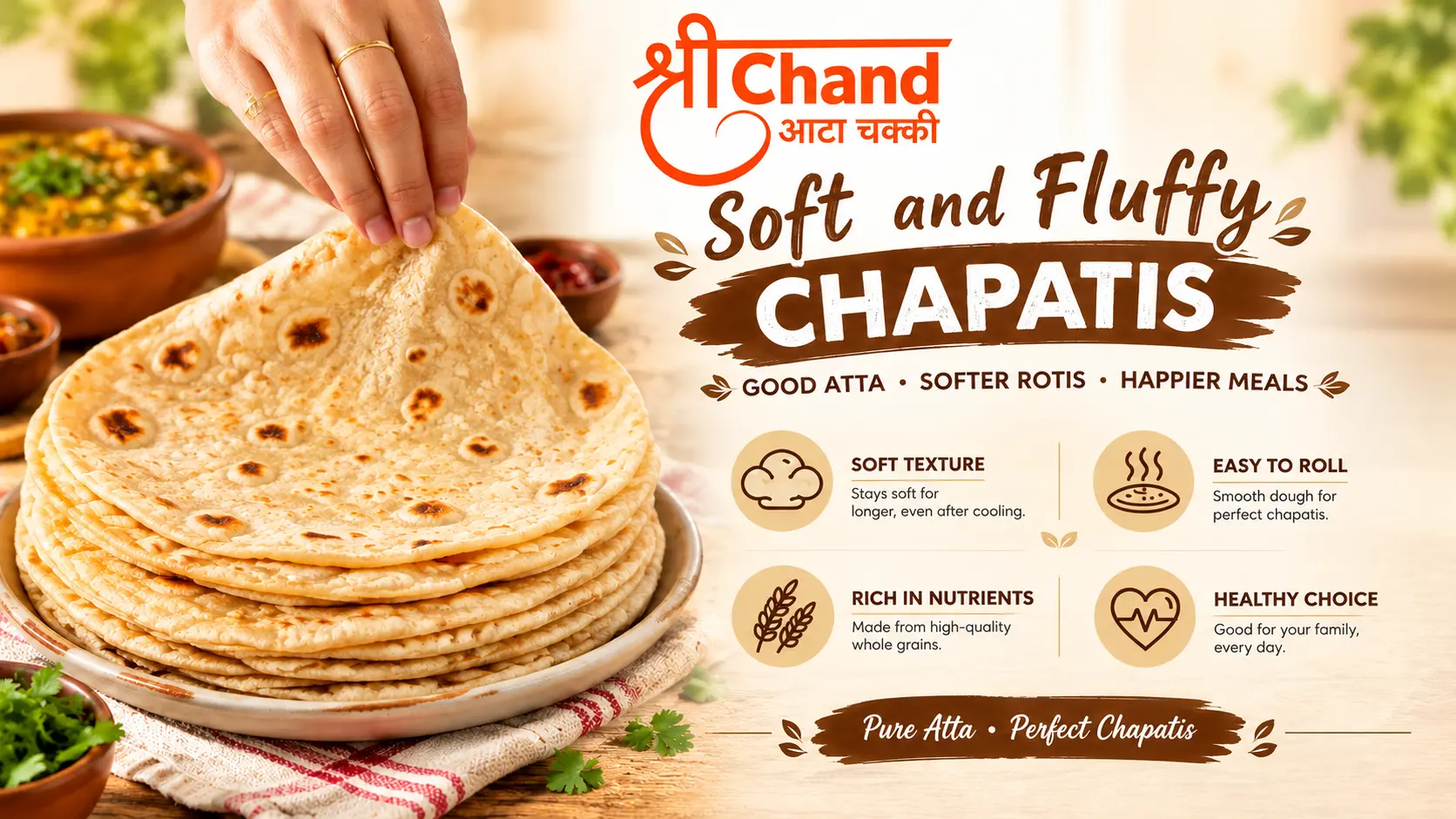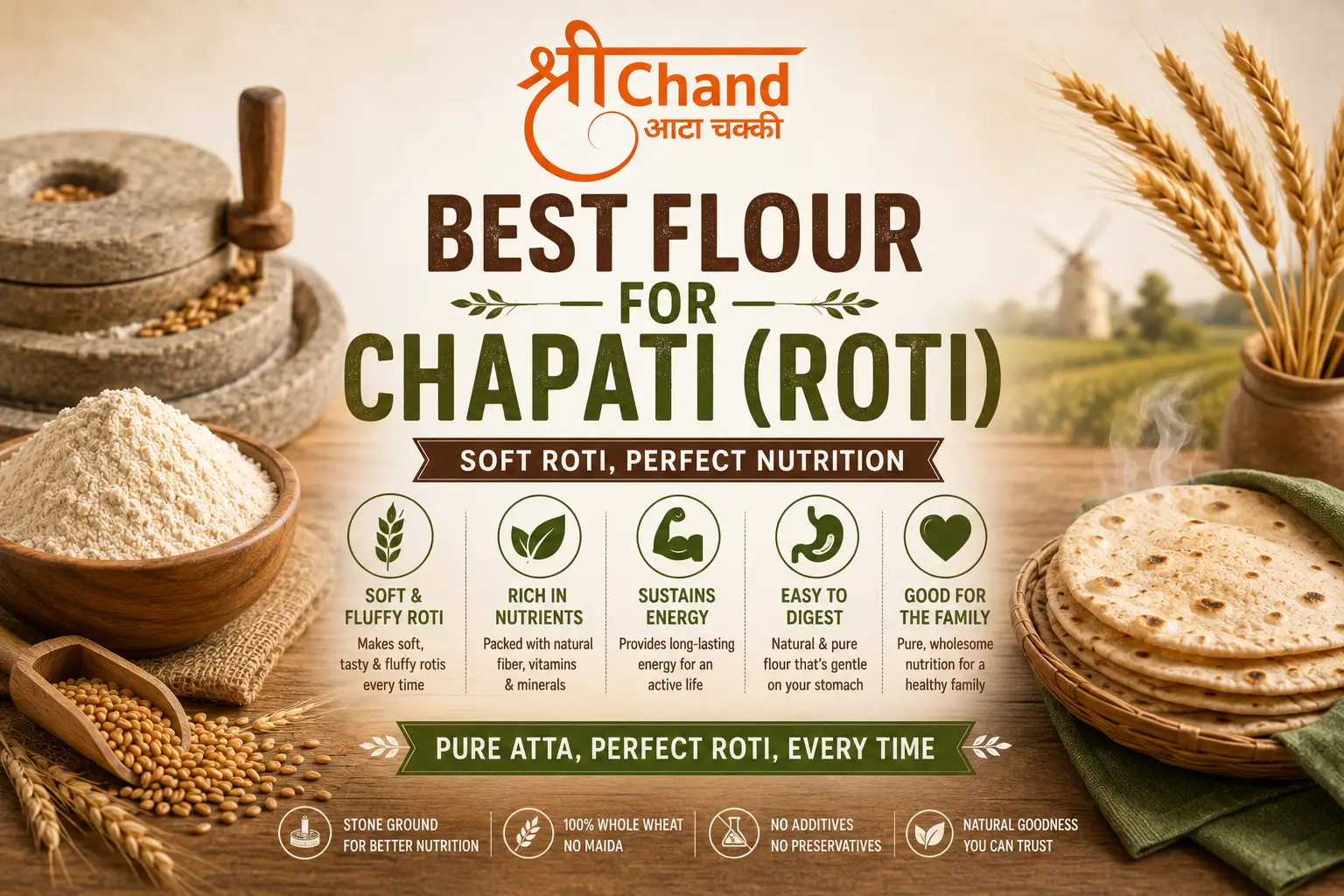
The best flour for chapati is a finely ground, fresh whole wheat atta, ideally stone milled, with a moderate protein content and no added maida. Freshness matters as much as the wheat variety itself, since the natural oils that keep dough soft and pliable fade over time. Beyond flour, the softness of a chapati depends heavily on how much water goes into the dough, how long it rests, and how it is rolled and cooked, so even excellent flour will not fully make up for rushed technique.
Why flour choice matters so much for chapati
Chapati is a simple recipe with almost no room to hide a poor ingredient. Unlike a curry or a baked dish where spices and other components can mask flour quality, a chapati is essentially flour, water and heat. That makes the flour itself the single biggest variable in how soft, pliable and flavourful the final roti turns out.
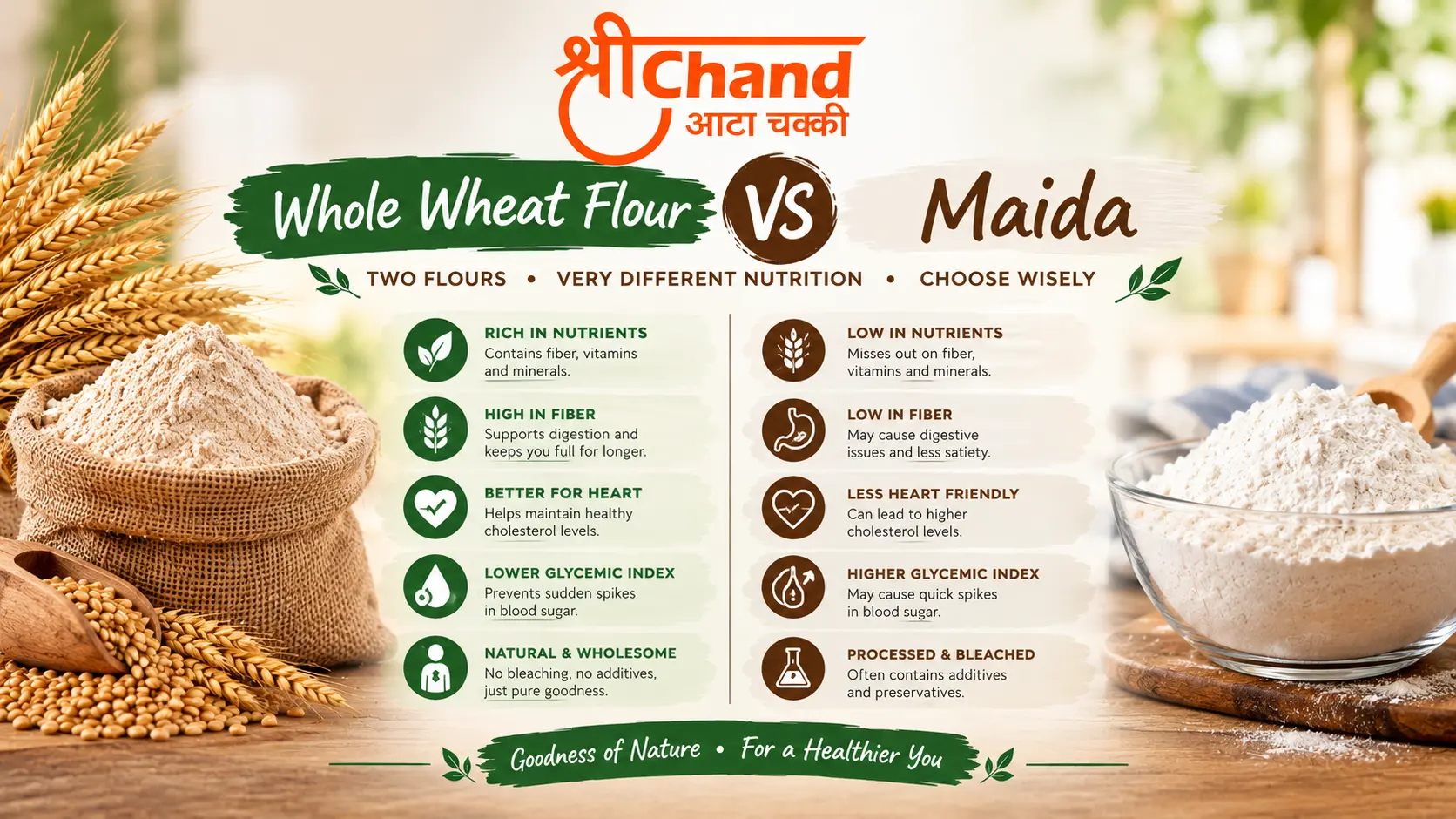
Whole wheat atta is the standard choice across Indian households, and for good reason. It has the right balance of protein and starch to form a dough that is elastic enough to roll thin and strong enough to puff up on the tawa. Refined flour, or maida, lacks the fibre and structure needed for a traditional chapati, and pure millet flours like bajra or jowar are typically too low in gluten to form the same kind of workable dough on their own. Our guide to types of flour covers where each of these fits best.
What actually makes chapati flour good
Protein content in a moderate range
Wheat flour protein forms gluten when mixed with water, and gluten is what gives dough its elasticity. Too little protein and the dough tears easily when rolled thin. Too much, and the dough becomes tough and harder to roll evenly. Most Indian wheat varieties used for atta sit in a moderate protein range that suits chapati well, generally between 10 and 13 grams per 100 grams of flour, which is part of why whole wheat atta works better here than bread flour or all purpose flour from other cuisines.
Fine, even grinding
The texture of the grind affects how evenly water absorbs into the dough. Flour with very inconsistent particle sizes can lead to patchy hydration, where some parts of the dough are dry and crumbly while others are overly wet. A consistent, fine grind, whether from stone milling or roller milling, generally produces a more uniform dough and, in turn, more evenly cooked rotis.
Freshness
This is the factor people underestimate most. The natural oils in the wheat germ keep the dough supple and contribute to a softer bite in the finished chapati. Those oils begin to fade from the moment the wheat is milled, which means flour that has been sitting on a shelf for months, even if technically within its expiry date, will generally produce a slightly drier, less pliable dough than freshly milled flour. Our detailed look at fresh atta versus packaged atta explains this in full.
Stone ground versus roller milled
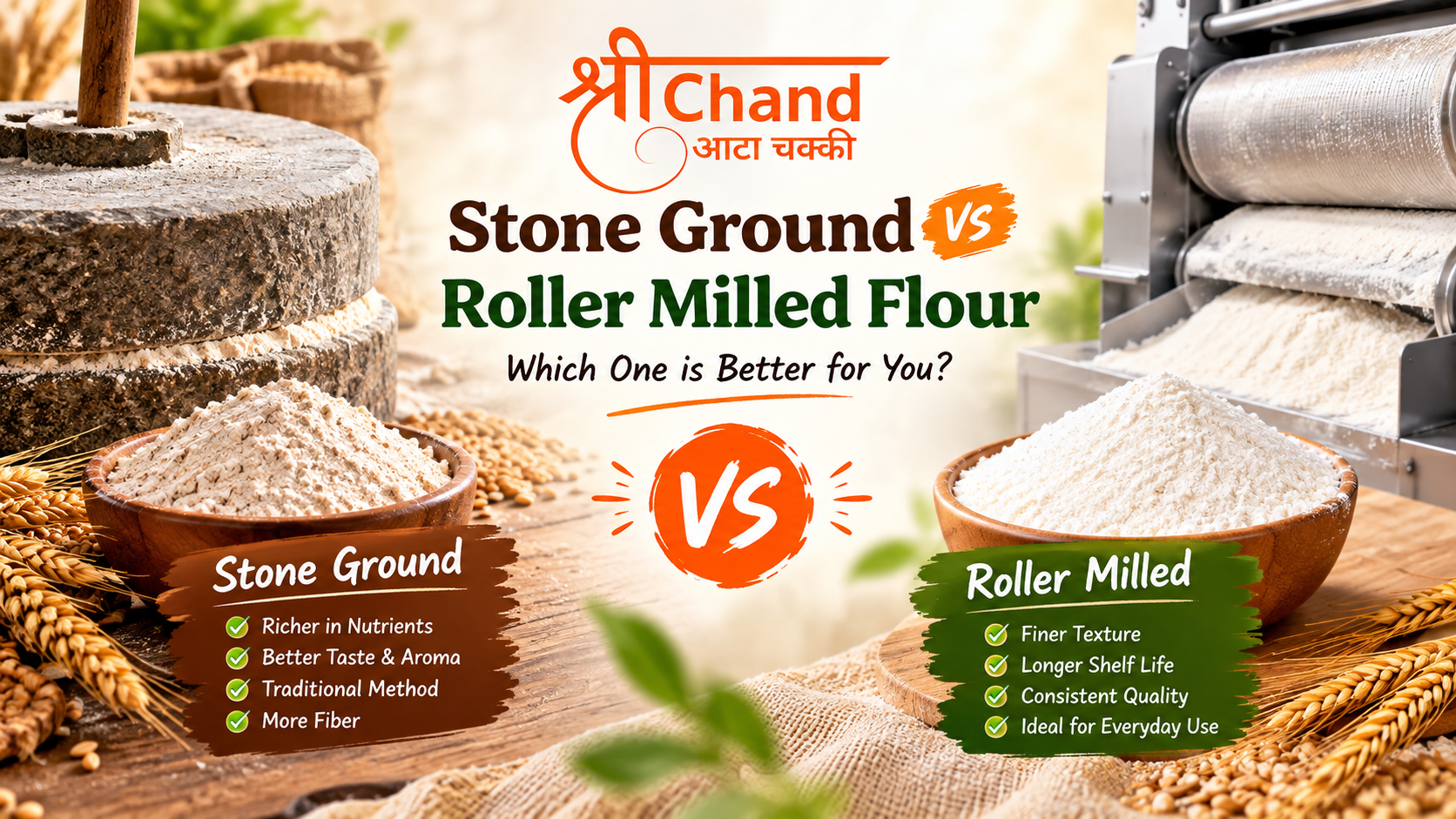
Stone ground, or chakki, atta is milled slowly at low heat, which preserves more of those natural oils compared to fast, high heat roller milling. Many people who switch from packaged roller milled atta to fresh chakki atta notice a real difference in how soft their chapatis stay, even hours after cooking. Our guide on chakki atta benefits covers exactly why this happens.
Beyond the flour: what else affects chapati softness
Even the best flour for chapati will not fully compensate for technique. These factors matter almost as much as the flour itself.
Water quantity and kneading
Dough that is too dry produces rotis that crack when rolled and turn hard quickly after cooking. Dough that is properly hydrated, kneaded for several minutes until smooth and elastic, holds moisture better and rolls out more evenly. Most whole wheat chapati dough needs slightly more water than people expect, added gradually rather than all at once.
Resting time
Letting the dough rest for at least twenty to thirty minutes after kneading allows the gluten to relax and the flour to fully absorb the water. Skipping this step is one of the most common reasons chapatis turn out stiff, regardless of how good the flour was to begin with.
Rolling evenly
Uneven thickness across the rolled chapati means some parts cook and puff before others, leading to rotis that are soft in the centre but dry at the edges, or that never puff at all. Rolling with consistent pressure from the centre outward produces a more even result.
Cooking heat and timing
A tawa that is too hot dries the surface before the inside cooks properly. One that is too cool leads to a dense, undercooked roti. Medium high heat, with the chapati flipped at the right moment and allowed to puff briefly over direct flame or a hot pan, produces the softest result.
Storing after cooking
Even a perfectly made chapati can turn hard if left uncovered to cool. Stacking cooked rotis in a covered container or wrapped in a clean cloth traps a small amount of steam, which keeps them soft for longer.
A quick comparison of flour options for chapati
| Flour type | Suitability for chapati | Notes |
|---|---|---|
| Fresh stone ground whole wheat atta | Excellent | Best balance of gluten strength, oil content and softness |
| Standard packaged whole wheat atta | Good | Works well if reasonably fresh, softer results fade with age |
| Multigrain atta | Fair to good | Softness varies depending on the blend and millet ratio |
| Maida (refined flour) | Poor for traditional chapati | Lacks fibre and structure, more suited to parathas or naan |
| Pure bajra or jowar flour | Poor on its own | Low gluten, usually needs to be blended with wheat to hold together |
Common mistakes that make chapatis hard even with good flour
- Using flour straight from a bag that has been open for months. Even good flour loses its edge over time. Check does flour expire if you are unsure whether an older bag is still worth using.
- Adding too little water because the dough feels sticky at first. Sticky dough often becomes manageable after a few more minutes of kneading, and cutting water short usually leads to dry, tough rotis.
- Skipping the resting period entirely to save time. This single step affects softness more than most people expect.
- Rolling chapatis too thick. Thicker rotis take longer to cook through and tend to dry out at the edges before the centre is done.
- Storing atta poorly. Exposure to air and moisture accelerates staleness. Our guide on how to store flour properly covers the basics.
Does whole wheat flour always beat multigrain for chapati
Not necessarily, and it depends on your priority. Whole wheat atta on its own generally produces the most reliably soft, pliable chapati because its gluten structure is well suited to the job. Multigrain blends, which mix in millets, oats or other grains, often trade a small amount of that softness for added fibre, protein variety or a specific health goal. If softness is your top priority, plain whole wheat is usually the safer choice. If you are optimising for something like blood sugar management or weight control, it may be worth the trade-off. Our guides on best flour for diabetes and best flour for weight loss go into this in more detail.
Frequently asked questions
Which flour is best for soft chapati?
A fresh, finely ground whole wheat atta, ideally stone milled, generally produces the softest chapatis. Freshness and moisture content in the dough matter as much as the flour itself.
Does stone ground atta make softer chapatis than regular atta?
Often yes, since stone milling at low heat preserves more of the wheat germ's natural oils, which keep the dough pliable and the finished roti softer for longer after cooking.
Why do my chapatis turn hard even with good flour?
The most common causes are dough that is too dry, skipping the resting period, rolling too thick, or cooking on heat that is too high or too low. Good flour helps, but technique still plays a major role.
Is multigrain flour good for chapati?
It can work well, though pure whole wheat generally produces a softer result due to its gluten structure. Multigrain blends are worth it if you have a specific nutritional goal beyond softness alone.
How much water should I use for chapati dough?
This varies by flour and season, but most whole wheat dough needs slightly more water than people initially expect, added gradually while kneading until the dough is smooth, soft and only slightly tacky.
Does the age of the atta affect chapati softness?
Yes. Freshly milled atta generally makes softer chapatis than flour that has been sitting for months, because the natural oils that keep dough pliable fade over time.
The bottom line
The best flour for chapati is fresh whole wheat atta with a moderate protein content, ideally stone ground, used before it has had time to lose its natural oils on a shelf. Beyond that, softness comes down to habits: enough water, a proper rest, even rolling and the right heat. Get the flour and the technique right together, and soft chapatis stop being something you get occasionally and start being the default.
For more on getting technique exactly right, read 10 tips to make soft and fluffy chapatis every time next, or start with the flour itself in our whole wheat flour benefits guide.