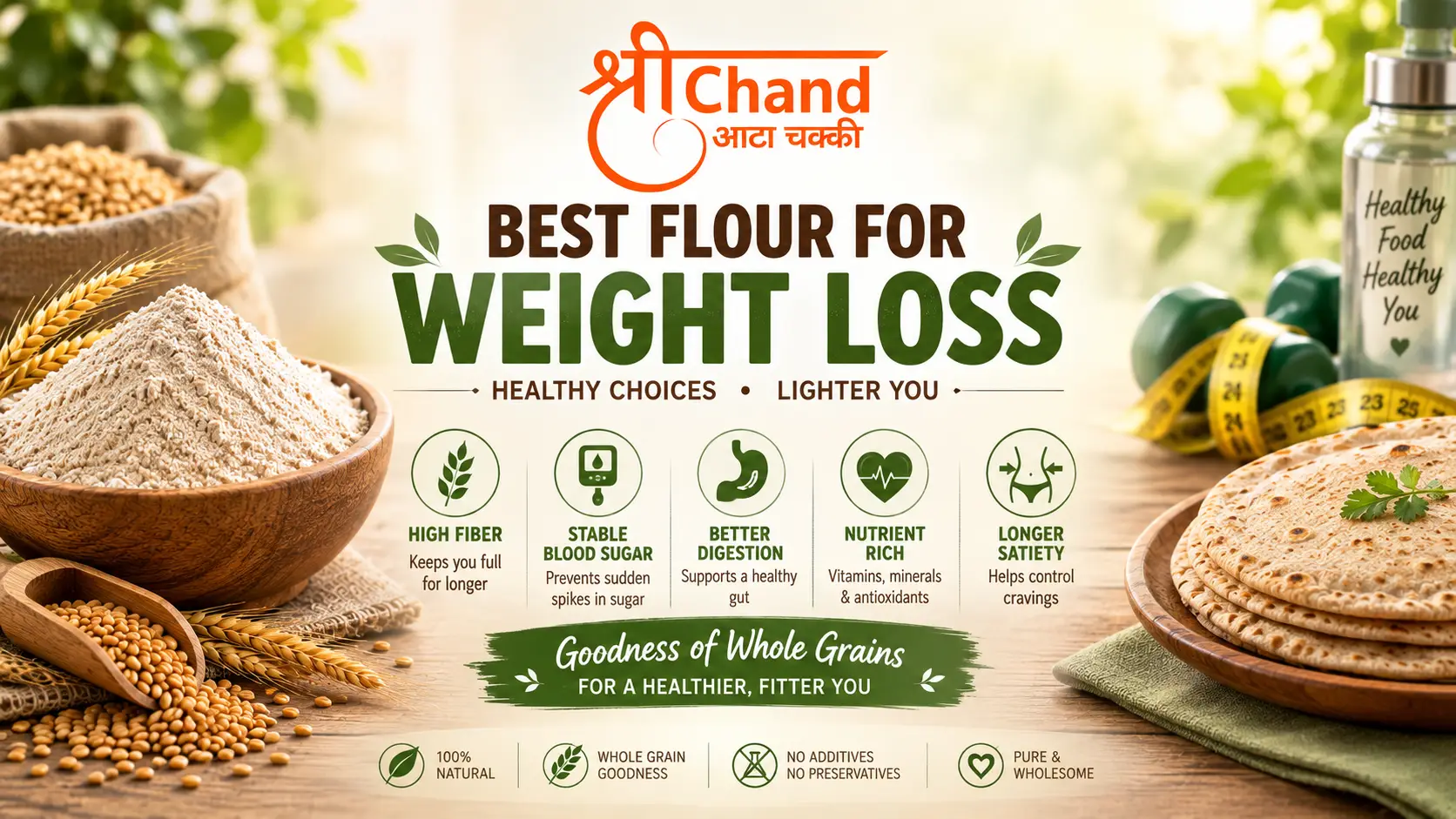
No single flour causes weight loss on its own, since that depends on overall calorie intake and activity level. What flour choice can do is support the process by keeping you fuller for longer, which makes it easier to eat reasonable portions. Flours higher in fibre and protein, such as multigrain blends, besan, oat flour and millet flours like jowar and ragi, generally support satiety better than refined maida, with plain whole wheat atta sitting in a solid middle ground.
Why flour affects how full you feel
Weight management ultimately comes down to overall energy balance, but flour choice influences one important piece of that equation: how satisfied you feel after eating. Foods higher in fibre and protein slow digestion and gastric emptying, which generally translates to feeling full for longer after a meal compared to foods that are mostly refined starch.
This matters in daily life because feeling fuller for longer naturally makes it easier to avoid snacking soon after a meal or overeating at the next one. It is not a substitute for overall portion awareness or an active lifestyle, but it removes some of the friction from managing intake, especially for a food eaten as regularly as roti.
Why refined flour works against this goal
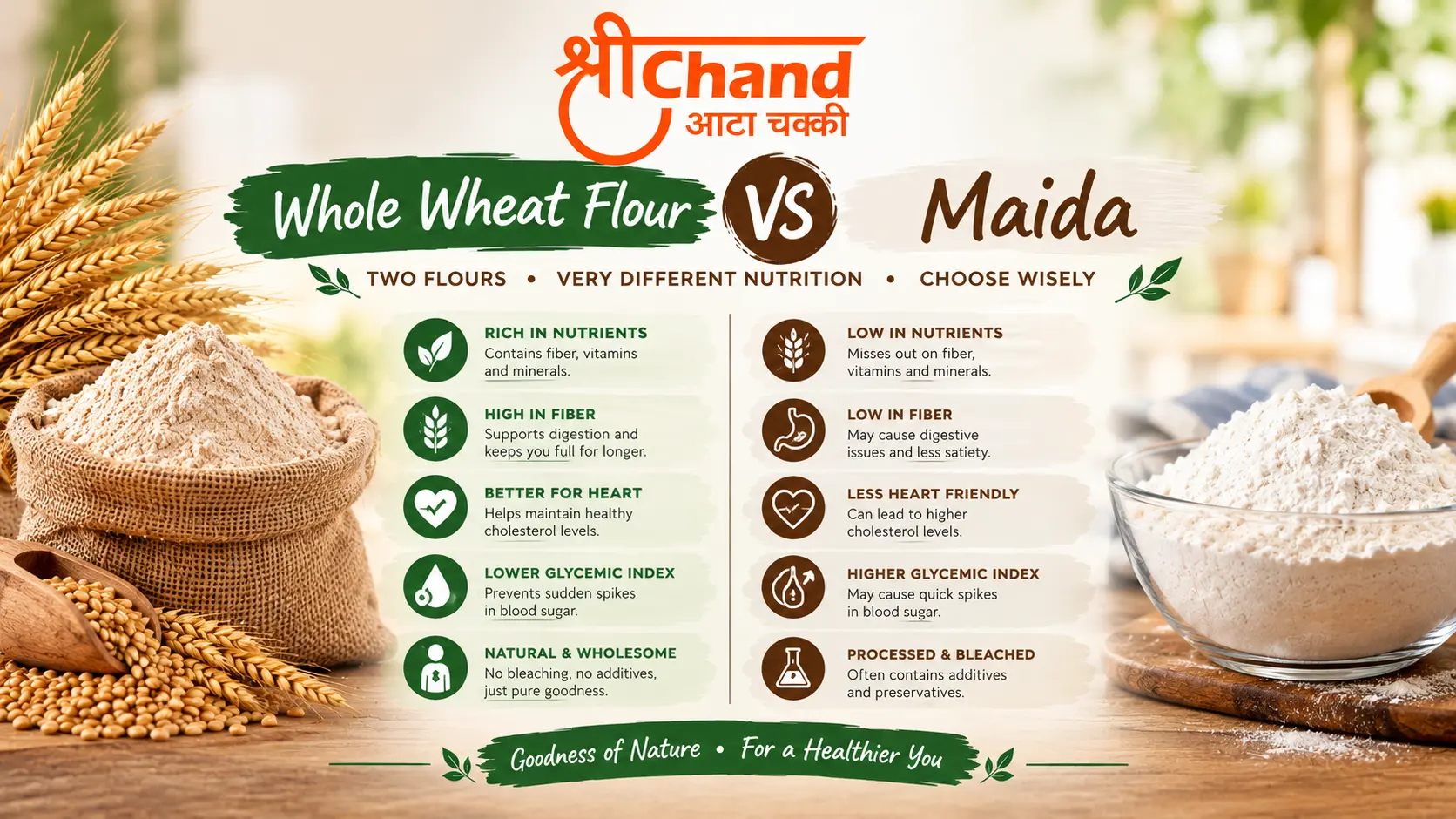
Maida, or refined flour, has the bran and germ removed during milling, leaving behind mostly starch with very little fibre or protein. Foods made from maida tend to digest quickly, which can lead to a faster return of hunger after eating compared to whole grain alternatives. This is one of the clearest, most consistent findings across nutrition research on refined versus whole grain carbohydrates. Our detailed comparison in whole wheat flour versus maida covers this in full.
Comparing flours for satiety and weight management
| Flour type | Fibre | Protein | Typical effect on fullness |
|---|---|---|---|
| Maida (refined flour) | Low | Low | Digests quickly, fullness fades sooner |
| Whole wheat atta | Moderate to high | Moderate | Solid everyday base, better than refined flour |
| Multigrain atta (wheat, millet, oats blend) | High | Moderate to high | Often more filling than plain wheat |
| Besan (chana flour) | High | High | Strong protein content supports longer fullness |
| Oat flour | High | Moderate | Beta-glucan fibre associated with satiety |
| Jowar (sorghum) flour | High | Moderate | Filling, gluten free, works best blended with wheat |
| Ragi (finger millet) flour | High | Moderate | High fibre, also valued for calcium |
| Soya flour | Moderate | Very high | Protein dense, usually blended in smaller proportions |
These are general patterns based on typical nutrient composition. Actual satiety response varies from person to person, and this table is meant as a general comparison rather than a personalised recommendation.
Why multigrain atta is a common recommendation
Multigrain flour blends combine whole wheat with a mix of millets, oats, chana or soya, aiming to increase fibre and protein content beyond what plain wheat atta offers, while keeping the dough workable enough for everyday rotis. This combination generally supports better satiety than plain wheat alone, without the texture challenges that come from using pure millet flour on its own.
The actual composition of the blend matters. A multigrain atta that is mostly wheat with a small addition of other grains behaves closer to plain wheat, while a blend with a meaningfully higher proportion of millets, oats or legumes tends to have a more noticeable effect on fullness. Checking the ingredient list, rather than relying on the word multigrain alone, gives a clearer picture of what you are actually buying.
Besan and soya flour as high protein additions
Besan and soya flour both stand out for their protein content, which is notably higher than wheat or millet flours. Protein is one of the most effective nutrients for supporting satiety, since it slows digestion and influences hormones related to appetite regulation more than carbohydrates or fat do.
Both are typically blended into wheat based roti dough in smaller proportions rather than used as the sole flour, since larger proportions change texture and flavour significantly. A common approach is replacing a portion of whole wheat atta with besan or soya flour to boost the protein content of an otherwise familiar roti.
Millet flours: jowar, bajra and ragi
Millets have become popular in weight management conversations partly because of their fibre content and lower glycaemic impact compared to refined grains. Jowar, bajra and ragi are all naturally gluten free and generally support longer lasting fullness than maida based foods.
The practical limitation is texture, since pure millet flour lacks the gluten structure needed to roll easily into a soft chapati. Most households blend millet flour with a portion of wheat, which is effectively a homemade version of multigrain atta. Our guide to types of flour explains how each grain behaves in the kitchen.
What flour choice cannot do on its own
It is worth being clear about the limits here. Switching flour will not lead to meaningful weight change if overall calorie intake, portion sizes and activity levels stay the same. Flour choice is a supporting factor, useful because it can make it easier to feel satisfied with reasonable portions, not a mechanism that burns fat or reduces calories by itself.
A few other factors matter just as much, and often more, for weight management:
- Overall portion size, regardless of which flour is used.
- What the roti is eaten with. A meal balanced with vegetables, dal or other protein sources tends to be more filling and nutritionally complete than roti eaten with minimal accompaniment.
- Cooking method. Rotis made with little to no added oil differ meaningfully in calorie content from parathas cooked with generous ghee or oil.
- Overall diet pattern and activity level, which have a far bigger influence on weight over time than any single ingredient swap.
If weight management is a specific health goal for you, working with a doctor or registered dietitian to build a full plan is more reliable than adjusting flour choice alone.
A practical way to start
If you want to try a higher fibre, higher protein flour without a big adjustment period, a gradual approach tends to work better than switching completely overnight.
- Start by blending a portion of multigrain, besan or millet flour into your regular whole wheat atta.
- Notice how filling your meals feel compared to before, and adjust the ratio based on taste and comfort.
- Pair rotis with vegetables and a protein source like dal, paneer or curd to support fullness further.
- Keep portion sizes consistent while you evaluate the change, so you can judge its effect more clearly rather than changing multiple variables at once.
For general background on wheat flour nutrition, see whole wheat flour benefits and wheat flour nutrition facts.
Frequently asked questions
Which flour is best for weight loss in India?
No flour causes weight loss by itself, but multigrain atta blending wheat with millets, besan or oats generally supports fullness better than plain wheat or refined flour, which can make portion control easier as part of an overall balanced diet.
Is whole wheat atta good for weight loss?
It is a reasonable everyday base and clearly better than refined maida, since it retains fibre from the bran and germ. Many people looking specifically for stronger satiety benefits move toward multigrain or protein enriched blends in addition to plain wheat.
Does besan help with weight loss?
Besan is high in both fibre and protein relative to wheat flour, both of which support longer lasting fullness after a meal. It is commonly blended into roti dough in smaller proportions rather than used as the only flour.
Is multigrain atta better than whole wheat for weight loss?
Multigrain blends generally offer more fibre and protein than plain whole wheat, which can support satiety better, though the actual benefit depends on the specific blend and proportion of added grains.
Can I lose weight just by changing my flour?
Flour choice alone is unlikely to produce meaningful weight change without attention to overall calorie intake, portion size and activity level. It works best as one supporting habit within a broader, balanced approach.
Are millet flours good for weight loss?
Millets like jowar, bajra and ragi are high in fibre and generally support fullness well, but pure millet flour is harder to roll into a soft roti on its own, so most households blend it with wheat.
The bottom line
Flour is a useful lever for weight management, not a shortcut. Multigrain blends, besan, oat flour and millet flours generally support fullness better than plain wheat or refined flour, which can make it easier to manage portions naturally over time. The bigger picture still matters more: overall diet pattern, portion sizes and activity level decide the outcome, with flour choice playing a supporting role within that picture.
For a related look at flour choice and blood sugar management, read best flour for diabetes next, or start with the fundamentals in our whole wheat flour benefits guide.
This article offers general nutrition information and is not a substitute for personalised advice from a doctor or registered dietitian.