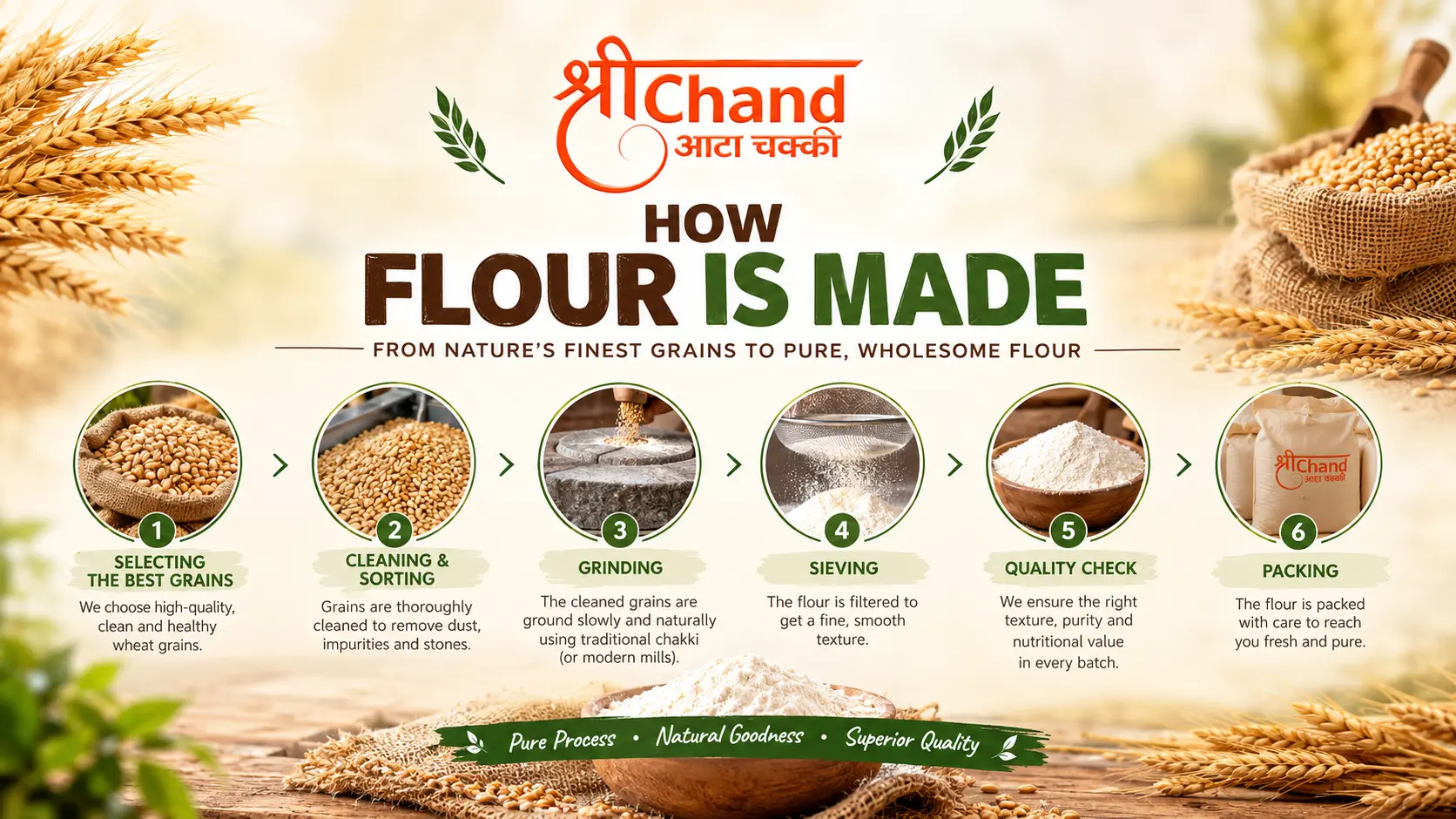
Flour is made by harvesting wheat, cleaning it to remove dust and impurities, conditioning it with a controlled amount of moisture, and then grinding it either between stone discs or through a series of steel rollers. Stone milling crushes the whole grain together in one gentle pass at low heat, while roller milling separates the bran, germ and endosperm at high speed and typically recombines a portion of bran afterward for whole wheat products. The flour is then sifted to the right texture, tested for quality, and packaged, usually within days of milling for fresher operations and over longer cycles for large scale ones.
From the field to the mill
Wheat is harvested once the grain has fully matured and dried in the field, typically in the spring across most of North India. After harvesting, the grain is threshed to separate it from the stalk and chaff, then transported to storage facilities or directly to a mill.
Before any grinding happens, the wheat needs to be clean. Raw harvested grain carries dust, small stones, chaff and occasionally other seeds mixed in during harvesting and transport. Skipping proper cleaning at this stage would mean grinding all of that debris directly into the final flour.
Step 1: Cleaning the grain
Mills use a combination of mechanical sieves, air separators and sometimes magnetic separators to remove foreign material from the wheat before milling begins. Sieves separate grain by size, filtering out anything too large or too small to be wheat. Air separators use controlled airflow to lift away lighter debris like dust and chaff while the heavier wheat kernels fall through. Magnetic separators catch any small metal fragments that may have entered during harvesting or handling equipment use.
This step matters for both safety and quality. Flour ground from poorly cleaned wheat can carry grit or foreign particles, and even well cleaned wheat still needs the next step before it is ready to grind properly.
Step 2: Conditioning the wheat
Dry wheat straight from storage does not grind well. It tends to shatter unevenly, producing an inconsistent mix of coarse and overly fine particles, and it makes separating the bran from the endosperm during roller milling far less efficient. To fix this, mills add a controlled, small amount of water to the grain and let it rest for several hours, a process known as conditioning or tempering.
Conditioning softens the bran layer slightly and toughens the endosperm in a way that makes both easier to separate cleanly during milling, or in the case of stone milling, easier to crush evenly together. The exact moisture level and resting time vary by mill and wheat variety, but this step is standard across nearly all flour production, whether small scale or industrial.
Step 3: Milling the grain
This is the step where stone milling and roller milling genuinely diverge, and it is the single biggest factor behind the differences people notice between types of atta on the shelf.
Stone milling
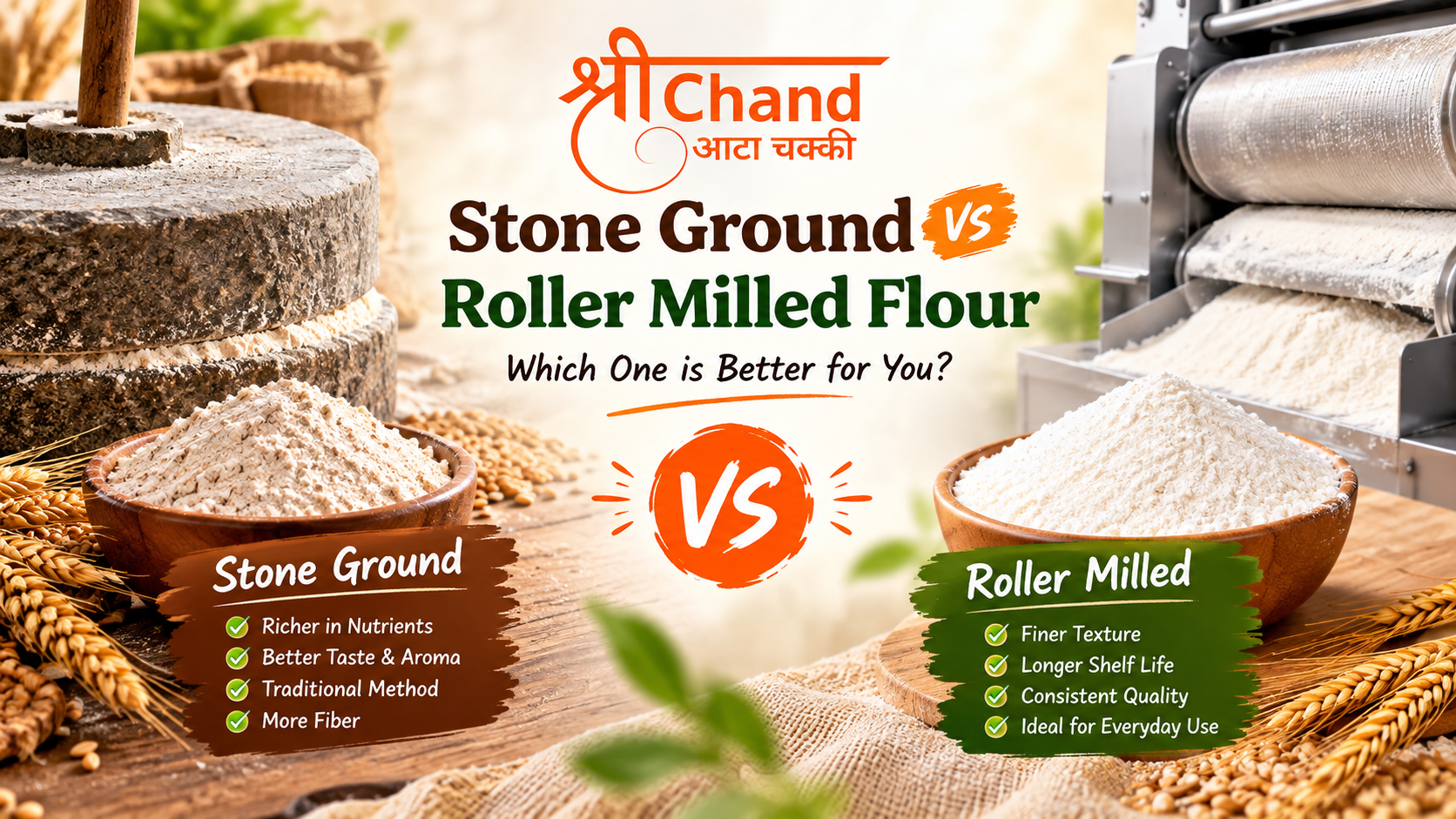
In stone milling, the conditioned wheat passes between two large stone discs, one stationary and one rotating slowly. The grain is crushed as a whole, with bran, germ and endosperm ground together in a single pass. Because the stones turn slowly, very little heat builds up during the process, which helps preserve the delicate oils in the wheat germ and the aroma they carry. This is the traditional method behind chakki atta, and our guide to chakki atta benefits covers what this means in practical terms for the flour you cook with.
Roller milling
In roller milling, wheat passes through a series of steel rollers spinning at high speed. Early rollers crack the grain open, and subsequent stages progressively separate the bran and germ from the endosperm using a combination of rollers and sifters. The endosperm is ground into fine flour first. For products sold as whole wheat, a measured proportion of bran is reintroduced afterward to approximate the nutritional profile of the whole grain, though the components are no longer bound together the way they are in stone milled flour.
Roller milling generates more heat due to the speed of the rollers, which can degrade some of the heat sensitive compounds in the germ, but it allows for much higher output and more consistent particle size across large volumes, which is why it dominates large scale commercial flour production. Our detailed comparison in stone ground versus roller milled flour walks through the practical differences this creates.
Step 4: Sifting and grading
After milling, flour passes through sieves to separate it by particle size. This step ensures the final product has a consistent texture, whether the goal is a finer flour for certain baked goods or a slightly coarser texture more typical of traditional atta. Multiple sifting passes are common, particularly in roller milling, where separating fractions of the grain at different stages is part of how bran gets isolated and later recombined.
Step 5: Quality checks
Reputable mills test flour at this stage for moisture content, protein levels and general consistency before it moves to packaging. Moisture content in particular needs to sit within a safe range, since flour that is too moist is far more prone to spoilage and mould growth during storage and transport.
Step 6: Packaging and distribution
The final step is packaging the flour into bags, typically sealed to protect against moisture and pests during storage and shipping. This is also where the biggest practical difference between small mills and large scale operations tends to show up. Smaller, local mills often package flour close to the milling date and distribute it quickly within a limited area. Larger operations may mill in bulk and hold stock for longer periods before it reaches store shelves, which is one reason the gap between milling date and purchase date can vary so widely between brands. Our guide on fresh atta versus packaged atta explains why this gap matters more than most labels suggest.
Why the milling process affects nutrition and taste
Each step described above has a direct effect on what ends up in your kitchen. Cleaning affects purity and safety. Conditioning affects texture consistency. The milling method itself, stone or roller, is the biggest factor behind aroma, retained nutrients and how the flour behaves in dough. Sifting determines texture. Packaging speed determines freshness by the time the flour reaches you.
For the specific nutrient numbers that come out the other end of this process, our guide to wheat flour nutrition facts breaks down exactly what whole wheat flour provides per 100 grams, and how that compares to refined flour that has gone through additional processing to remove the bran and germ entirely.
How this compares across flour types
While this guide focuses on wheat, the same general steps, cleaning, conditioning, milling, sifting and packaging, apply to other grains and pulses used for flour, including bajra, jowar, ragi and besan, with adjustments for each grain's specific structure and hardness. Our guide to types of flour covers how these different grains are typically milled and used.
A quick summary of the process
- Harvesting wheat once fully matured and dried in the field.
- Cleaning to remove dust, chaff, stones and foreign material.
- Conditioning with a controlled amount of moisture to prepare the grain for even milling.
- Milling, either by stone at low speed and low heat, or by steel rollers at high speed with separated components.
- Sifting to achieve consistent particle size and texture.
- Quality testing for moisture, protein and overall consistency.
- Packaging and distribution, ideally close to the milling date to preserve freshness.
Frequently asked questions
How is wheat flour made from wheat grain?
Wheat is harvested, cleaned to remove impurities, conditioned with a small amount of moisture, then ground either by stone milling, which crushes the whole grain together, or by roller milling, which separates and later recombines the bran, germ and endosperm.
What is the difference between how stone ground and roller milled flour is made?
Stone milling grinds the entire wheat grain together in one slow, low heat pass. Roller milling uses high speed steel rollers to separate the bran and germ from the endosperm before adding a portion of bran back for whole wheat products.
Why is wheat conditioned before milling?
Conditioning softens the bran and prepares the endosperm for more even grinding, which produces a more consistent flour texture and, in roller milling, allows the different parts of the grain to be separated more cleanly.
Does the way flour is made affect its nutrition?
Yes, to some degree. Stone milling's lower heat tends to preserve slightly more of the heat sensitive vitamins and natural oils in the wheat germ compared to the higher heat generated during fast roller milling, though the core fibre and protein content is similar across both methods since both use the whole grain.
How long does it take from milling to reach store shelves?
This varies widely by mill. Small, local operations often package and distribute flour within days of milling. Larger industrial mills may hold stock for weeks or months before it reaches retail shelves, which is why checking the milling date on a package matters more than most people realise.
The bottom line
Flour production is a longer, more deliberate process than it appears from the outside, and the choices made at the milling stage in particular shape everything from aroma to nutrition in the final product. Understanding these steps makes it easier to judge what you are actually buying, whether that means checking a milling date, choosing between stone ground and roller milled options, or simply appreciating why fresh atta tastes noticeably different from flour that has been sitting for months.
To see how this process translates into real differences on the shelf, read chakki atta benefits next, or explore our full stone ground flour buying guide.