Stone ground flour is made by crushing whole grain slowly between two stones at low heat, which keeps the bran, germ and endosperm together instead of separating and recombining them. This preserves more of the natural oils, aroma and nutrients compared to fast, high heat roller milling. When you buy it, check the milling date, the ingredient list for added maida, and the texture, since a genuine stone ground flour should look slightly coarse with visible bran and smell noticeably fresher than standard packaged flour.
What stone ground flour actually is
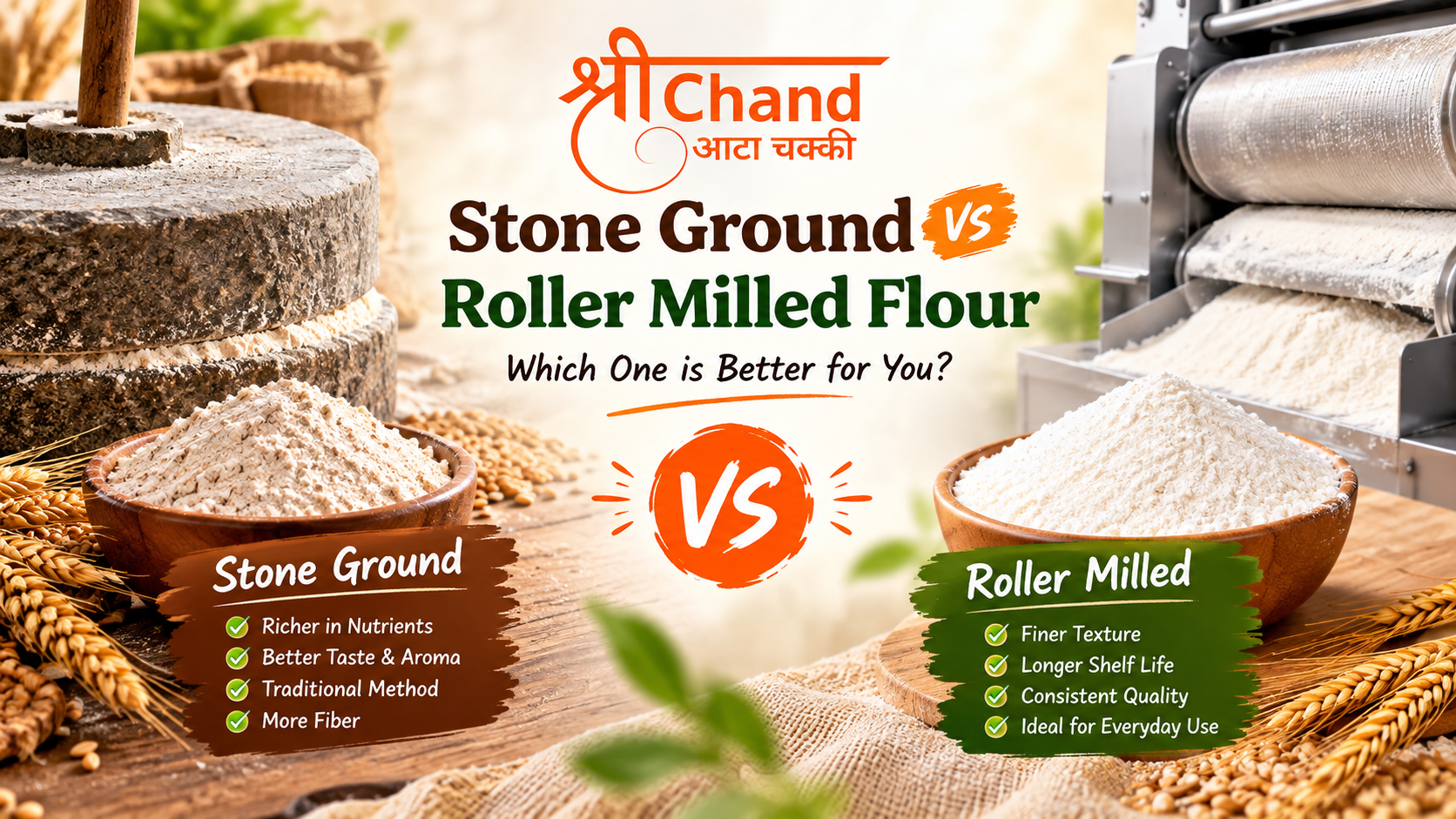
Stone ground flour, sometimes labelled chakki flour or chakki atta, is produced using a traditional milling method where whole grain passes between two stone discs that rotate slowly and crush it into flour. This is different from the roller milling process used by most large scale flour producers, where steel rollers spin at high speed and separate the grain into its components before recombining them.
The wheat kernel, or any grain being milled, has three parts. The bran is the fibre rich outer shell. The germ is the nutrient dense core containing healthy oils and vitamins. The endosperm is the starchy bulk. Stone milling grinds all three together in a single, gentle pass. Roller milling typically separates the bran and germ early, grinds the endosperm into fine flour, and adds a measured amount of bran back in afterward for products labelled whole wheat.
Both methods produce edible, usable flour. The difference lies in heat exposure, how intact the grain stays, and how much of the natural aroma and nutrition survives the process. We cover the mechanics of this comparison in full in stone ground versus roller milled flour, and the specific case of wheat atta in chakki atta benefits.
Stone ground flour is not limited to wheat
While most people associate stone ground flour with whole wheat atta, the same milling method applies to a range of grains and pulses commonly used in Indian kitchens.
- Whole wheat atta, the everyday flour for rotis and parathas.
- Bajra flour, ground from pearl millet, popular in winter for its warming properties.
- Jowar flour, ground from sorghum, often used for gluten free rotis.
- Ragi flour, ground from finger millet, valued for its calcium content.
- Besan, ground from chana dal, used in curries, snacks and baking.
- Multigrain blends, combining wheat with millets, oats or pulses in a single stone ground mix.
If you are exploring options beyond plain wheat, our guide to types of flour breaks down which grain works best for which dish.
Why stone ground flour benefits show up in the kitchen
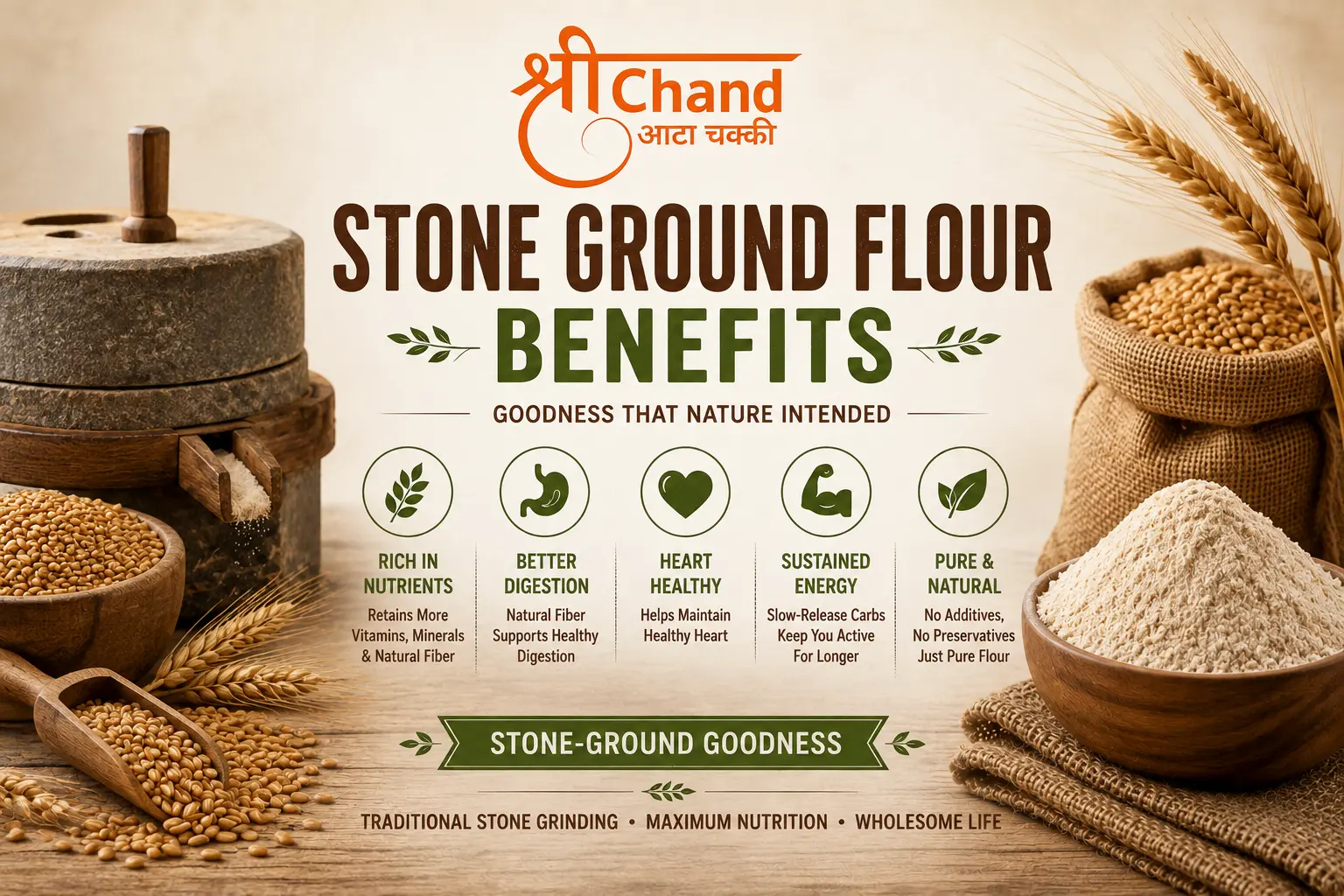
Lower heat means better nutrient retention
Stone mills turn slowly and generate very little friction heat compared to steel roller mills running at high speed. Heat is the main enemy of the delicate oils and vitamins in the grain's germ layer. The gentler the milling process, the more of that original nutrition makes it into your flour rather than being degraded before it ever reaches your kitchen.
The whole grain stays together
Because stone milling does not separate the bran, germ and endosperm at any point, there is nothing to recombine and no room for inconsistency between batches. What you buy is a direct, unaltered reflection of the grain that went in. This also means no refined flour needs to be blended in to compensate for texture, which some lower quality roller milled products do.
Aroma and taste improve noticeably
The natural oils preserved by low heat stone milling are what give freshly ground flour its characteristic nutty smell. This is one of the fastest ways to judge quality at the point of purchase, and one of the clearest reasons people switch to stone ground flour and do not go back. For a full comparison of how freshness affects this, see fresh atta versus packaged atta.
Better texture for rotis and baking
Stone ground flour tends to absorb water differently than very finely milled roller flour, which often results in a softer, more workable dough. This matters most for rotis and parathas, where texture directly affects how well the bread puffs and how soft it stays after cooking.
Stone ground flour nutrition
Nutrient values shift slightly by grain type and season, but for stone ground whole wheat flour specifically, expect a profile close to this per 100 grams.
| Nutrient | Approximate amount |
|---|---|
| Energy | 340 to 360 kcal |
| Protein | 11 to 13 g |
| Dietary fibre | 10 to 13 g |
| Fat | 1.5 to 2.2 g |
| Iron | 3.5 to 4.5 mg |
| Magnesium | 130 to 140 mg |
| B vitamins | Meaningful daily contribution |
For a deeper breakdown of what these numbers mean for digestion, blood sugar and heart health, read whole wheat flour benefits and wheat flour nutrition facts.
A buying guide for stone ground flour
1. Check the milling date, not just the expiry date
Most packets show a manufacturing or milling date somewhere on the pack, often in smaller print than the expiry date. Stone ground flour loses its aromatic edge faster than heavily processed flour, so a bag milled six months ago will taste noticeably different from one milled two weeks ago, even if both are technically within their expiry window.
2. Read the ingredient list carefully
A genuine stone ground whole wheat flour should list only one ingredient: whole wheat. If maida, refined flour, or any additive appears on the list, the product is a blend rather than pure stone ground whole grain flour, regardless of what the front of the pack claims.
3. Judge the texture
Stone ground flour typically looks slightly coarse, with visible flecks of bran distributed through it. If a bag labelled stone ground looks unusually fine, smooth and uniform, similar to roller milled flour, it is worth questioning the claim.
4. Smell before you commit, when possible
If you are buying in person, a fresh, slightly nutty aroma is one of the most reliable signs of quality stone ground flour. A flat, musty or cardboard like smell suggests the flour has been sitting for a while, regardless of milling method.
5. Ask about batch size and milling frequency
Smaller mills, including many chakki atta producers, tend to mill in smaller batches more frequently, which naturally shortens the time between grinding and reaching your kitchen. Larger, centralised operations may mill in bulk and store flour for longer stretches before distribution.
6. Compare price against value, not just against the cheapest bag
Stone ground flour usually costs somewhat more than the most basic roller milled options, though the gap has narrowed as more brands enter the space. Weigh that difference against how much you value aroma, freshness and closeness to the whole grain. Our flour buying guide has a broader checklist covering this trade-off across all flour types, not just stone ground.
Buying stone ground flour online
Traditional chakki atta shops have one obvious limitation: you can only buy from whichever one happens to be near you, and quality varies a lot between local mills. Buying stone ground flour online solves the access problem, but it introduces a new one, which is judging freshness without being able to smell or touch the product before ordering.
A few practical checks help here. Look for brands that display the milling date clearly on the product page, not just on the physical packet. Favour sellers who mill in small, frequent batches rather than large stock that may have been sitting in a warehouse. Check reviews specifically for comments about freshness and aroma, not just delivery speed. Our guide to buying wheat flour online covers this process step by step.
Shri Chand Atta is milled on stone in small batches in Delhi NCR, with orders processed close to the milling date rather than pulled from long term stock. You can browse the full range of stone ground flours on our shop page, and see how we compare to national brands in our best atta brands in India roundup.
Stone ground flour versus roller milled flour at a glance
| Factor | Stone ground flour | Roller milled flour |
|---|---|---|
| Milling heat | Low | Higher, due to speed and friction |
| Bran and germ | Ground together, never separated | Separated, added back later |
| Texture | Slightly coarse, visible bran | Fine, uniform |
| Aroma | Strong when fresh, fades faster | Milder, more stable over time |
| Typical shelf life once milled | Best within 4 to 6 weeks | Often formulated for several months |
| Common use case | Daily rotis, health focused kitchens | Bulk cooking, longer storage needs |
Frequently asked questions
What does stone ground flour mean?
Stone ground flour is made by crushing whole grain slowly between two stone discs at low heat, keeping the bran, germ and endosperm together in a single milling pass, unlike roller milling which separates and recombines these parts.
Is stone ground flour healthier than regular flour?
It generally retains slightly more of its natural nutrients and oils because it is milled at lower heat and the grain is not separated and reprocessed. Both are typically whole grain and nutritionally similar overall, but stone ground flour tends to have a nutritional and aromatic edge, especially when fresh.
Is stone ground flour only for wheat?
No, the same method is used for millets like bajra and jowar, for ragi, and for besan made from chana dal. Stone ground whole wheat atta is simply the most common application in Indian households.
How can I tell if stone ground flour is genuine?
Check the ingredient list for a single grain with no maida added, look for a visibly coarse texture with bran flecks, check the milling date rather than just the expiry date, and smell the flour if buying in person.
Does stone ground flour cost more?
Usually somewhat more than the cheapest roller milled options, though the price gap has narrowed. Many premium roller milled brands now cost the same as or more than local stone ground flour.
How long does stone ground flour stay fresh?
Typically four to six weeks once opened, stored in an airtight container away from heat and sunlight. It does not spoil quickly, but aroma and some nutritional value fade over time. See does flour expire for the complete storage timeline.
The bottom line
Stone ground flour earns its reputation through a simple mechanical difference: slow, low heat milling that keeps the whole grain intact rather than taking it apart and reassembling it. That difference shows up as better aroma, a more workable dough, and a modest nutritional edge over standard roller milled flour, particularly when the flour you buy is genuinely fresh.
The label alone will not tell you that. Checking the milling date, the ingredient list and the texture will. Once you know what to look for, read chakki atta benefits for a closer look at how this plays out specifically for wheat atta, or go back to our best atta brands in India comparison to see which brands actually deliver on the stone ground promise.