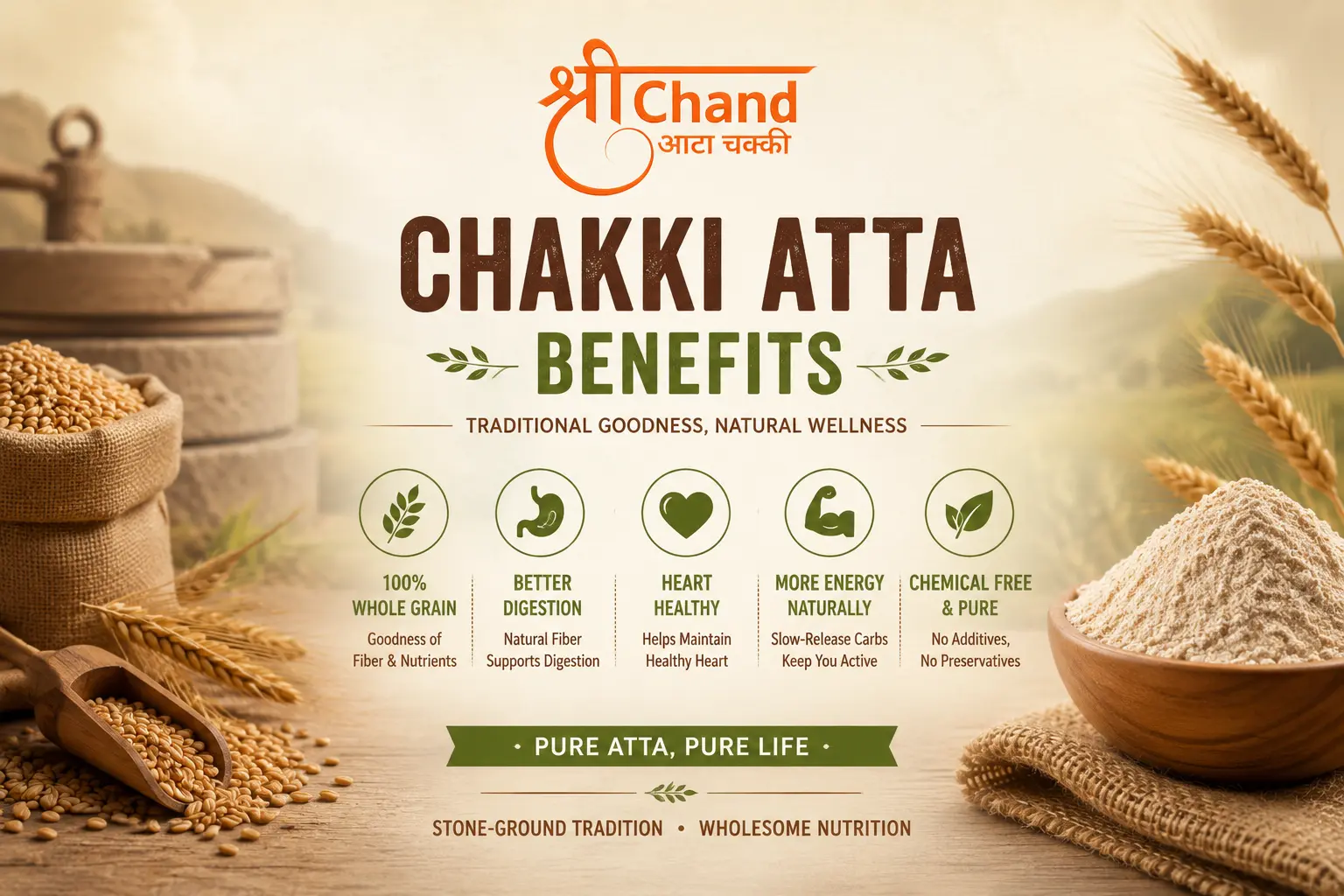
Chakki atta is flour milled by slowly crushing whole wheat grain between two stones, which keeps the bran, germ and endosperm together and processed at low heat. This preserves more of the natural oils, aroma and nutrients in the wheat germ compared to fast, high heat roller milling. The practical result is atta that smells fresher, cooks into softer rotis, and holds onto its fibre and vitamin content better, especially when it is milled in small batches close to the day you buy it.
What chakki atta actually means
Chakki is the Hindi word for a grinding stone mill. Chakki atta, sometimes written as chakki fresh atta, is whole wheat flour produced by that traditional stone milling process rather than modern high speed roller mills.
The wheat grain has three parts: the bran, the germ and the endosperm. In chakki milling, the whole grain goes between two stone discs and gets crushed slowly. All three parts get ground together in one pass, at a low temperature, and stay combined in the final flour.
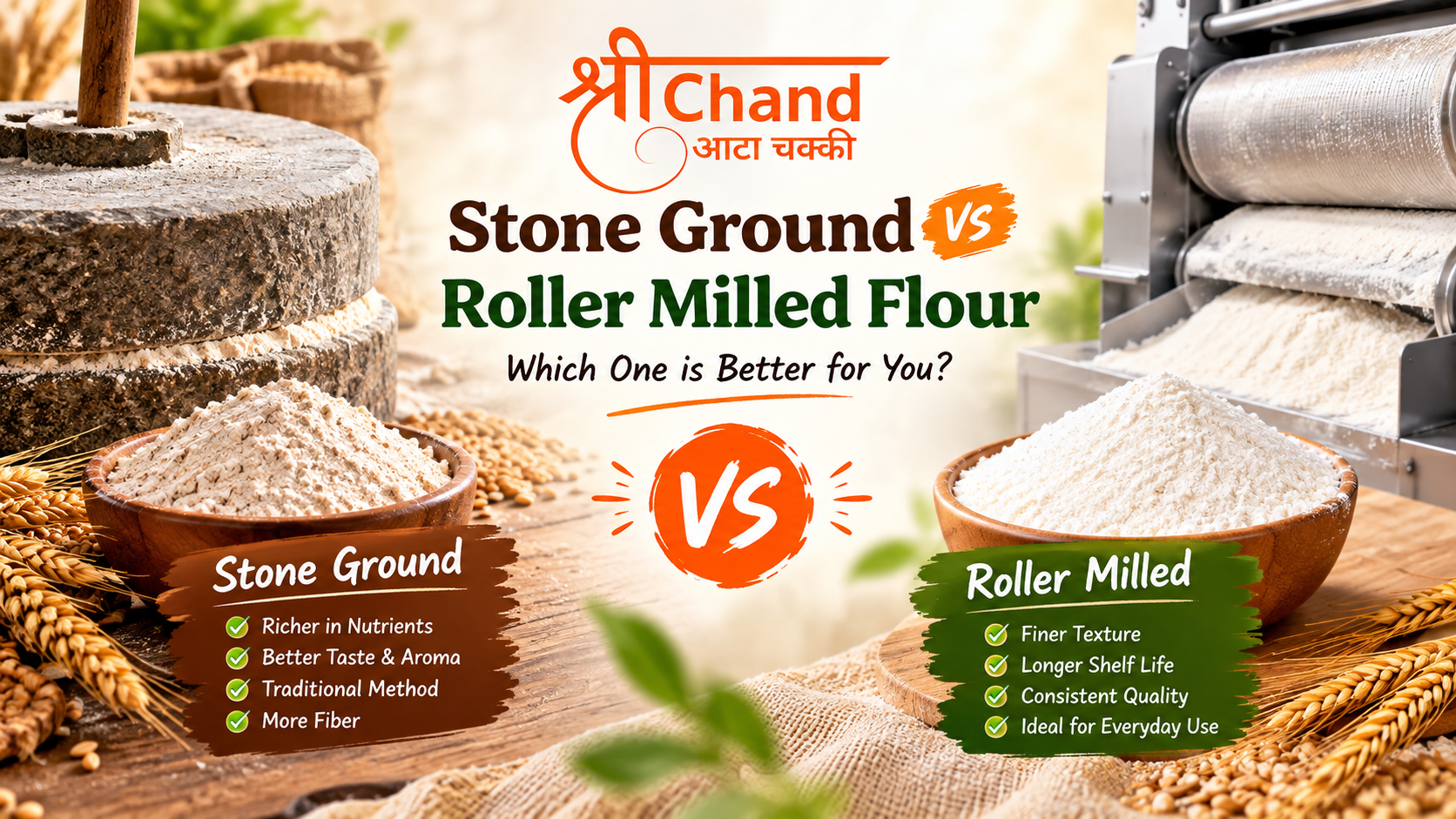
Roller milling works differently. Steel rollers spin at high speed and separate the bran and germ from the endosperm early in the process. The endosperm is ground into fine white flour first, and a measured amount of bran is added back afterward to produce what gets sold as whole wheat atta. Both processes are legitimate ways to make flour. They just do not produce the same flour, which is the whole reason chakki atta benefits exist as a separate conversation from ordinary atta. Our detailed breakdown in stone ground versus roller milled flour walks through this comparison step by step.
Why the milling method changes the outcome
Heat is the deciding factor
Roller mills run fast and generate friction heat as the grain passes through steel rollers at high speed. That heat can degrade some of the delicate oils and vitamins in the wheat germ. Stone mills turn slowly, generate far less heat, and are gentler on those same compounds.
This is not a marketing distinction. It is basic food chemistry. Wheat germ oil is sensitive to heat and oxidation, and the less it is disturbed during milling, the more of its natural aroma and nutrition survives into the final flour.
The grain stays whole
In chakki milling, bran, germ and endosperm are ground together and never separated. Nothing gets stripped out and added back later. What you see in the flour is a direct reflection of the whole grain, not a reconstructed blend. That is also why the flour looks slightly beige with visible flecks of bran, rather than the very fine, pale texture of roller milled whole wheat flour.
The main chakki atta benefits
1. Better aroma and taste
This is the benefit people notice first and remember longest. Chakki atta, especially when freshly milled, has a distinct nutty, slightly sweet smell that comes directly from the wheat germ oils. Roller milled flour, particularly if it has been sitting in a warehouse or on a shelf for weeks, tends to smell flatter or almost like paper by comparison.
Open a bag of freshly stone ground atta next to a bag of standard packaged atta and the difference is immediate. That gap only grows with time, because the compounds that carry aroma are the same ones that degrade fastest.
2. Softer, more pliable rotis
Because chakki atta retains more of its natural moisture and oil content, the dough tends to be easier to work with. Rotis puff up more reliably and stay soft for longer after they cool, compared to rotis made from flour that has lost its natural oils to heat or time.
If soft rotis are your main priority, our guide on which flour makes the softest chapatis goes further into technique, hydration and resting time, all of which work better when you start with good chakki atta.
3. More of the original nutrition intact
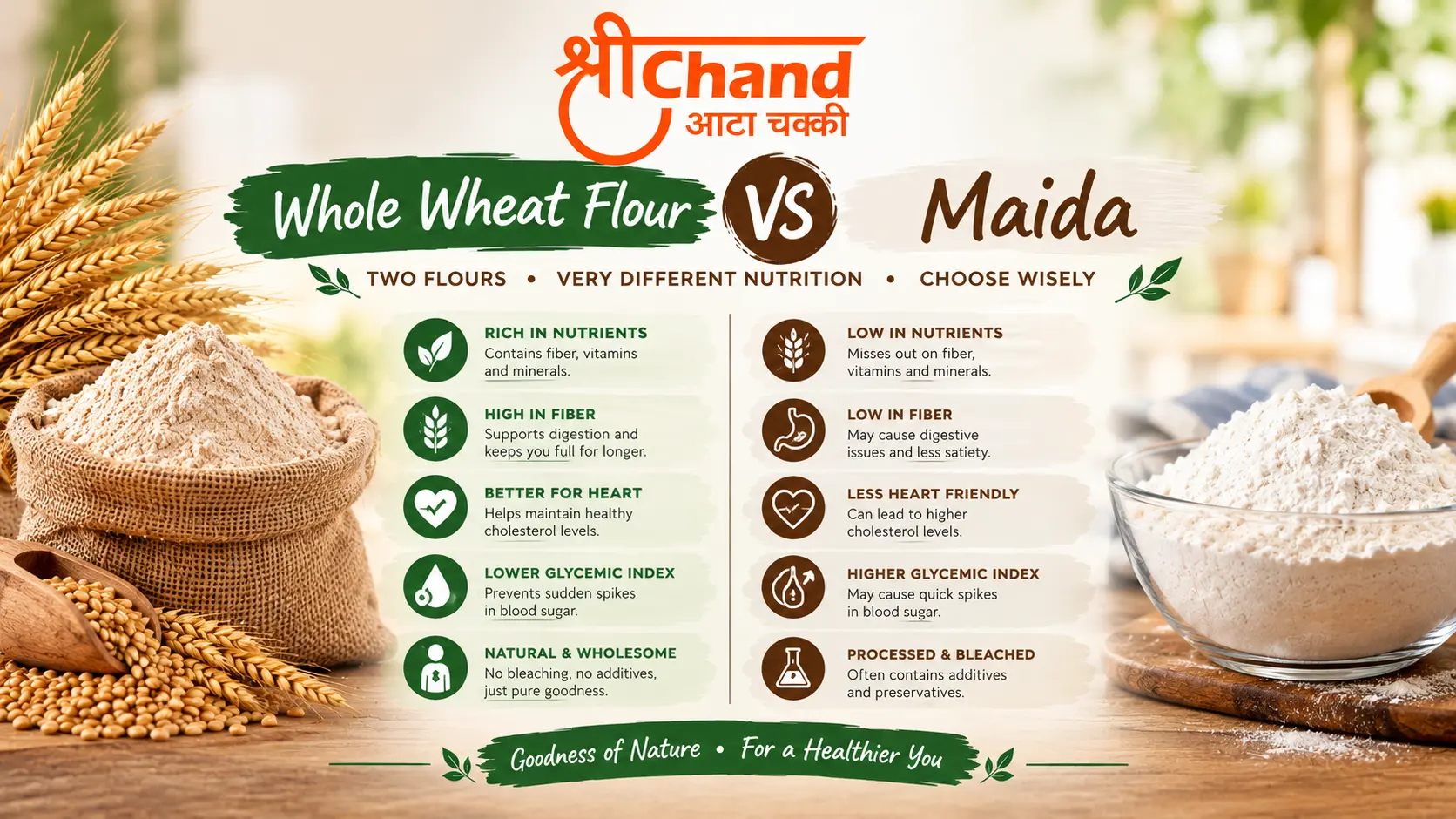
Since bran and germ stay in the flour rather than being processed separately and recombined, chakki atta generally holds onto more fibre, B vitamins, iron and magnesium relative to flour that has gone through aggressive industrial processing. The gentler, low heat process also means fewer nutrients are lost to oxidation during milling itself.
For the full nutrient breakdown by weight, our guide to wheat flour nutrition facts has the detailed numbers, and whole wheat flour benefits covers what those nutrients actually do for the body.
4. No hidden refined flour
Chakki atta made from 100 percent whole wheat has nothing to add back, because nothing was taken out in the first place. Some cheaper roller milled attas quietly blend in a portion of refined maida to make the dough softer and the rotis look whiter. A genuine chakki atta has no reason to do this, since the whole grain naturally produces a workable dough on its own.
5. Freshness you can actually judge
Because chakki mills are often smaller, local operations rather than large industrial plants, batches tend to be smaller and turn over faster. That usually means less time between milling and the moment the atta reaches your kitchen. Freshness is the single biggest factor separating good atta from average atta, and chakki milling makes it easier to buy flour that was ground recently rather than months ago. Our full comparison of fresh atta versus packaged atta covers exactly how to check this before you buy.
Chakki atta versus roller milled atta at a glance
| Factor | Chakki (stone ground) atta | Roller milled atta |
|---|---|---|
| Milling temperature | Low heat, slow grinding | Higher heat, high speed |
| Bran and germ | Ground together, stays whole | Separated, added back later |
| Aroma | Strong, nutty, fresher | Milder, fades faster |
| Nutrient retention | Generally higher | Slightly lower due to heat and processing |
| Texture | Slightly coarse, visible bran flecks | Finer, more uniform |
| Typical batch size | Smaller, often local | Large scale, industrial |
| Shelf life once milled | Shorter, best used within weeks | Longer, formulated for months on shelf |
Neither method produces a bad product. Roller milling exists because it scales well and gives consistent results across huge volumes, which is exactly what large national brands need. Chakki milling trades some of that scale and shelf life for aroma, freshness and a more direct connection to the whole grain. If you want to see how this plays out across actual brands on the market, our best atta brands in India comparison rates thirteen options including both roller milled and stone ground options.
Does chakki atta cost more, and is it worth it
Chakki atta, particularly from local mills, often costs somewhat more per kilo than the cheapest packaged roller milled brands, though premium roller milled options like Sharbati blends can cost just as much or more. The honest answer on whether it is worth it depends on what you are optimising for.
If price per kilo at scale is your only concern, a value roller milled brand will usually beat chakki atta on cost. If aroma, freshness and getting closer to the whole, unprocessed grain matter to you, chakki atta earns its price. Many households land somewhere in between, using chakki atta for daily rotis and a cheaper option for baking or thickening where the aroma matters less. Our flour buying guide has a full checklist for weighing these trade-offs against your own kitchen habits.
How to spot genuine chakki atta
Not everything labelled chakki atta on a shelf was actually stone milled recently. A few checks help separate the real thing from a marketing label.
- Check the manufacturing date, not the expiry date. Genuine fresh chakki atta should show a recent milling date, ideally within the last few weeks.
- Look at the texture. Real stone ground flour has a slightly coarse feel and visible bran flecks. If it looks unusually fine and uniform, it may be closer to roller milled flour with bran added back.
- Smell it before buying if possible. A nutty, slightly sweet aroma is the clearest sign of fresh chakki atta. A flat or musty smell suggests it has been sitting for a while.
- Ask where it was milled. Local chakki mills or brands that mill in small batches close to where you live are more likely to deliver genuinely fresh flour than large centralised operations shipping across the country.
If you want the flour itself rather than just the theory, Shri Chand Atta is milled on stone in small batches in Delhi NCR, so the gap between milling and your kitchen stays short. You can see the full range, including stone ground flour options beyond wheat, on our shop page.
Frequently asked questions
What is the difference between chakki atta and normal atta?
Chakki atta is milled slowly between stones, keeping bran, germ and endosperm together at low heat. Normal or roller milled atta separates these parts using fast steel rollers and adds bran back afterward. The result is a difference in aroma, texture and, to some degree, nutrient retention.
Is chakki atta healthier than regular atta?
Chakki atta generally retains slightly more of its natural nutrients and oils because it is processed at lower heat and the grain is never separated and recombined. Both are whole wheat flour and nutritionally similar overall, but chakki atta tends to have a nutritional and aromatic edge, especially when fresh.
Does chakki atta make softer rotis?
Yes, in most cases. The retained natural oils and moisture in stone ground flour tend to produce a more pliable dough, which generally leads to softer, more puffed up rotis compared to flour that has lost aroma and moisture over time on a shelf.
How long does chakki atta stay fresh?
Freshly milled chakki atta is best used within four to six weeks in typical Indian conditions, stored in an airtight container away from heat. It does not spoil quickly, but the aroma and some nutritional edge fade with time. See does flour expire for the full storage timeline.
Is chakki atta more expensive than packaged atta?
It can be, particularly compared to value roller milled brands, though the gap is often smaller than expected. Many premium roller milled attas cost the same or more than local chakki atta while offering less freshness.
Can I buy chakki atta online? Yes, several local mills and brands now deliver freshly milled chakki atta, which solves the biggest limitation of traditional chakki shops, which is being tied to wherever the nearest one happens to be. Our guide to buying wheat flour online covers what to check before ordering.
The bottom line
Chakki atta benefits come down to one simple mechanical difference: slow, low heat stone milling keeps the whole wheat grain together instead of taking it apart and reassembling it. That single choice is why chakki atta tends to smell better, cook into softer rotis, and hold onto more of its natural nutrition, particularly when the flour is bought fresh rather than after months on a shelf.
If you are deciding between chakki atta and standard packaged atta for your kitchen, the most useful thing you can do is check the milling date before you check the brand name. For a deeper look at how stone milling stacks up against roller milling on paper, read stone ground versus roller milled flour next, or go back to our full best atta brands in India comparison to see where stone ground options fit against the big national brands.